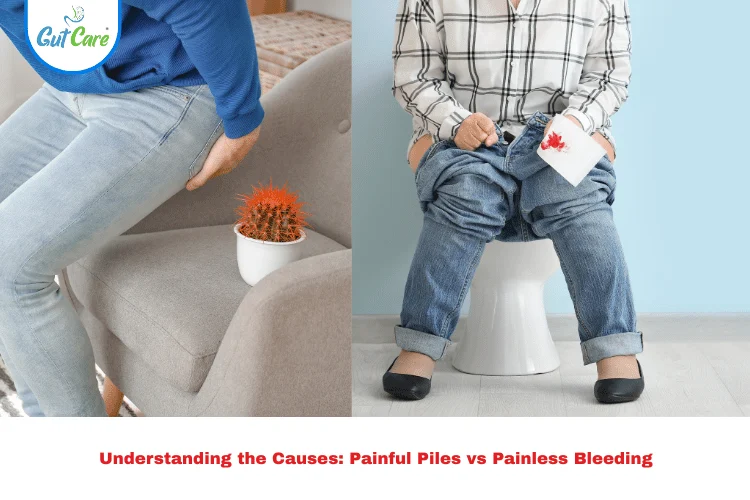
Understanding the difference between painful piles vs painless bleeding is important because both affect the lower digestive area but present differently. While one causes discomfort, the other may appear without pain but still needs attention. Recognizing symptoms early helps prevent worsening and supports long-term digestive comfort.
“Take control of symptoms early—get expert guidance before discomfort worsens.”
What Are Painful Piles?
Painful piles usually occur when swollen veins develop near sensitive nerve endings around the anal area. Because this region contains many nerves, even mild swelling can cause discomfort.
Common Features of Painful Piles:
- Pain during or after bowel movements
- Discomfort while sitting or walking
- Swelling or tenderness around the anal area
- Burning or irritation due to inflammation
Pain often increases with straining or prolonged sitting. This discomfort is a sign that lifestyle changes and proper care are needed.
What Is Painless Bleeding in Piles?
Painless bleeding commonly occurs in internal piles. These develop deeper inside the rectum, where nerve sensitivity is lower, so bleeding may happen without pain.
Common Features of Painless Bleeding:
- Bright red blood seen after bowel movements
- No pain during stool passage
- Mild itching or fullness sensation
- Bleeding often linked to straining or hard stools
Even though it may not hurt, painless bleeding should never be ignored, especially if it repeats.
Key Differences Between Painful Piles and Painless Bleeding
Understanding painful piles vs painless bleeding helps patients identify symptoms accurately and reduce unnecessary worry.
Painful Piles:
- Pain and discomfort are prominent
- Swelling near the outer anal area
- Increased sensitivity due to nerve involvement
Painless Bleeding:
- Bleeding without pain
- Usually linked to internal piles
- Caused by fragile blood vessels inside the rectum
The main difference lies in location and nerve sensitivity.
Why Do the Symptoms Feel Different?
The variation in symptoms depends on nerve involvement.
- Painful piles are close to nerve-rich skin
- Painless bleeding occurs where fewer nerves are present
Both conditions need care, even if pain is absent.
When Painless Bleeding Becomes a Concern
Repeated bleeding, even without pain, should be evaluated. Ongoing blood loss can affect overall health and energy levels. If bleeding lasts several days or increases, professional guidance is important.
Even though bleeding may not hurt, repeated episodes should be evaluated. In Painful Piles vs Painless Bleeding scenarios, ongoing bleeding may lead to weakness or anemia if ignored. Bleeding that continues for several days or worsens over time requires professional assessment.
Early diagnosis prevents complications and supports faster recovery.
Common Causes of Painful and Bleeding Piles
Several factors can trigger or worsen symptoms:
- Chronic constipation
- Straining during bowel movements
- Low fiber intake
- Poor hydration
- Prolonged sitting
Lifestyle habits play a major role in symptom development
Diagnosis: How Doctors Identify the Type of Piles
Doctors identify piles through physical examination and basic assessments. In Painful Piles vs Painless Bleeding evaluations, Identifying whether piles are internal or external helps guide proper care and rule out other causes.
A colorectal specialist like Dr. Yuvrajsingh Gehlot focuses on early evaluation to prevent complications.
Treatment Options for Painful Piles
Treatment aims to reduce pain and swelling:
- Diet improvement and fiber intake
- Stool-softening measures
- Warm sitz baths
- Supportive topical care
In advanced Painful Piles vs Painless Bleeding cases, minimally invasive procedures may be recommended. Advanced cases may require minimally invasive procedures.
Treatment Options for Painless Bleeding Piles
Managing painless bleeding involves reducing strain and supporting vein health. Fiber-rich diets, hydration, and lifestyle changes form the first line of care. In persistent Painful Piles vs Painless Bleeding conditions, medical procedures may be advised to control bleeding.
Timely care prevents progression.
How to Prevent Both Painful and Bleeding Piles
Prevention centers on digestive regularity:
- Balanced fiber-rich diet
- Adequate water intake
- Regular movement
- Avoid prolonged sitting
Small daily habits protect long-term comfort.
Expert Care and When to Seek Help
Persistent pain or repeated bleeding should not be ignored. Gutcare Clinics in Bangalore provides patient-focused digestive care under the guidance of Dr. Yuvrajsingh Gehlot, colorectal surgeon, using gentle diagnostic and supportive treatment methods.
Final Thoughts: Painful Piles vs Painless Bleeding
Painful piles vs painless bleeding are signals from the body. Pain draws attention quickly, but painless bleeding deserves equal seriousness. Early awareness, healthy habits, and expert guidance ensure better digestive comfort and peace of mind. Gutcare Clinics in Bangalore supports patients with focused digestive care, early evaluation, and personalized guidance to help prevent symptoms from progressing and to maintain long-term gut health.
FAQs
1. What is the main difference in Painful Piles vs Painless Bleeding?
Painful piles cause discomfort, while painless bleeding occurs without pain.
2. Is painless bleeding always serious?
No, but repeated bleeding should be medically evaluated.
3. Can constipation cause both types of piles?
Yes, constipation is a common trigger for both pain and bleeding.
4. Who should I consult for piles treatment?
A colorectal surgeon like Dr. Yuvrajsingh Gehlot can guide treatment.
5.Can hemorrhoids be painless and still bleed?
Yes, hemorrhoids can bleed without causing pain, especially when they are located inside the rectum where nerve sensitivity is low. Even painless bleeding should be evaluated if it occurs repeatedly.