Reviewed by Dr. Yuvraj Singh Gehlot, Gastrointestinal, Laparoscopic and Colorectal Surgeon, GutCare Clinics Bangalore · Updated June 2026
Anal fissure treatment in Bangalore is available at GutCare Clinics for both acute and chronic cases. An anal fissure is a small tear in the anal lining that causes sharp pain and bleeding during bowel movements. Acute fissures often heal with dietary changes and topical treatment. Chronic fissures, those lasting beyond six to eight weeks, require laser treatment or surgery. Most patients are diagnosed in a single visit and experience significant relief quickly.
If you feel a sharp, tearing pain every time you pass stools, and notice a little blood on the toilet paper, you may have an anal fissure. It sounds alarming, but it is one of the most common conditions treated at GutCare Clinics in Bangalore. If your symptoms have lasted more than a few weeks, please do not wait.
What Is an Anal Fissure?
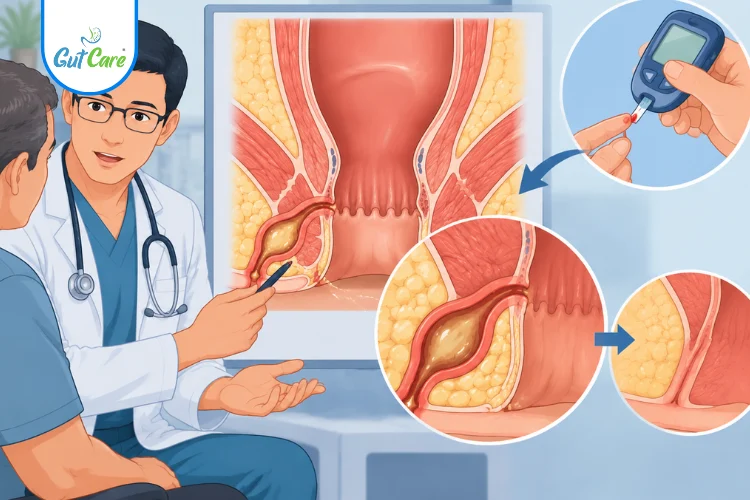
An anal fissure is a small tear in the thin tissue that lines the anus. This tissue is called the anoderm. When it tears, it causes pain, often a burning or stinging sensation, during and after a bowel movement. In many cases, there is also a small amount of bright red bleeding.
Most fissures are acute, meaning they appeared recently and are likely to heal on their own in a few weeks. When a fissure does not heal within six to eight weeks, it is called a chronic fissure. Chronic fissures are deeper, often develop scar tissue at the edges, and almost always require medical treatment to resolve.
Anal fissures are more common than people realise. A study published in the Journal of Clinical and Diagnostic Research found that roughly 18% of patients who came in with anorectal complaints had an anal fissure. The lifetime prevalence of chronic anal fissure is estimated at 7 to 8% globally, according to research published in the Journal of Clinical Medicine in 2025.
Patients who leave fissures untreated risk progression to chronic complications, though the exact proportion varies by individual case and risk factors. Breaking this cycle early is one of the key reasons treatment works best when started promptly.
“Anal fissures are painful and disruptive, but very treatable. The patients who struggle most are those who wait too long out of embarrassment. The earlier you come in, the simpler the treatment.” – Dr. Yuvraj Singh Gehlot, Gastrointestinal, Laparoscopic and Colorectal Surgeon, GutCare Clinics Bangalore
What Causes an Anal Fissure?
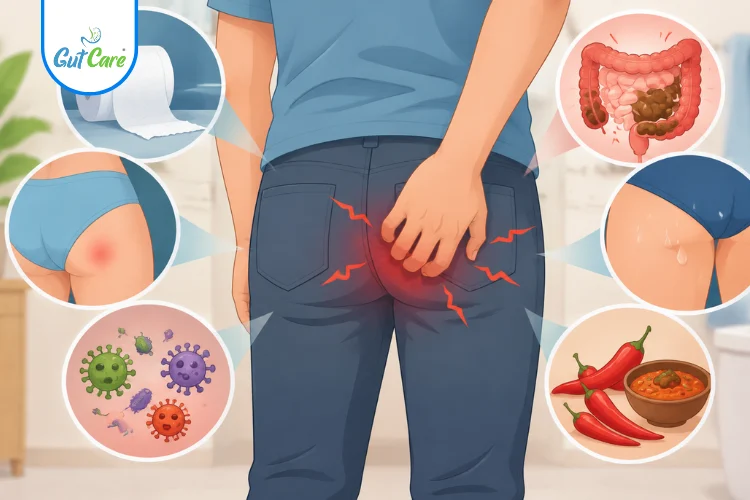
The most common cause is passing a hard or large stool during constipation. The stool stretches the anal canal more than the tissue can handle, and it tears. Other causes include:
• Chronic diarrhoea, which repeatedly irritates the anal lining
• Straining during bowel movements over a long period
• Childbirth, which puts significant pressure on the pelvic floor
• A low-fibre diet, which leads to harder stools
• Inflammatory bowel conditions such as Crohn’s disease
Constipation and fissure have a circular relationship. The pain during a bowel movement causes people to hold back, which makes stools harder, which makes the fissure worse. Breaking this cycle is one of the key reasons treatment works best when started early.
Symptoms of an Anal Fissure: What to Watch For
These are the most common signs that you may have an anal fissure:
1. Sharp or burning pain during a bowel movement that may last minutes to hours afterward
2. Bright red blood on the toilet paper or on the surface of the stool
3. A visible crack or small cut near the anal opening
4. A small lump or skin tag near the tear, which is more common in chronic fissures
5. Itching or irritation in the anal area between bowel movements
Pain that lasts several hours after passing stools is often what brings patients to see a specialist. If you are delaying using the toilet because of pain, or if you notice that symptoms are getting worse rather than better, that is a sign to consult a gut surgeon.
Acute vs Chronic Fissure: Know the Difference
Not every fissure needs surgery. The right treatment depends on how long the fissure has been present and how severe the symptoms are.
| Feature | Acute Fissure | Chronic Fissure |
| Duration | Less than 6 weeks | More than 6 to 8 weeks |
| Appearance | Fresh, shallow tear | Deeper, with scar tissue or skin tags |
| Healing without surgery | Likely with dietary changes and topical treatment | Unlikely without medical intervention |
| Pain level | Significant, especially during bowel movements | Often severe, may last hours after passing stool |
| Treatment needed | Dietary change, sitz baths, topical creams | Medical review; likely laser or surgical treatment |
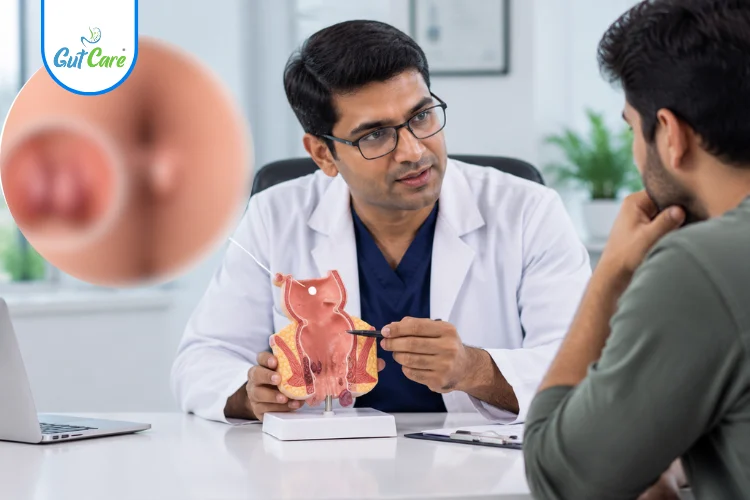
If you are unsure which category your fissure falls into, a consultation with a gut surgeon is the most reliable way to find out. At GutCare Clinics in Bangalore, Dr. Yuvraj Singh Gehlot diagnoses fissures through a simple visual examination in most cases. No invasive tests are usually needed at the first visit.
When Should You See a Gut Surgeon in Bangalore?
Many people delay seeing a doctor because they feel embarrassed or hope the pain will go away. But waiting often makes things worse, especially if the fissure is becoming chronic. You should see a surgeon if:
• Pain during and after bowel movements has lasted more than two weeks
• You are avoiding going to the toilet because of pain
• You see blood consistently with stools
• Topical creams or dietary changes have not reduced the pain
• You notice a lump or skin tag near the anal opening
• Symptoms are getting worse, not better
An early consultation saves you from weeks or months of unnecessary pain. With the right treatment, most patients experience significant relief very quickly.
Anal Fissure Treatment in Bangalore: Laser vs Surgery
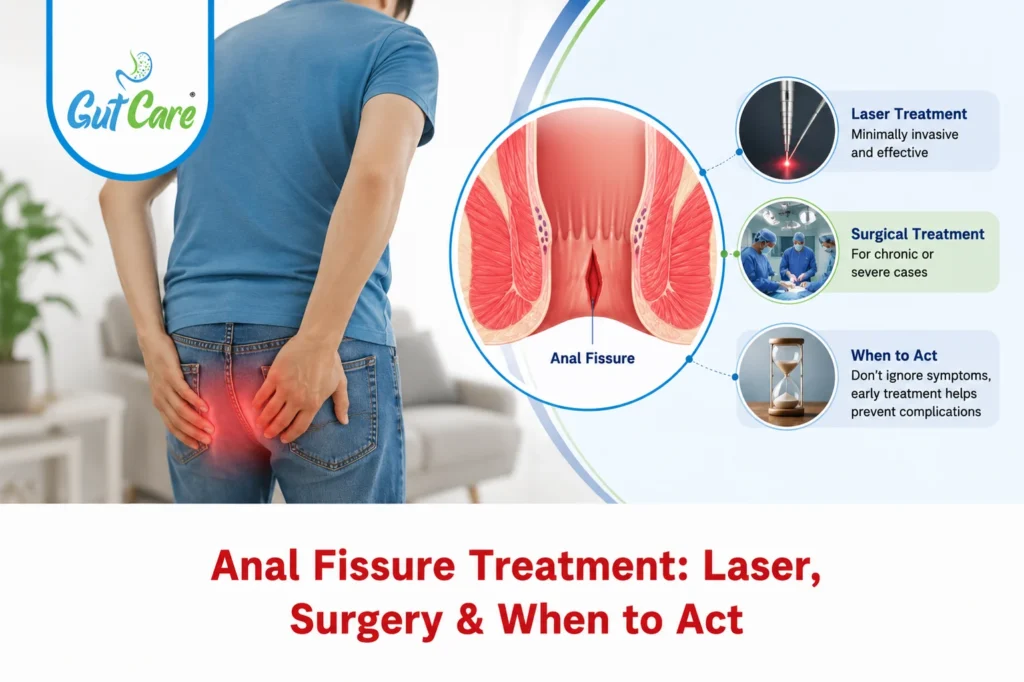
The two most common surgical options for chronic anal fissures are laser fissure treatment and lateral internal sphincterotomy (LIS), which is the standard open or closed surgical approach. Here is a plain comparison:
| Factor | Laser Fissure Treatment | Lateral Internal Sphincterotomy (LIS) |
| How it works | Laser energy precisely removes damaged or scarred tissue and promotes healing without an open wound | A small incision is made in the internal anal sphincter to relieve spasm and allow the fissure to heal |
| Incision required | No open cut | Small surgical incision |
| Procedure time | 20 to 30 minutes | 20 to 40 minutes |
| Hospital stay | Same-day discharge | Same-day discharge in most cases |
| Recovery time | Most patients resume normal activity within 3 to 5 days | Typically 1 to 2 weeks |
| Post-operative pain | Minimal for most patients | Mild to moderate for the first few days |
| Bleeding risk | Low (laser seals as it works) | Low, managed intraoperatively |
| Best for | Chronic fissures with scar tissue, patients who prefer minimally invasive options | Complex or recurrent fissures, or where laser is not indicated |
| Success rate | High; comparable to LIS in published studies for appropriate cases | High; well-established gold standard for chronic fissure |
The right option depends on your specific case, the severity and duration of the fissure, and whether there are other associated conditions such as a fistula or a skin tag. Dr. Yuvraj Singh Gehlot, with 30 years in healthcare, 25 years of surgical practice and more than 25,000 surgeries performed, assesses each patient individually and recommends the approach that gives you the best outcome.
Patients who have previously had piles or anal fistula may have additional considerations. You can read more about related conditions on the anal fissures treatment page, the anal fistula treatment page, or the piles treatment page at GutCare Clinics.
What Happens During Anal Fissure Treatment at GutCare Clinics, Bangalore?
Here is what to expect when you come in for treatment:
- Consultation: Dr. Gehlot reviews your symptoms and medical history. A gentle visual examination of the anal area is usually sufficient to diagnose a fissure. No invasive tests are typically needed at the first visit.
- Diagnosis: For complex or recurring cases, an anoscopy (a short, simple in-clinic examination) may be recommended to confirm the fissure and check for other conditions.
- Treatment plan: Based on the type and severity of your fissure, Dr. Gehlot recommends either conservative management or a procedure. He explains each option clearly before you decide.
- Procedure (if needed): Laser treatment or LIS is performed under local or spinal anaesthesia. Most patients go home the same day.
- Recovery: You receive specific dietary guidance and follow-up instructions. Most patients are able to return to daily activities within a few days.
Dr. Gehlot has treated over 1,00,000 patients across his career and has received international surgical training. Thousands of patients from across India, and internationally through our medical tourism programme, have chosen GutCare Clinics for colorectal care in Bangalore.
Learn more about Dr. Gehlot’s background on the Our Doctor page.
Can You Prevent Anal Fissures?
In many cases, yes. The most effective prevention involves reducing strain on the anal canal:
• Eat a high-fibre diet with whole grains, vegetables, and fruits to keep stools soft
• Drink at least 2 to 2.5 litres of water daily
• Do not strain or spend excessive time on the toilet
• Treat constipation early rather than letting it become chronic
• Speak to a doctor if you have frequent diarrhoea, as this also weakens the anal lining
If you have had a fissure once, you are more likely to develop another. A proper treatment course at the right time reduces recurrence significantly.
FAQs
What is the best treatment for anal fissure in Bangalore?
Treatment depends on whether the fissure is acute or chronic. Acute fissures often respond to dietary changes, increased water intake, sitz baths, and topical creams. Chronic fissures that persist beyond six to eight weeks generally require laser treatment or a surgical procedure called lateral internal sphincterotomy. A gut surgeon will assess your specific case before recommending the right approach.
Is laser surgery better than conventional surgery for fissure?
Both treatments have high success rates. Laser treatment is minimally invasive, involves no open incision, and most patients recover within three to five days. Conventional sphincterotomy is the established gold standard and is recommended for complex or recurring fissures. Your surgeon will advise which is more appropriate based on the fissure’s depth, duration, and associated conditions.
How long does recovery take after laser or surgical fissure treatment?
For laser treatment, most patients return to normal daily activities within three to five days. For lateral internal sphincterotomy, recovery is typically one to two weeks. Both procedures are performed on an outpatient basis, meaning you go home the same day. Complete healing of the tissue usually takes several weeks.
Can a chronic anal fissure heal without surgery?
Chronic fissures, those lasting more than six to eight weeks, rarely heal without medical treatment. Conservative approaches such as dietary changes and topical creams are usually insufficient at this stage. Medical interventions such as Botox injections to the sphincter, or a surgical procedure, are generally needed to break the cycle of spasm and allow the tissue to heal.
Why does my anal fissure keep coming back?
Recurrence is usually linked to ongoing constipation, a diet low in fibre, insufficient water intake, or incomplete healing from the first episode. In some patients, a tight anal sphincter continues to put pressure on the healing tissue. Addressing the root cause, whether dietary or through a targeted procedure, is the most effective way to prevent fissures from returning.
Is anal fissure treatment painful?
The treatment itself is performed under anaesthesia, so there is no pain during the procedure. After surgery, there may be mild discomfort for a few days, which is managed with medication. Most patients find that the post-procedure discomfort is significantly less than the daily pain they were experiencing from the fissure itself.
Which foods make anal fissures worse?
Avoid foods that can harden stools or cause constipation, including refined white flour, processed snacks, fried foods, red meat, and excess dairy. Also avoid alcohol and caffeine, which can dehydrate the body and make stools harder to pass. Focus on high-fibre foods such as fruits, vegetables, legumes, and whole grains, and drink plenty of water throughout the day.
At what point should I stop waiting and see a doctor?
See a gut surgeon if pain during bowel movements has lasted more than two weeks, if you are avoiding using the toilet because of pain, if you see blood consistently, or if home remedies are not helping. An early consultation prevents the fissure from becoming chronic and makes treatment far simpler. Anal fissures are very common and are treated routinely.
Book Your Appointment at GutCare Clinics, Bangalore
You do not have to keep managing this pain on your own. Dr. Yuvraj Singh Gehlot, one of Bangalore’s most experienced gut surgeons with 25 years of surgical practice and 25,000 surgeries performed, has helped thousands of patients with fissures, piles, fistulas, and other colorectal conditions return to a comfortable, normal life.
If you are in pain during or after bowel movements, or if you have seen blood and are not sure why, the right step is a consultation. Most fissures are diagnosed in a single visit. Treatment is often quick, gentle, and effective.
Book your appointment at GutCare Clinics and speak directly with Dr. Yuvraj Singh Gehlot’s team. We see patients from across Bangalore and from other cities and countries through our medical tourism programme. You are in safe hands.