Reviewed by Dr. Yuvraj Singh Gehlot, Gastrointestinal, Laparoscopic and Colorectal Surgeon, GutCare Clinics Bangalore · Updated June 2026
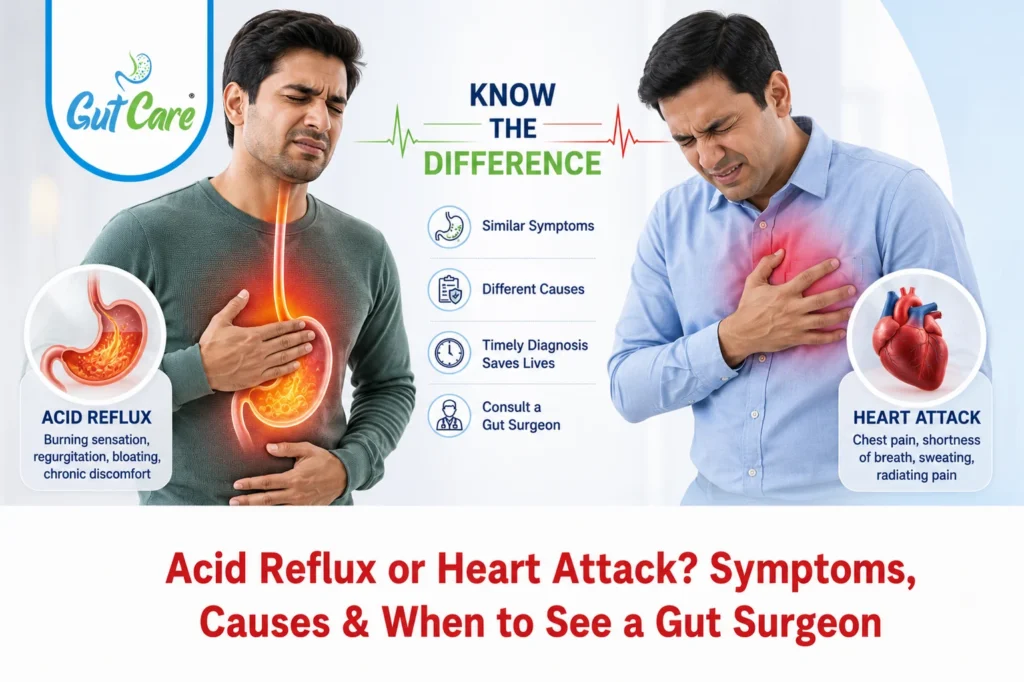
Acid reflux treatment in Bangalore at GutCare Clinics covers everything from mild heartburn to chronic GERD. Acid reflux and heart attacks can feel almost identical. Acid reflux causes burning chest pain after meals, usually relieved by antacids. A heart attack causes crushing pressure that spreads to the arm or jaw and does not improve with antacids. When in doubt, always seek emergency care. If reflux is happening more than twice a week, you likely have GERD, which needs proper treatment, not just antacids.
The burning starts around 10 pm. You have just finished dinner, settled in on the couch, and then it hits: a tight, rising heat behind your chest that makes you wonder whether to reach for an antacid or call an ambulance.
That uncertainty is exactly why acid reflux deserves more attention than most people give it.
Acid reflux is one of the most common reasons patients in India visit a gut surgeon. Millions dismiss it as a minor inconvenience and reach for an antacid, not realizing that persistent acid reflux, also known as GERD (gastroesophageal reflux disease), can silently damage the food pipe over months or years.
What Is Acid Reflux and What Is GERD?
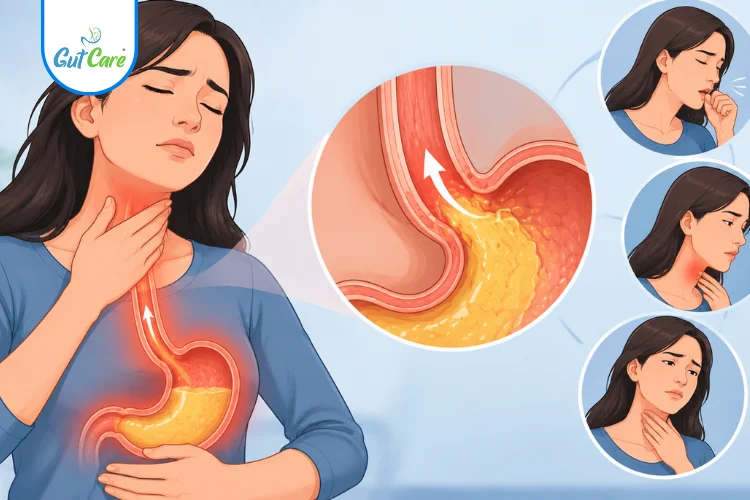
Acid reflux happens when stomach acid flows backward into the esophagus (food pipe) instead of staying in the stomach. It causes a burning feeling in the chest or throat that most people know as heartburn. GERD, or gastroesophageal reflux disease, is what doctors call it when acid reflux happens frequently (twice a week or more) and starts to cause complications. In short: everyone gets occasional acid reflux, but GERD is the chronic, medical version that needs treatment.
The culprit is usually a weakened lower esophageal sphincter (LES), the ring of muscle that acts as a valve between the stomach and the food pipe. When this valve does not close tightly, acid escapes upward.
“GERD is one of the most under-treated conditions I see. Patients come in after years of daily antacids, not realizing the acid has already caused damage to their food pipe. A proper evaluation changes everything.” – Dr. Yuvraj Singh Gehlot, Gastrointestinal, Laparoscopic and Colorectal Surgeon, GutCare Clinics Bangalore
Acid Reflux Symptoms to Watch For
Most patients recognize the classic symptom of heartburn, but GERD can show up in surprising ways. See a gut surgeon if you experience any of the following regularly:
1. Burning sensation in the chest or upper abdomen, especially after eating
2. Sour or bitter taste rising into the throat or mouth (regurgitation)
3. Frequent burping or bloating
4. Feeling of food ‘sticking’ in the throat
5. Chronic cough, hoarseness, or a persistent sore throat with no other cause
6. Worsening symptoms when lying down or bending forward
7. Disrupted sleep due to burning or choking
8. Bad breath that does not improve with oral hygiene
Any of these symptoms occurring more than twice a week for over three weeks deserves a proper medical evaluation, not just another course of antacids.
Acid Reflux vs Heart Attack: How to Tell the Difference
This is the question that brings many patients to the emergency room. The chest pain from acid reflux can feel very similar to the chest pain of a heart attack, which is why confusion is so common. Here is a quick comparison:
| Feature | Acid Reflux / GERD | Heart Attack |
| Type of chest pain | Burning, often behind the breastbone | Tight, crushing, or squeezing pressure |
| When it typically happens | After meals, when lying down, at night | Can happen any time, including at rest |
| Does it spread? | Usually stays in chest or rises to throat | May radiate to left arm, jaw, neck, or shoulder |
| Relieved by antacid? | Often yes, within minutes | No |
| Associated symptoms | Sour taste, burping, bloating | Sweating, nausea, shortness of breath, dizziness |
| Worsens with exertion? | Usually not | Yes, often worsens with physical activity |
Important: If your chest pain is severe, does not respond to antacids, and comes with sweating, breathlessness, or pain in the arm or jaw, call emergency services immediately. Never assume it is just acidity without medical evaluation.
What Causes GERD?
GERD is rarely caused by one thing. It is usually a combination of physical factors and lifestyle habits:
• Weakened lower esophageal sphincter (LES), sometimes from a hiatus hernia
• Obesity, which increases pressure on the stomach
• Eating large, heavy, spicy, or fatty meals
• Late-night eating and lying down shortly after dinner
• Smoking and regular alcohol consumption
• High stress, which increases stomach acid
• Certain medications such as aspirin, ibuprofen, and some blood pressure drugs
• Pregnancy, due to hormonal changes and pressure on the abdomen
Urban Indians are particularly vulnerable. Late dinners, desk-bound routines, and chronic stress are consistently identified as major drivers of GERD symptom severity in clinical practice across India.
If you have been diagnosed with a hiatal hernia alongside GERD, see our page on hernia treatment in Bangalore for more on how the two conditions are connected.
When Should You See a Gut Surgeon?
Lifestyle changes and short-term medication help most patients. But there are specific warning signs that mean you need a gut surgeon, not just another prescription:
- You have been on antacids or PPIs (such as omeprazole or pantoprazole) for more than 3 months without lasting relief
- You are experiencing unintended weight loss
- You have difficulty or pain when swallowing
- You have vomited blood or notice black, tarry stools
- Your symptoms are waking you up at night regularly
- You have a persistent cough or new-onset asthma in adulthood
- You have been told you may have Barrett’s esophagus (a precancerous change in the food pipe lining)
These are not symptoms to manage on your own. They require a full evaluation that may include an upper endoscopy to assess the condition of your esophagus.
How Is GERD Treated?
Treatment follows a progression based on how severe and persistent your symptoms are.
For mild or early GERD, lifestyle adjustments alone can make a significant difference. Eating smaller meals, finishing dinner at least 2 hours before lying down, avoiding trigger foods (spicy, fatty, fried, and acidic), reducing coffee and alcohol, maintaining a healthy weight, and elevating the head end of the bed are all first steps worth trying.
When lifestyle changes are not enough, proton pump inhibitors (PPIs) and antacids are usually prescribed for a defined period. They reduce acid production and give the esophagus time to heal. Long-term use of PPIs without medical supervision is not advisable and should always be guided by a doctor.
When symptoms persist despite medication, or when a patient prefers a permanent solution rather than lifelong tablets, surgery may be recommended. The most commonly performed procedure is laparoscopic Nissen fundoplication, in which the upper part of the stomach is wrapped around the LES to strengthen it and prevent acid from refluxing.
| Feature | Medication (PPIs) | Laparoscopic Anti-Reflux Surgery |
| How it works | Reduces acid production | Repairs the valve mechanically |
| Duration of relief | While taking medication; symptoms often return on stopping | Long-term; most patients remain symptom-free for years |
| Procedure | Daily tablet | Minimally invasive keyhole surgery |
| Hospital stay | None | 1 to 2 days typically |
| Recovery time | Immediate | Most patients resume normal activity in 1 to 2 weeks |
| Best suited for | Mild to moderate GERD | Moderate to severe GERD; hiatus hernia; failed medication |
Outcomes vary by patient and depend on the severity of the condition and the surgeon’s experience. A detailed evaluation is needed before deciding on surgery.
Why Experience Matters in GERD Surgery
Laparoscopic anti-reflux surgery requires precision. At GutCare Clinics, Dr. Yuvraj Singh Gehlot brings 30 years in healthcare and 25 years of surgical practice as a colorectal and laparoscopic gut surgeon, with more than 25,000 surgeries performed and 1,00,000+ patients treated. His expertise spans the full spectrum of gut surgery, from managing chronic acidity and GERD to gallbladder conditions, hernia repairs, and complex colorectal procedures.
Learn more about Dr. Gehlot’s background and training on the Our Doctor page.
FAQs
What is the difference between acid reflux and GERD?
Acid reflux is the occasional backward flow of stomach acid into the food pipe, causing heartburn. GERD is the medical diagnosis when this happens frequently (at least twice a week) and begins causing damage or complications. Most people have acid reflux at some point; GERD is the chronic version that needs treatment.
Can acid reflux feel like a heart attack?
Yes, it can. Both conditions cause chest pain, which is why patients frequently confuse them. Acid reflux pain is usually a burning sensation after meals that may improve with antacids. Heart attack pain is typically a tight, crushing pressure that can spread to the arm or jaw and does not improve with antacids. When in doubt, seek emergency medical care.
How do I know if it is GERD or just occasional acidity?
If you experience heartburn or regurgitation more than twice a week, if symptoms disrupt your sleep, or if antacids stop providing relief, it is likely GERD rather than occasional acidity. A gut surgeon can confirm this with a clinical examination and, if needed, an endoscopy or acid monitoring test.
Can GERD be permanently cured without surgery?
For many patients, significant lifestyle changes (losing weight, quitting smoking, adjusting meal timing) combined with medication lead to long-term symptom control. However, GERD does not always resolve on its own. Patients with a structural cause, such as a hiatus hernia, or those who do not respond to medication may need surgery for lasting relief.
What does recovery look like after laparoscopic GERD surgery?
Laparoscopic anti-reflux surgery is a well-established, minimally invasive procedure performed through small keyhole incisions. Most patients go home within 1 to 2 days and resume light activity within a week. Recovery varies by individual. Your surgeon will assess whether you are a suitable candidate based on a full evaluation.
What foods should I avoid with acid reflux?
Common triggers include spicy and fried foods, chocolate, coffee, alcohol, citrus fruits, and carbonated drinks. Heavy meals and eating late at night are also well-known aggravators. Food triggers vary between individuals, so keeping a food diary can help identify what worsens your symptoms. Always consult a doctor before making major dietary changes.
Does stress make GERD worse?
Stress does not directly cause GERD, but it is a well-recognized trigger for worsening symptoms. Stress increases stomach acid production, slows digestion, and can cause people to eat more trigger foods or skip meals. Managing stress through regular physical activity and adequate sleep supports better gut health overall.
Which symptoms mean I should go to the emergency room right now?
Seek emergency care immediately if you experience chest pain with sweating, breathlessness, or pain radiating to the arm or jaw. Also go to the hospital urgently if you vomit blood, notice black tarry stools, or have difficulty swallowing that is getting worse. These symptoms can indicate serious complications and should never be attributed to acidity without a medical evaluation.
Book an Appointment at GutCare Clinics
If you have been managing chronic acidity with antacids and not getting lasting relief, it may be time to see a gut surgeon. Dr. Yuvraj Singh Gehlot and the team at GutCare Clinics offer a thorough evaluation and a clear, step-by-step treatment plan tailored to your condition.
You can also explore our dedicated pages on acid reflux and GERD treatment and hernia treatment (hiatus hernia is a common underlying cause of GERD).
Ready to get a proper diagnosis? Book your appointment or call +91 84315 50550.