Reviewed by Dr. Yuvraj Singh Gehlot, Gastrointestinal, Laparoscopic and Colorectal Surgeon, GutCare Clinics Bangalore · Updated June 2026
Quick answer: Gallbladder stone surgery in Bangalore is the most effective treatment for symptomatic gallstones. Gallbladder stones cause sharp upper abdominal pain, nausea, and serious complications if left untreated. When stones are symptomatic, laparoscopic cholecystectomy (keyhole surgery) is the safest, most effective treatment. Most patients at GutCare Clinics go home the same day and return to normal life within a week.
It often starts the same way. A heavy meal, then a dull ache that builds into something sharper on the right side of the abdomen. A restless night wondering what is wrong. By morning, most patients are searching for answers.
If that sounds familiar, gallbladder stones may be the cause.
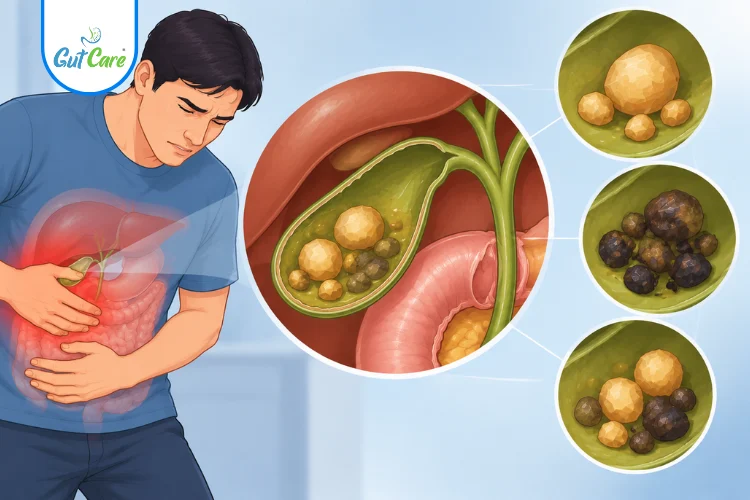
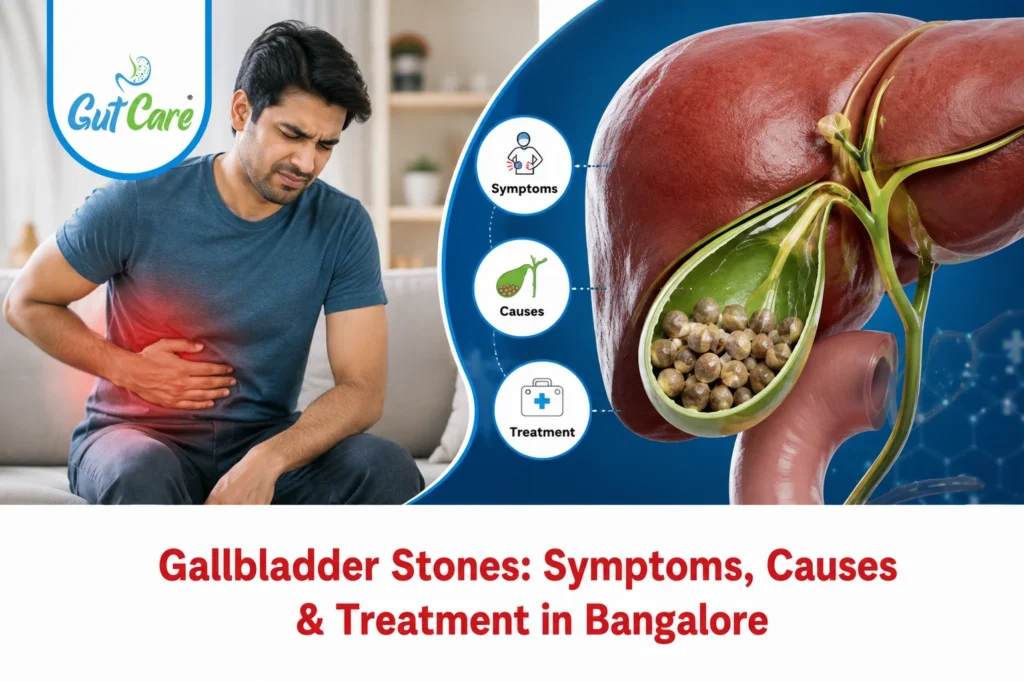
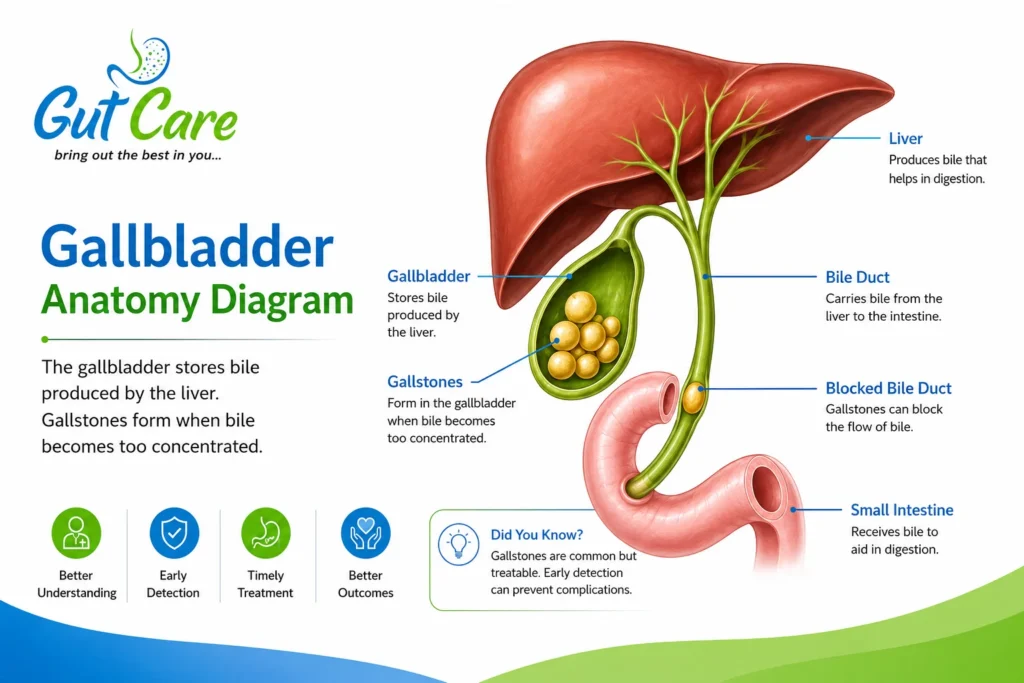
Gallbladder stones, also called gallstones, are hardened deposits that form inside the gallbladder, the small pear-shaped organ that sits just below your liver. They develop when substances in bile, mainly cholesterol or bilirubin, build up and crystallise over time.
In India, gallbladder stones are among the most common reasons patients visit a gut surgeon. In Bangalore, numbers have been rising steadily, driven by richer diets and more sedentary lifestyles.
How Gallbladder Stones Are Diagnosed in Bangalore?
More people in India have gallstones than most realise. A 2025 global meta-analysis published in Annals of Medicine found that roughly one in twenty people worldwide has gallbladder stones, with women, people over 50, and those with obesity, diabetes, or a family history of gallstones at higher risk.
In clinical practice, many patients in Bangalore discover gallstones accidentally during an ultrasound done for a different reason entirely. These are called silent stones. They often need no immediate treatment but do require monitoring. When stones start causing symptoms, patients seeking gallbladder stone surgery in Bangalore should get an early evaluation. The sooner it is done, the more straightforward the treatment.
“In my 30 years of practice, gallstone presentations have become increasingly common in younger patients, particularly those in desk-bound professions. Catching them early and treating them before complications develop makes a significant difference to outcomes.” – Dr. Yuvraj Singh Gehlot, Gastrointestinal, Laparoscopic and Colorectal Surgeon, GutCare Clinics Bangalore
Symptoms of Gallbladder Stones: What to Watch For
Symptoms vary from mild to severe depending on the size and position of the stones. The most common warning signs are:
• Sudden, sharp pain in the upper right side of the abdomen, often after a fatty meal
• Pain that spreads to the right shoulder or upper back
• Nausea and vomiting during or after a pain episode
• Bloating, indigestion, or a feeling of heaviness after eating
• Fever with chills if the gallbladder becomes infected (cholecystitis)
• Yellowing of the skin or whites of the eyes (jaundice) if a stone blocks the bile duct
• Dark urine or pale stools alongside jaundice
These episodes are called biliary colic. They tend to come on suddenly and can last anywhere from 30 minutes to several hours. Some patients describe the pain as one of the worst they have felt. If you experience severe pain, fever, or jaundice, seek medical attention the same day.
A note of caution: many of these symptoms overlap with acid reflux, liver problems, and other gut conditions. A proper diagnosis from a qualified gut surgeon is essential before any treatment decision is made.
What Causes Gallbladder Stones?
Gallstones form when the chemical balance of bile is disrupted. The main contributing factors are:
• Excess cholesterol in bile – the most common cause in India, producing yellowish stones
• High bilirubin levels – seen in liver disease or certain blood conditions, producing darker stones
• Gallbladder that does not empty fully or frequently enough
• Obesity or rapid weight loss
• A diet high in refined carbohydrates and low in fibre
• Prolonged fasting or irregular meal times
• Pregnancy and use of oral contraceptives in women
• Family history of gallstone disease
Women are about twice as likely as men to develop gallstones, particularly during and after pregnancy. In Bangalore, younger patients in sedentary IT roles are also presenting with gallstones more frequently, which doctors attribute to high-calorie diets and low physical activity.
How Gallbladder Stones Are Diagnosed in Bangalore
If a gut surgeon suspects gallstones based on your symptoms and medical history, the first step is an abdominal ultrasound. This is the most reliable and widely available test for detecting stones, and it can show the size, number, and position of stones as well as any signs of inflammation.
Additional tests may include:
• Blood tests to check for infection, liver function, or bile duct blockage
• CT scan for a more detailed picture if complications are suspected
• MRCP (magnetic resonance cholangiopancreatography) if stones in the bile duct are a concern
At GutCare Clinics, gallbladder stone surgery in Bangalore is recommended only after a thorough review of your scan findings, symptom history, and overall health.
Laparoscopic vs. Open Gallbladder Surgery: Key Differences
When surgery is required, most patients are candidates for laparoscopic cholecystectomy, the keyhole approach. Here is how it compares to traditional open surgery:
| Factor | Laparoscopic (Keyhole) Surgery | Open Surgery |
| Incisions | 3 to 4 small incisions of 5 to 10 mm each | One large incision of 10 to 15 cm |
| Hospital stay | Usually same day or next morning | 3 to 7 days |
| Pain after surgery | Minimal in most patients | More significant, longer to manage |
| Return to daily activity | 5 to 7 days for light activity | 4 to 6 weeks |
| Scarring | Very small marks that fade over time | Longer visible scar |
| When open surgery may be needed | Rarely — for severe inflammation or anatomy that makes keyhole unsafe | When laparoscopic conversion is necessary for safety |
Laparoscopic cholecystectomy is the gold standard worldwide and is the procedure Dr. Yuvraj Singh Gehlot performs most frequently.
What Happens During Laparoscopic Gallbladder Surgery: Step by Step
1. You will be placed under general anaesthesia so you feel nothing during the procedure.
2. The surgeon makes 3 to 4 small incisions in the abdomen, each less than 1 cm.
3. A thin camera called a laparoscope is passed through one incision, showing a magnified view of the gallbladder on a monitor.
4. Precision instruments are used to carefully separate the gallbladder from the liver and bile duct.
5. The gallbladder, along with all the stones inside it, is removed through one of the incisions.
6. The incisions are closed with sutures or surgical tape. Most patients go home the same day or the following morning.
Recovery Timeline After Laparoscopic Gallbladder Surgery
| Timeframe | What to Expect | Activity Level |
| Day 0 to 1 | Discharge same day or next morning; mild soreness at incision sites | Rest; short walks encouraged |
| Days 2 to 7 | Pain reduces significantly; light diet (low fat, easily digestible) | Light housework; avoid driving |
| Week 1 to 2 | Most symptoms resolve; return to desk work | Office or WFH work; no heavy lifting |
| Weeks 3 to 4 | Digestive system adapts; normal diet mostly restored | Physical jobs; moderate exercise with surgeon approval |
| 6 to 8 weeks | Full recovery for most patients | Back to full routine including exercise |
Life After Gallbladder Removal: What Patients in Bangalore Ask Most
One of the biggest concerns patients have is whether they can live normally without a gallbladder. The answer is yes. The liver continues to produce bile and release it directly into the small intestine. The gallbladder’s job is simply to store bile between meals, and the body adjusts to its absence quite well.
In the first few weeks after surgery, some patients notice looser stools or mild indigestion, especially after very fatty or spicy food. These symptoms settle as the body adapts.
When Should You See a Gut Surgeon in Bangalore?
Do not wait until symptoms become unbearable. See a gut surgeon if you experience any of the following:
• Recurring upper abdominal pain, especially after meals
• Pain episodes that last more than 30 minutes
• Nausea, vomiting, or fever with abdominal pain
• Yellowing of the skin or eyes
• You have been told you have gallstones on a scan but have not yet seen a specialist
Untreated gallstones that are causing symptoms can lead to complications including cholecystitis (gallbladder inflammation), bile duct blockage, pancreatitis, and in rare cases, gallbladder cancer. Early evaluation and treatment, when needed, prevents these outcomes.
FAQs
How do I know if my abdominal pain is from gallbladder stones?
The most common early sign is pain in the upper right side of the abdomen, often triggered by fatty foods. Many patients also experience bloating, nausea, and a feeling of fullness. Some people have stones without any symptoms at all. If pain becomes frequent or severe, consult a gut surgeon for an ultrasound and proper evaluation.
Can gallstones go away without surgery?
Silent gallstones that cause no symptoms may never need treatment. However, stones that are causing pain or other symptoms will not dissolve on their own in most cases. Medications like ursodeoxycholic acid can slowly shrink certain types of small cholesterol stones, but recurrence is common. Surgery remains the most reliable and permanent solution for symptomatic gallstones.
Is laparoscopic gallbladder surgery safe?
Laparoscopic cholecystectomy is one of the most performed and safest surgical procedures in the world. Complications are uncommon when the procedure is done by an experienced gut surgeon. Most patients go home the same day or the next morning. Your surgeon will discuss individual risks based on your health during your consultation.
What does recovery look like week by week?
Most patients resume light activity within 5 to 7 days of laparoscopic surgery and return to desk work within 1 to 2 weeks. Physical jobs or heavy lifting may require 3 to 4 weeks. Reducing very fatty foods in the first few weeks helps the digestive system adapt. See the recovery timeline table above for a full week-by-week breakdown.
Will I have to follow a special diet after gallbladder removal?
In the first four to six weeks, a low-fat, easily digestible diet is recommended. Most patients can return to a normal diet after that. A small number of people notice that very fatty or spicy foods cause loose stools even months after surgery. This usually settles with time. A balanced diet with adequate fibre and hydration supports a smooth adjustment.
What happens if symptomatic gallstones are left untreated?
Untreated symptomatic gallstones can lead to cholecystitis (gallbladder infection and inflammation), a blocked bile duct, acute pancreatitis, or rarely, gallbladder cancer. These complications often require emergency surgery and carry greater risks than planned laparoscopic removal. If you have been diagnosed with symptomatic gallstones, timely treatment is strongly advisable.
How much does laparoscopic gallbladder surgery cost in Bangalore?
The cost of gallbladder stone surgery in Bangalore varies depending on the hospital, the surgeon’s experience, and any additional investigations required. At GutCare Clinics, Dr. Yuvraj Singh Gehlot’s team will provide a clear, transparent cost estimate during your initial consultation. The clinic also assists patients with insurance queries where applicable.
Who is most likely to develop gallstones in India?
Women are significantly more likely than men to develop gallstones, especially during or after pregnancy. Other risk factors include being over 40, obesity, a high-fat or low-fibre diet, rapid weight loss, a family history of gallstones, diabetes, and sedentary habits. Rising gallstone rates in young urban professionals in Bangalore are linked to lifestyle and dietary changes.
Book a Consultation at GutCare Clinics, Bangalore
Gallbladder stones that are causing symptoms will not go away on their own. The longer you wait, the higher the risk of complications.
Dr. Yuvraj Singh Gehlot , GI and Laparoscopic Surgeon, 30 years in healthcare, 25 years of surgical practice, 25,000+ procedures, and 1,00,000+ patients treated in Bangalore, will review your scans, explain your options in plain language, and give you a clear treatment plan.
To learn more about gallbladder stone surgery in Bangalore, visit: https://www.gutcareclinics.com/appointment/
Book Your Appointment Now