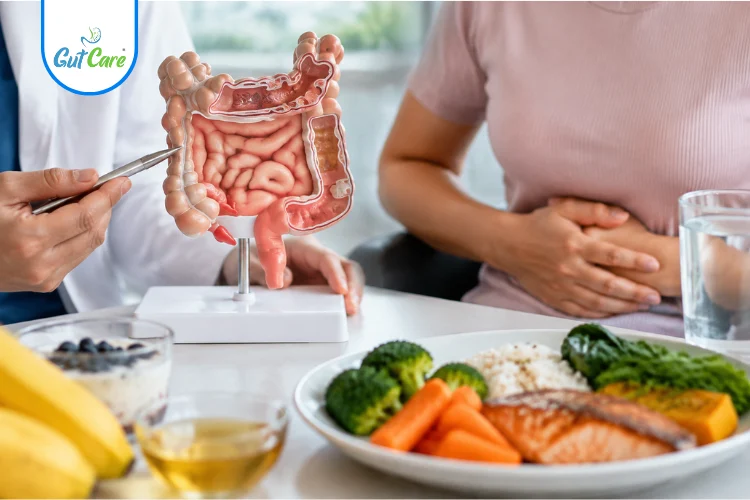

Bloating after every meal is one of the most common gut complaints in India, and one of the most misunderstood. You have cut out wheat. Then dairy. Then onions. Then almost everything. You have tried antacids, probiotic sachets from the pharmacy, and three different gastroenterologists. Every report comes back normal. And yet the bloating is still there, right after meals, sometimes even when you have barely eaten.
If this sounds familiar, you are not imagining it. If you experience bloating after every meal despite normal reports, the problem is rarely the food alone. The real cause often goes beyond the stomach itself, which is why so many people never get a clear answer.
The reason your symptoms are not responding is not because nothing is wrong. It is because the gut is not one system. It is five. And most treatment plans address only one at a time.
Why Bloating After Every Meal Involves More Than Your Stomach
When a patient walks in with chronic bloating, gas, loose stools, or cramping and a folder of normal reports, we do not look at just the bowel. We look at five connected systems that together decide how your gut behaves every single day.
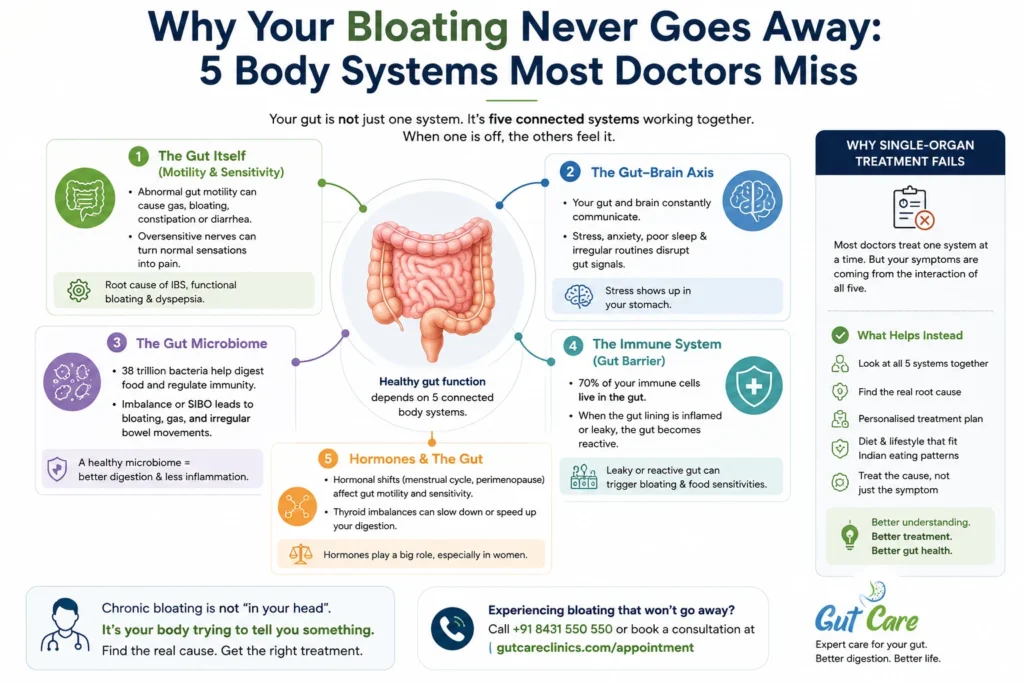
1. The gut itself (motility and sensitivity)
The muscles of the bowel need to contract in the right sequence and at the right speed to move food through. When this goes wrong, food sits too long in one place and ferments, which produces gas. Or it moves too fast and you get urgency and loose stools.
On top of this, the nerve endings inside the bowel can become oversensitive. A normal amount of gas that would go unnoticed in one person produces real, physical pain in another. This is not psychological. It is a measurable change in how gut nerves fire.
This is the root of most functional gut disease cases in India, including IBS, functional bloating, and functional dyspepsia. This is why bloating after every meal is often a motility problem, not a food problem, and why antacids rarely give lasting relief.
2. The gut-brain axis
Your gut has its own nervous system, sometimes called the second brain. It contains more nerve cells than your spinal cord. This system talks constantly with your brain, and the conversation goes both ways.
Stress, anxiety, poor sleep, and irregular schedules all change the signals your brain sends down to your gut. This is why exam stress causes stomach cramps in students, and why working professionals in cities like Bengaluru and Mumbai report their worst gut days during high-pressure weeks.
This is not stress making you imagine symptoms. This is neuroscience. The gut-brain axis is a physical pathway, and when it is dysregulated, it produces real digestive symptoms.
3. The gut microbiome
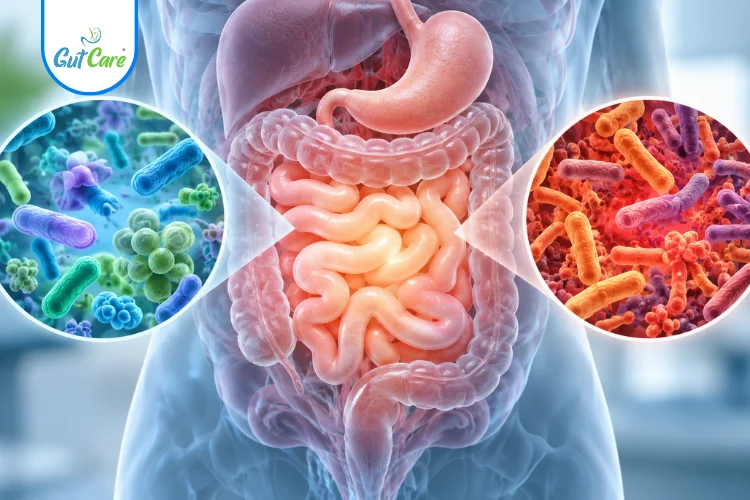
There are roughly 38 trillion bacteria living in your intestine. They help break down food, produce certain vitamins, and regulate inflammation. When the balance of these bacteria shifts, it affects digestion directly.
Small intestinal bacterial overgrowth, or SIBO, is one of the most underdiagnosed causes of bloating in India. Bacteria that should be in the large intestine end up in the small intestine and ferment carbohydrates before they are properly absorbed. The result is significant bloating, gas, and often alternating constipation and loose stools.
Many patients who come to us after years of unexplained bloating test positive for SIBO. It is treatable once identified. SIBO is one of the most common and underdiagnosed reasons for bloating after every meal in India, and it is fully treatable once identified through a simple breath test.
| Experiencing bloating that has not improved despite tests? Call +91 8431 550 550 or book a consultation at gutcareclinics.com. |
4. The immune system inside the gut
About 70 percent of your immune system lives in the lining of your gut. This lining acts as a barrier, deciding what gets absorbed into the bloodstream and what does not. When this barrier is inflamed or disrupted, even without a visible structural problem, the gut becomes reactive.
This is separate from diagnosed conditions like Crohn’s disease or ulcerative colitis. You can have a chronically reactive gut lining that no colonoscopy will flag, because the issue is at a microscopic level. Patients in this category often have food sensitivities that shift unpredictably, unlike true food allergies.
5. Hormones and the gut
This one is particularly relevant for women. Hormonal shifts during the menstrual cycle, perimenopause, and thyroid imbalances directly affect gut motility. Many women notice their IBS symptoms peak at specific points in their cycle. This is not coincidence.
Thyroid dysfunction is one of the first things we check when a patient presents with chronic constipation or diarrhoea with no other identifiable cause. An underactive thyroid slows the entire gut down. An overactive thyroid speeds it up.
Why single-organ treatment keeps failing
Standard medical care is built around organs. You see a gastroenterologist for the bowel. A psychiatrist for anxiety. An endocrinologist for the thyroid. A dietitian for food. But in functional gut disease, all five systems are involved at the same time. Treating only one without looking at the others is why so many patients cycle through specialists without getting better.
According to the Rome Foundation, functional gut disorders affect 40% of people globally and are significantly undertreated.
The right approach is to assess all five systems together, identify which are most dysregulated in that specific patient, and treat them in the right order. For most people, this means combining gut-directed therapy, microbiome work, dietary adjustment that makes sense for Indian eating patterns, and sometimes low-dose nerve-modulating medication.
It rarely means another endoscopy. Chronic bloating after every meal is your gut signalling that one or more of these five systems needs a proper assessment, not another elimination diet.
| If your gut symptoms have not been explained despite multiple tests, speak with our team at GutCare Clinics, Indiranagar, Bengaluru. Call +91 8431 550 550 |
Reviewed by Dr. Yuvraj Singh Gehlot, GI, Laparoscopic and Colorectal Surgeon, Gutcare Clinics Bangalore.