
When it comes to abdominal discomfort or unusual swelling in the groin area, one possible cause could be an Indirect Inguinal Hernia. This condition is more common than many realize and can lead to serious complications if left untreated. At Gutcare Clinics, Bangalore, Dr. Yuvrajsingh Gehlot, an experienced colorectal surgeon, provides expert diagnosis and advanced care for all types of hernias, including the Indirect Inguinal Hernia.
Understanding Indirect Inguinal Hernia
An Indirect Inguinal Hernia occurs when tissue, such as part of the intestine, protrudes through a weak spot in the lower abdominal wall near the inguinal canal. This canal is a passage in the lower abdomen where structures like blood vessels and the spermatic cord (in men) pass through.
This type of hernia is often congenital, meaning some people are born with a weakness in the abdominal wall. Unlike a direct inguinal hernia, which develops due to strain or aging, an indirect inguinal hernia can occur at any age.
Inguinal Hernia Meaning
The term “inguinal hernia” refers to a condition where a portion of tissue or intestine pushes through the inguinal canal. It’s one of the most common types of hernia seen in adults. Understanding this helps identify the indirect inguinal hernia symptoms early and seek timely treatment.
Common Causes of Indirect Inguinal Hernia
There are several reasons why an Indirect Inguinal Hernia can develop:
- Congenital weakness in the abdominal wall.
- Heavy lifting or intense physical activity.
- Chronic cough or straining during bowel movements.
- Obesity, which adds pressure on the lower abdomen.
- Family history of hernias or weak connective tissue.
People who engage in heavy physical labor or have long-term coughing or constipation are at higher risk.
Early Warning Signs and Symptoms
Recognizing indirect inguinal hernia symptoms early is crucial for effective treatment. Common warning signs include:
- Bulge or swelling in the groin area, which may increase when standing or coughing.
- Pain or discomfort in the groin, especially when bending or lifting.
- A heavy or dragging sensation in the lower abdomen.
- Swelling around the testicles in men.
- In severe cases, symptoms may worsen and cause nausea or vomiting if the hernia becomes obstructed.
If you notice a persistent bulge or pain, it’s essential to consult a colorectal surgeon promptly.
Types of Inguinal Hernia
Understanding the inguinal hernia types can help you differentiate between conditions:
- Indirect Inguinal Hernia – Caused by a congenital defect where abdominal contents push through the internal inguinal ring.
- Direct Inguinal Hernia – Usually develops with age due to weakened abdominal muscles.
- Bilateral Inguinal Hernia – Occurs on both sides of the groin.
Among these, the Indirect Inguinal Hernia is more common in younger individuals and men.
Diagnosis and Medical Evaluation
At Gutcare Clinics, Bangalore, diagnosis typically begins with a physical examination. Dr. Yuvrajsingh Gehlot may recommend imaging tests such as an ultrasound or CT scan to confirm the presence of an Indirect Inguinal Hernia and evaluate its severity. Early diagnosis helps prevent complications like strangulation, where the herniated tissue loses blood supply, leading to a medical emergency.
Treatment Options for Indirect Inguinal Hernia
The main treatment for an Indirect Inguinal Hernia is surgical repair, which can be performed through:
1. Open Hernia Repair (Herniorrhaphy)
The surgeon makes an incision in the groin area to push back the protruding tissue and strengthen the abdominal wall with sutures or mesh.
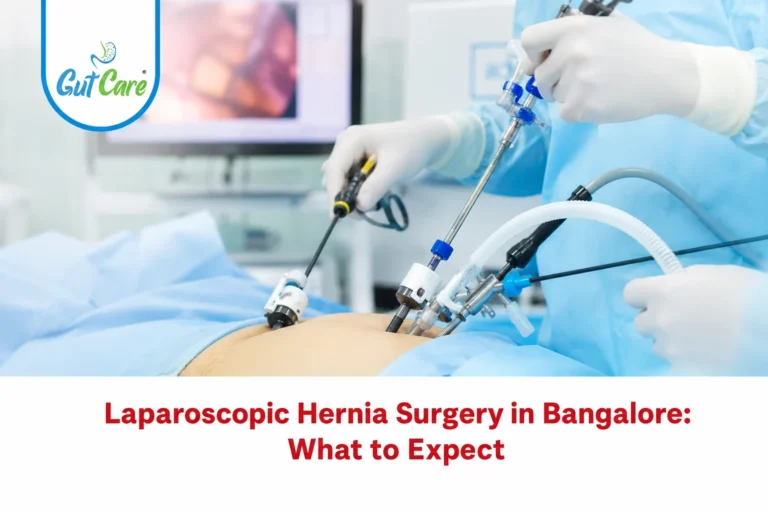
2. Laparoscopic Hernia Repair
A minimally invasive method using small incisions and a camera for faster recovery, less pain, and minimal scarring.
Post-surgery, patients are advised to avoid heavy lifting and follow a proper recovery plan to prevent recurrence.
Complications if Left Untreated
Ignoring Indirect Inguinal Hernia symptoms can lead to complications such as:
- Incarceration: The herniated tissue gets trapped and cannot be pushed back.
- Strangulation: The blood flow to the trapped tissue is cut off, causing severe pain and potential tissue damage.
Both are medical emergencies that require immediate attention.
Prevention Tips
While not all hernias can be prevented, you can reduce the risk by following these steps:
- Maintain a healthy weight to reduce abdominal strain.
- Avoid heavy lifting without proper technique.
- Manage chronic cough or constipation with medical advice.
- Engage in core-strengthening exercises to improve abdominal wall support.
Preventive care and regular health checkups at Gutcare Clinics can help detect early signs and manage symptoms effectively.
When to Consult a Specialist
If you suspect an Indirect Inguinal Hernia, don’t delay medical evaluation. Dr. Yuvrajsingh Gehlot, a renowned colorectal surgeon at Gutcare Clinics, Bangalore, provides personalized treatment plans and advanced surgical care to ensure complete recovery. Timely diagnosis and treatment not only relieve discomfort but also prevent future complications.
Conclusion
An Indirect Inguinal Hernia is a common but treatable condition. Recognizing the early warning signs and seeking expert care at Gutcare Clinics can make all the difference. Whether it’s mild discomfort or visible swelling, it’s best to act early and consult a specialist like Dr. Yuvrajsingh Gehlot for proper guidance, diagnosis, and recovery support.
Frequently Asked Questions (FAQs)
1. What are the early symptoms of Indirect Inguinal Hernia?
Early symptoms include a noticeable bulge in the groin, discomfort when lifting or bending, and a feeling of heaviness in the lower abdomen.
2. How is an Indirect Inguinal Hernia different from a Direct Hernia?
An Indirect Inguinal Hernia is congenital, while a Direct Hernia develops with age due to muscle weakness.
3. Can an Indirect Inguinal Hernia heal without surgery?
No, once a hernia has formed, surgery is the only definitive treatment. However, early consultation can prevent complications.
4. What are the complications of untreated Indirect Inguinal Hernia?
If untreated, it may lead to incarceration or strangulation, both of which require emergency medical attention.
5. Does Gutcare Clinics in Bangalore treat Indirect Inguinal Hernia?
Yes, Gutcare Clinics, led by Dr. Yuvrajsingh Gehlot, offers expert diagnosis, surgical repair, and recovery care for Indirect Inguinal Hernia patients.