Many people experience some form of discomfort around their lower digestive area at some point in their lives, yet very few know exactly what is causing it. Two conditions that are commonly confused with each other are a fissure and a fistula. Both affect a similar part of the body, both can cause ongoing discomfort, and both are very treatable when identified correctly. Understanding the difference between fissure vs fistula is the first step toward getting the right care.
At Gutcare Clinics in Indiranagar, Bangalore, our proctology specialists speak with patients about this distinction every day. This guide explains both conditions clearly, helps you recognise which one you may be dealing with, and shows you when the right time is to seek proper support.
“ Recognize fissure vs fistula symptoms early and book consultation today.”
What Is a Fissure?
A fissure is a small tear or crack that develops in the soft tissue lining of the lower digestive passage. It is one of the most common reasons people experience sharp discomfort during or after using the bathroom, and it tends to be most noticeable when passing stools that are hard or difficult.
Fissures are extremely common and can affect people of all ages. In many cases they are mild and improve with simple care, but when they become persistent or keep returning, they benefit from a proper assessment and targeted treatment.
Common Signs of a Fissure
• A sharp or stinging sensation when using the bathroom
• Mild spotting on tissue paper after a visit to the bathroom
• A sense of tightness or lingering discomfort after using the bathroom
• Itching or irritation around the lower area between bathroom visits
Learn how fissures are identified and assessed: Fissure Diagnosis Methods – A Patient Guide
What Is a Fistula?
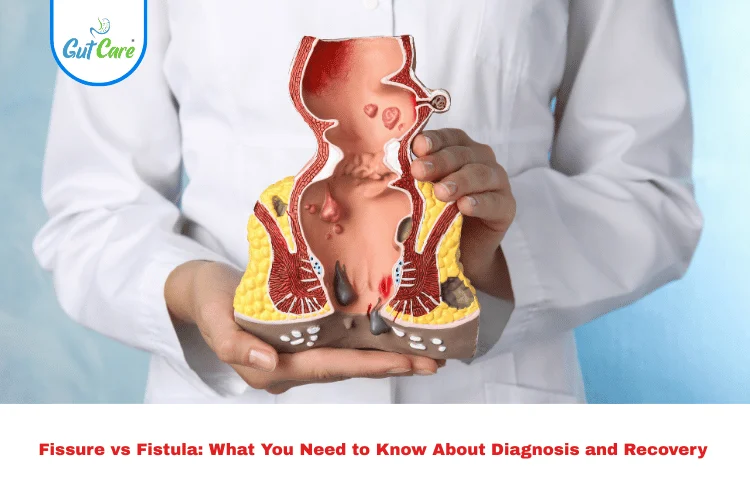
A fistula is a small tunnel that forms between the inside of the lower digestive passage and the surrounding skin on the outside. This tunnel develops when a small pocket of infection near the lower digestive passage does not heal fully and instead creates a persistent channel.
Unlike a fissure, which sits on the surface of the tissue, a fistula involves a deeper pathway within the body. This is why fistulas tend to be more persistent and generally require a specialist assessment rather than home management alone. Fistula treatment in Bangalore is something our team at Gutcare Clinics handles regularly, and outcomes are very positive when care is sought promptly.
Common Signs of a Fistula
• A persistent or recurring area of swelling or tenderness near the lower passage
• A small opening visible on the skin near the lower area that appears to be draining
• Ongoing discomfort in the lower digestive area that does not fully settle
• A general sense of heaviness or pressure around the lower area that does not go away
Fissure vs Fistula: The Key Differences at a Glance
Now that we have looked at each condition separately, here is a clear side-by-side comparison of fissure vs fistula to help you understand what sets them apart:
Location and Structure
A fissure is a surface-level tear in the tissue lining. A fistula is a deeper channel or tunnel that runs from inside the digestive passage to the outer skin. This fissure vs fistula structural difference is the most fundamental distinction between fissure vs fistula.
Main Symptom
A fissure typically causes a sharp, noticeable discomfort that is most intense during or immediately after using the bathroom. A fistula tends to cause a more persistent, low-level discomfort or pressure that continues throughout the day and does not settle in the way a fissure might between bathroom visits.
How Long They Last
Mild fissures sometimes improve on their own with dietary changes and proper hydration. A fissure vs fistula because of its deeper structure, very rarely resolves without some form of specialist involvement. If you suspect a fistula, early attention from a gastroenterologist or proctology specialist in Indiranagar is always the right move.
Which Is More Serious?
Both fissure vs fistula conditions deserve proper attention, but in terms of complexity, a fistula is generally considered more involved than a fissure. A fistula requires a specialist assessment to understand its structure before treatment can begin, whereas many fissures respond well to straightforward care. That said, a chronic or recurring fissure that has been ignored for a long time can also become more complex over time.
For a detailed comparison with clear visuals: Fissure vs Fistula: What Is the Difference?
When Should You See a Specialist for Fissure vs Fistula?
A common question our team hears is: how do I know when to stop managing this at home and actually see someone? Understanding the difference between fissure vs fistula can help identify symptoms more accurately. Here are some clear signals that it is time to book a consultation:
• Your discomfort has been present for more than two to three weeks with no improvement
• You notice a small area of skin near the lower passage that appears to be persistently tender or draining
• Your symptoms improve temporarily but keep returning over several weeks or months
• The discomfort is affecting your daily routine, your comfort when sitting, or your sleep
• You are unsure whether what you have is a fissure or a fistula and want a proper answer
In all of these situations, a visit to a proctology specialist is the right step. Getting a clear diagnosis early means simpler treatment and a faster path to feeling better. Understanding fissure vs fistula can also help patients recognize symptoms and seek the appropriate care sooner.
Not sure which condition you have? Our gastroenterologist team in Indiranagar can give you clarity quickly. Book a consultation at Gutcare Clinics.
A Brief Patient Example
Rajan, a 38-year-old professional from Bangalore, had been dealing with recurring discomfort for nearly five months. He assumed it was a fissure and managed it with home remedies. When he finally visited Gutcare Clinics, a proper assessment revealed it was actually an early-stage fistula. With targeted fistula treatment in Bangalore guided by Dr. Yuvraj Singh Gehlot, Rajan experienced significant relief within a few weeks. “I had no idea there was such a difference between the two,” he said. “Getting properly checked changed everything.”
Treatment Options for Fissure vs Fistula at Gutcare Clinics
Fissure Treatment in Bangalore
For most fissures, treatment begins with dietary adjustments to ensure stools are softer and easier to pass, combined with simple topical care and hydration guidance. For fissures that have become persistent or chronic, a gentle in-clinic procedure can provide lasting relief without the need for a hospital stay.
Fistula Treatment in Bangalore
Fistulas generally require a specialist-led approach that begins with a thorough assessment of the tunnel’s pathway. At Gutcare Clinics, our proctology team uses minimally invasive methods wherever possible, focusing on complete resolution with the most comfortable and least disruptive approach for each patient.
Explore the full comparison of both conditions and treatment pathways: Difference Between Fissure and Fistula – Gutcare Guide
Meet our lead specialist : Dr. Yuvraj Singh Gehlot, Gutcare Clinics
Fissure vs Fistula: Get the Right Answer Today
Understanding fissure vs fistula is the most important step you can take if you have been dealing with ongoing discomfort in your lower digestive area. Both conditions are very treatable, and both respond best when identified and addressed early. Whether you are dealing with a fissure, a fistula, or simply are not sure which one it is, a specialist consultation is the clearest and most reassuring path forward.
At Gutcare Clinics in Indiranagar, Bangalore, our warm and experienced proctology team is here to help you get the right diagnosis, understand your options, and feel better as smoothly and quickly as possible. You deserve clarity and proper care, and we are ready to provide both.
Book Your Consultation at Gutcare Clinics, Bangalore
Find us: Gutcare Clinics, Indiranagar, Bangalore | Meet Dr. Yuvraj Singh Gehlot
Frequently Asked Questions
1. Can a fissure turn into a fistula if left untreated?
A fissure and a fistula are separate conditions that develop differently. However, leaving a fissure unattended for a long time can sometimes lead to complications. Early attention is always the simpler and more comfortable path.
2. Is fistula treatment in Bangalore available without major surgery?
Yes. At Gutcare Clinics, we use minimally invasive approaches wherever appropriate, with most patients experiencing a straightforward recovery and no hospital stay required.
3. How do I know if I have piles, a fissure, or a fistula?
The symptoms of these three conditions overlap in some ways, which is why a specialist assessment is so valuable. A brief consultation with our proctology team in Indiranagar will give you a clear and accurate diagnosis quickly.
4. Are fissures and fistulas common in Bangalore?
Yes, both are seen very regularly at Gutcare Clinics. Factors like diet, a sedentary lifestyle, and irregular bowel habits all contribute, and our team has extensive experience managing both conditions effectively.
5. How do I support my recovery after treatment?
Diet plays a key role. Staying hydrated, eating fibre-rich foods, and building regular gentle movement into your day all help recovery and reduce the likelihood of recurrence.