Finding out that you have a colon polyp during a colonoscopy can naturally raise an important question: Can colon polyps turn into cancer?
The short answer is no, not all colon polyps become cancer. Some types have little or no potential to become cancerous, while others can develop abnormal changes over time and may eventually become cancer if they are not identified and managed appropriately.
Understanding the type of polyp, its size, number, and what the laboratory examination shows can help explain what the finding means for you. Gutcare Clinics in Bangalore provides evaluation and colorectal care for people concerned about colon polyps, bowel symptoms, and colon health.
If you have been diagnosed with a colon polyp or advised to undergo further evaluation, consider discussing the finding with a gastroenterology or colorectal specialist at Gutcare Clinics in Bangalore.
Book Your Consultation Today
What Are Colon Polyps?
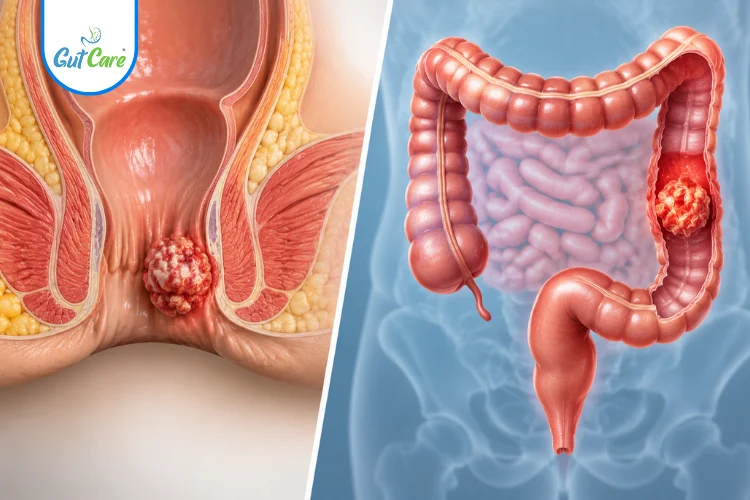
Colon polyps are growths that develop on the inner lining of the colon. They can vary in size, shape, and type.
Some polyps are small and harmless. Others can contain cells with changes that may have the potential to progress toward cancer over time.
A colon polyp is not automatically cancer. In many cases, a polyp is discovered before it has caused any serious problem, which is one reason colon evaluation and appropriate follow-up can be important.
Do can colon polyps turn into cancer?
No. Colon polyps do not always turn into cancer.
The risk depends largely on the characteristics of the polyp and the findings from its examination.
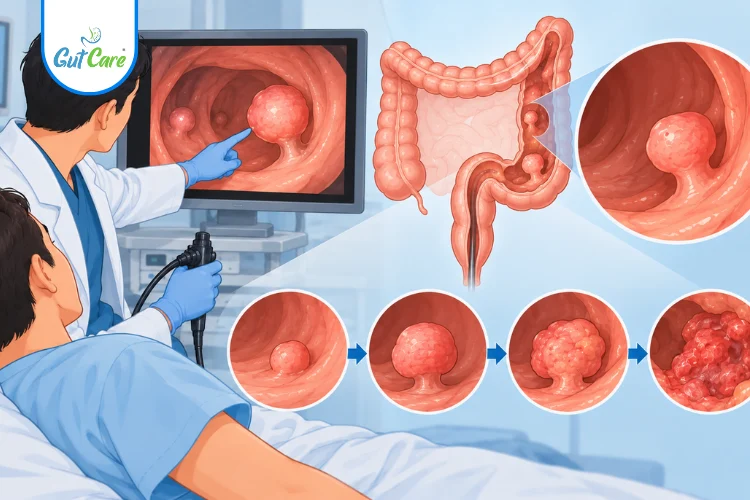
Some polyps are considered low-risk and are unlikely to develop into cancer. Others are described as precancerous because they contain changes that can potentially progress over time.
The important point is that simply hearing the word “polyp” does not mean that cancer is present.
Which Types of Colon Polyps Can Be Precancerous?
Different types of polyps can have different levels of concern.
Adenomatous polyps
Adenomas are a type of polyp that can contain abnormal cell changes. Some adenomas can gradually develop further changes, which is why they may be removed when found.
Serrated polyps
Serrated lesions are another group of colon polyps. Certain types can have precancerous potential, depending on their characteristics.
Hyperplastic polyps
Some hyperplastic polyps, particularly when small, generally have a much lower concern for cancerous progression. However, the location, size, number, and overall pathology findings still matter.
This is why the type of colon polyp is important when determining what happens next.
What Determines the Cancer Risk of a Colon Polyp?
A doctor does not usually assess a polyp based on its name alone. Several features may be considered.
Size of the polyp
Larger polyps can require closer attention than very small ones. Size is one of the factors considered alongside the pathology report and other findings.
Number of polyps
Finding several polyps may influence the recommended follow-up approach. The total number and types of polyps can provide useful information about future monitoring.
Type of polyp
The pathology report can identify whether the polyp is an adenoma, serrated lesion, hyperplastic polyp, or another type.
Cell changes
Pathology may describe abnormal changes in the cells, sometimes using terms such as dysplasia. The degree of these changes can help determine how concerning the finding is.
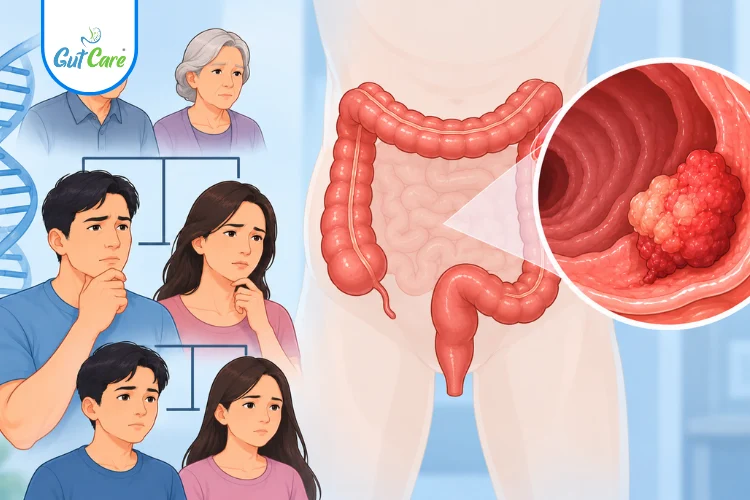
Personal and family history
A history of previous colon polyps or certain bowel cancers in close family members may also be relevant when planning future screening or follow-up.
Can a Colon Polyp Be Cancerous?
Yes, a polyp and cancer are not always completely separate findings.
A polyp can sometimes contain cancerous changes, particularly when abnormal cells have progressed beyond earlier stages. However, this cannot be determined simply by looking at a polyp or based on symptoms alone.
When a polyp is removed during colonoscopy, the tissue can be examined to determine its characteristics.
The pathology report is therefore an important part of understanding what the polyp means.
What Happens When a Colon Polyp Is Found?
If a polyp is identified during a colonoscopy, the next step depends on factors such as its appearance, size, location, number, and whether it can be safely removed during the procedure.
Polyp removal
Many colon polyps can be removed during colonoscopy. Removing a polyp allows the tissue to be examined and can prevent that particular polyp from remaining in the colon.
Pathology examination
The removed tissue may be sent for laboratory examination. The report can identify the type of polyp and whether abnormal cell changes are present.
Follow-up planning
The recommended follow-up depends on the pathology findings and the individual’s overall risk factors. Some people may need another colon examination sooner than others.
This is why it is important not to assume that every person with a colon polyp needs the same follow-up schedule.
If you have received a colonoscopy or pathology report and are unsure what your colon polyp findings mean, consult a specialist at Gutcare Clinics in Bangalore for an appropriate evaluation and explanation of the next steps.
Do Colon Polyps Cause Symptoms?
Many colon polyps may not cause noticeable symptoms, particularly when they are small.
When symptoms do occur, they can vary and may include:
- Blood in or on the stool
- Changes in bowel habits
- Persistent changes in stool pattern
- Abdominal discomfort
- Unexplained changes related to bowel function
These symptoms can occur for many different reasons and do not necessarily mean that a person has a colon polyp or colon cancer.
If you notice persistent or concerning bowel symptoms, medical evaluation can help determine the underlying cause.
How Are Colon Polyps Detected?
Colonoscopy is one way doctors can directly examine the lining of the colon and identify polyps.
During the procedure, a specialist can examine the colon for abnormal growths. When appropriate, polyps may be removed during the same procedure for further examination.
Other tests may sometimes be considered depending on a person’s symptoms, medical history, and screening needs.
The right approach depends on individual circumstances rather than a single test being suitable for everyone.
Can Colon Polyps Be Prevented?
There is no way to guarantee that a person will never develop a colon polyp. However, paying attention to colorectal health and following an appropriate screening or follow-up plan can help identify abnormalities earlier.
If you have previously had a colon polyp, do not ignore the follow-up advice given after your examination. The appropriate interval can depend on the type and characteristics of the polyp.
It is also useful to discuss any significant family history of bowel conditions or colorectal cancer with your doctor.
When Should You See a Doctor About Colon Polyps?
Consider speaking with a doctor if:
- You have been told that a colon polyp was found.
- Your pathology report mentions abnormal or precancerous changes.
- You have a history of recurrent colon polyps.
- You notice persistent blood in your stool.
- You experience ongoing changes in bowel habits.
- You have concerns about your personal or family history of colorectal conditions.
- You are unsure when you should have your next colon evaluation.
The goal is not to assume the worst. It is to understand what the finding means and make sure appropriate follow-up is not missed.
The Bottom Line: Are Colon Polyps Always Cancerous?
No, colon polyps do not always turn into cancer.
Some polyps have little potential for progression, while others can contain changes that may become more concerning over time. The type, size, number, location, and pathology findings all help determine the significance of a polyp.
If a colon polyp has been found, the most useful step is to understand the pathology report and follow the recommended plan for evaluation or surveillance rather than assuming that every polyp is cancerous.
Concerned about colon polyps, abnormal colonoscopy findings, or ongoing bowel symptoms?
Find us here:Gutcare Clinics, Indiranagar, Bangalore | Dr. Yuvraj Singh Gehlot, Digestive Health Specialist
FAQs
Is every colon polyp precancerous?
No. Colon polyps can be different types, and not every type has the same potential to develop into cancer. The pathology findings help determine the significance of a particular polyp.
Can a small colon polyp turn into cancer?
Some small polyps can contain abnormal changes, but size alone does not determine cancer risk. The type and microscopic characteristics of the polyp are also important.
How fast can colon polyps become cancer?
There is no single timeframe that applies to every colon polyp. Different types of polyps can behave differently, and some may never progress to cancer.
Can a colon polyp be cancerous?
Yes. A polyp can sometimes contain cancerous cells. The tissue examination after removal helps determine whether cancerous changes are present.
What happens after a colon polyp is removed?
The removed tissue is generally examined to identify the type of polyp and any abnormal cell changes. Based on those findings, a doctor can recommend an appropriate follow-up plan.
Do colon polyps cause symptoms?
Many colon polyps do not cause noticeable symptoms. When symptoms occur, they may include blood in the stool or changes in bowel habits, although these symptoms can have several possible causes.
Should I worry if my colonoscopy found a polyp?
Finding a polyp does not automatically mean that you have cancer. The type, size, number, and pathology findings provide more useful information about what the finding means and whether further monitoring is needed.