A burning feeling in the chest after eating can be uncomfortable and confusing. You may wonder whether it is gas, acidity, indigestion, or something that needs more attention. Digestive issues such as acid reflux and heartburn can cause chest burning, but chest symptoms should not automatically be labelled as “gas” because heart-related problems can sometimes feel similar.
This guide explains common reasons for chest burning after meals, the differences between digestive and heart-related symptoms, and when a medical consultation may be appropriate. If you are looking for digestive health guidance in Bangalore, Gutcare Clinics can help you discuss recurring symptoms and possible causes.
If burning in your chest after eating keeps returning, Book Your Consultation Today
What Can Cause Burning in Chest After Eating?
Chest burning after eating can have several possible causes. The timing of symptoms, food intake, other symptoms, and health history can all provide useful context.
Acid reflux and heartburn
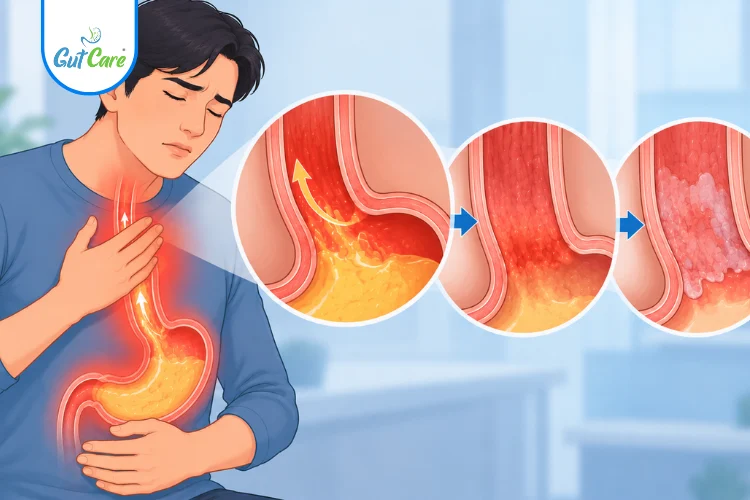
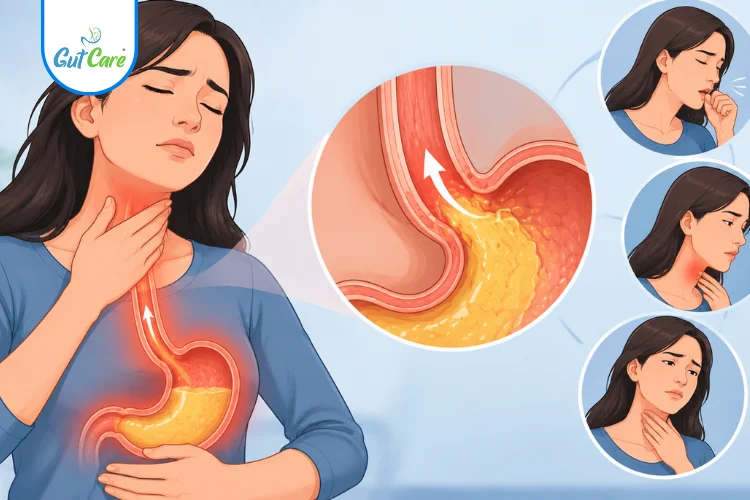
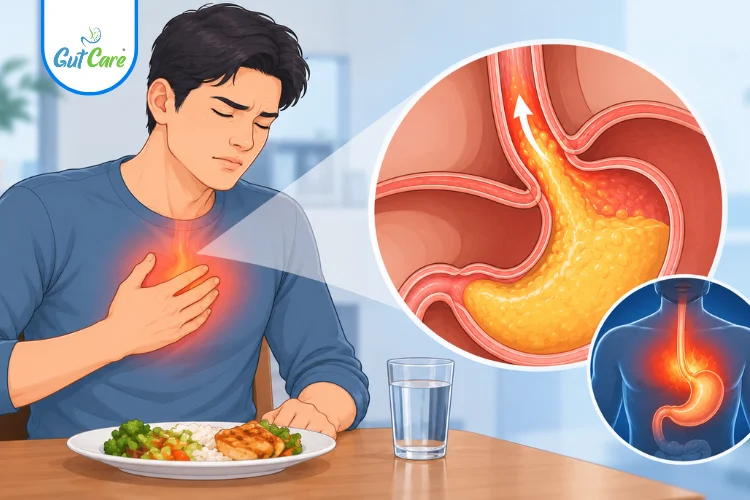
Acid reflux occurs when stomach contents move back towards the food pipe. This can cause a burning sensation behind the breastbone, commonly called heartburn.
It may become more noticeable after a large meal or when lying down soon after eating. Some people also notice a sour or bitter taste, belching, or discomfort that seems to move from the upper abdomen towards the chest.
Indigestion
Indigestion can cause upper abdominal discomfort, fullness, bloating, belching, or burning. Because these sensations can occur around the chest or upper abdomen, they may sometimes be described simply as chest discomfort.
Gas and bloating
Gas can cause pressure, fullness, bloating, belching, and abdominal discomfort. When discomfort is felt high in the abdomen, it may be interpreted as chest pressure or burning.
However, “gas” is not the only possible explanation for burning after eating. New, unusual, persistent, or concerning chest symptoms should not be self-labelled as gas.
Is Burning in the Chest After Eating Usually Gas?
Not necessarily. People often use the word “gas” to describe several digestive symptoms, including bloating, belching, indigestion, and reflux.
A burning sensation behind the breastbone after a meal may fit a heartburn or acid reflux pattern more closely than trapped gas alone. Still, symptoms can overlap, so one symptom cannot reliably identify the cause.
A digestive pattern may be more noticeable when symptoms:
- Start during or after eating
- Follow a large meal
- Occur with bloating or belching
- Come with a sour or bitter taste
- Become more noticeable when lying down
These patterns can help a clinician understand the symptoms, but they do not confirm a diagnosis.
How Is Heartburn Different From a Heart Problem?
The term “heartburn” can be misleading. It describes a burning sensation in the chest and does not mean that the heart is causing it.
Digestive burning may have a relationship with meals and may occur with reflux, belching, bloating, or a sour taste. Heart-related chest discomfort can present differently, but the symptoms can overlap.
Chest symptoms that should not be dismissed as gas
Pay attention to chest discomfort that is:
- New, severe, or unusual for you
- Associated with pressure, squeezing, or tightness
- Accompanied by shortness of breath
- Associated with sweating, faintness, or significant dizziness
- Accompanied by unusual weakness or nausea
- Spreading towards the arm, shoulder, back, neck, or jaw
- Occurring with exertion or without a clear digestive trigger
These symptoms can have different causes, but they should not simply be assumed to be gas. If you have severe or concerning chest symptoms, seek urgent medical attention rather than trying to determine the cause yourself.
Why Does Chest Burning Happen After Eating?
The timing of symptoms can provide useful clues about the digestive pattern.
Large meals
A large meal can leave the stomach feeling very full and may make reflux or indigestion more noticeable.
Lying down after eating
Lying down soon after a meal can make reflux symptoms more noticeable for some people.
Individual food triggers
Some people notice symptoms after particular foods or drinks. Spicy or fatty foods, large meals, alcohol, coffee, or other individual triggers may be associated with symptoms in some people. Triggers vary from person to person.
Eating quickly
Eating quickly may contribute to swallowing more air and can increase belching or bloating in some people.
What Should You Do If Burning Keeps Happening After Meals?
If chest burning repeatedly occurs after eating, keep track of the pattern. This information can make a medical consultation more useful.
Note:
- When the burning starts
- What and how much you ate
- Whether you had bloating or belching
- Whether there was a sour or bitter taste
- Whether symptoms occurred while lying down
- How long the discomfort lasted
- Whether breathlessness, sweating, dizziness, or pain elsewhere occurred
Avoid repeatedly assuming that unexplained chest discomfort is “just gas” when symptoms continue or change.
If recurring chest burning is affecting your meals or daily routine, Gutcare Clinics in Bangalore can provide a consultation focused on your digestive symptoms and possible causes.
Find us here:Gutcare Clinics, Indiranagar, Bangalore | Dr. Yuvraj Singh Gehlot, Digestive Health Specialist
When Should You Consult a Doctor for Chest Burning?
A consultation can be useful when burning is frequent, recurring, unexplained, or interfering with normal activities.
It is also worth discussing the symptoms with a doctor if:
- Burning keeps returning despite changes in your eating pattern
- Symptoms frequently occur at night
- You regularly experience reflux or a sour taste
- You have persistent bloating or indigestion
- Symptoms are becoming more frequent or feel different from before
- You are unsure whether the discomfort is digestive or something else
A clinician may review your symptoms, eating pattern, medical history, and other relevant information before deciding whether further evaluation is appropriate.
Gas, Acid Reflux, or Heart Problem: Why the Difference Matters
The key point is simple: not every type of chest discomfort is gas.
- Gas or bloating: Pressure, fullness, belching, or upper abdominal discomfort may be prominent.
- Acid reflux or heartburn: Burning behind the breastbone, particularly around meals, may be noticeable.
- Indigestion: Upper abdominal discomfort, fullness, bloating, or burning may occur after eating.
- Heart-related causes: Pressure, tightness, or discomfort may occur with symptoms such as breathlessness, sweating, dizziness, or discomfort spreading to other areas.
This comparison is only a general guide. Symptoms can overlap, and medical assessment may be needed when the cause is uncertain.
How Gutcare Clinics Can Help With Digestive Symptoms in Bangalore
Recurring burning, reflux, bloating, or indigestion can affect eating habits and everyday comfort. A consultation can help organise the symptom pattern and determine whether further evaluation may be appropriate.
Gutcare Clinics provides digestive health consultations in Bangalore for people experiencing gastrointestinal symptoms. Discussing the complete pattern is more useful than assuming every episode of chest burning is gas.
Final Takeaway
Burning in the chest after eating can be associated with acid reflux, heartburn, indigestion, or bloating. However, it should not automatically be called gas, particularly when it is new, unusual, severe, or accompanied by concerning symptoms.
Pay attention to when the symptom occurs and what other symptoms appear with it. If the cause is unclear or the problem keeps returning, consider a professional consultation.
If you are experiencing recurring burning in the chest after eating and want to discuss your digestive symptoms, contact Gutcare Clinics in Bangalore for a consultation.
FAQs
Is burning in the chest after eating caused by gas?
It can be related to gas, bloating, indigestion, or acid reflux. However, chest burning should not automatically be assumed to be gas, especially when it is new, severe, unusual, or accompanied by other symptoms.
How can I tell if chest burning is acid reflux?
Burning around meals with a sour taste, belching, or a sensation of stomach contents coming back up can fit a reflux pattern. These symptoms alone cannot confirm the cause.
Can heart problems feel like gas or indigestion?
Yes. Heart-related chest discomfort can sometimes resemble indigestion or gas. New or unusual pressure, tightness, breathlessness, sweating, dizziness, or discomfort spreading to the arm, back, neck, or jaw should not be dismissed as gas.
Why does my chest burn when I lie down after eating?
Lying down soon after a meal can make reflux symptoms more noticeable for some people. If this happens repeatedly, discuss the pattern with a doctor.
When should I see a doctor for burning in my chest after eating?
Consider a consultation when the symptom keeps returning, is unexplained, changes over time, or interferes with daily life. Severe or concerning chest symptoms, particularly with breathlessness, sweating, faintness, significant dizziness, or spreading pain, require urgent medical attention.