

Stomach discomfort, burning sensations, bloating, nausea, and recurring abdominal pain are common digestive complaints. However, many people confuse gastritis and ulcers because their symptoms can feel similar. While both conditions affect the stomach lining, they are different in terms of causes, severity, and treatment approach.
Understanding the difference between gastritis vs ulcer can help you identify symptoms early and seek appropriate medical guidance. At Gutcare Clinics, Bangalore, our gastroenterology specialists focus on accurate diagnosis and personalized digestive care to help patients manage stomach-related concerns effectively.
If you experience recurring acidity, stomach pain, or digestive discomfort, consult a specialist to understand the underlying cause.
Looking for expert digestive care in Bangalore?
Book an appointment Today!
What Is Gastritis?
Gastritis refers to inflammation or irritation of the stomach lining. The stomach naturally produces acids that help digest food, but a protective mucus layer prevents these acids from damaging the stomach wall.
When this protective barrier becomes weak or the stomach lining gets irritated, inflammation can occur, leading to gastritis.
Gastritis may develop suddenly (acute gastritis) or continue for a longer period (chronic gastritis).
Common Causes of Gastritis
Several factors can contribute to gastritis, including:
- H. pylori bacterial infection, which can affect the stomach lining
- Long-term use of certain pain-relieving medicines such as NSAIDs
- Excessive alcohol consumption
- Smoking
- Chronic stress
- Autoimmune conditions affecting stomach cells
- Irregular eating patterns
Common Gastritis Symptoms
Symptoms may vary depending on the severity of inflammation. Common signs include:
- Burning or discomfort in the upper abdomen
- Nausea or vomiting
- Feeling full quickly after eating
- Bloating
- Loss of appetite
- Frequent indigestion
- Burping or stomach discomfort
Some people with gastritis may have mild symptoms, while others may experience persistent digestive issues.
What Is a Stomach Ulcer?
A stomach ulcer, also known as a gastric ulcer, is an open sore that develops on the inner lining of the stomach. Unlike gastritis, which involves inflammation, an ulcer involves actual damage or erosion of the stomach lining.
Ulcers are a type of peptic ulcer disease and can occur when stomach acid damages the protective lining.
Common Causes of Stomach Ulcers
The most common causes of stomach ulcers include:
- H. pylori infection
- Long-term use of NSAID medications
- Increased acid exposure in the stomach
- Smoking
- Certain lifestyle factors that affect stomach health
Common Symptoms of Stomach Ulcers

Symptoms of a stomach ulcer may include:
- Burning stomach pain
- Pain that changes with eating patterns
- Persistent indigestion
- Nausea
- Vomiting
- Loss of appetite
- Unexplained weight loss
- Dark or tar-like stools due to bleeding in some cases
Severe symptoms such as vomiting blood, black stools, or sudden intense abdominal pain require immediate medical attention.
Gastritis vs Ulcer: Key Differences
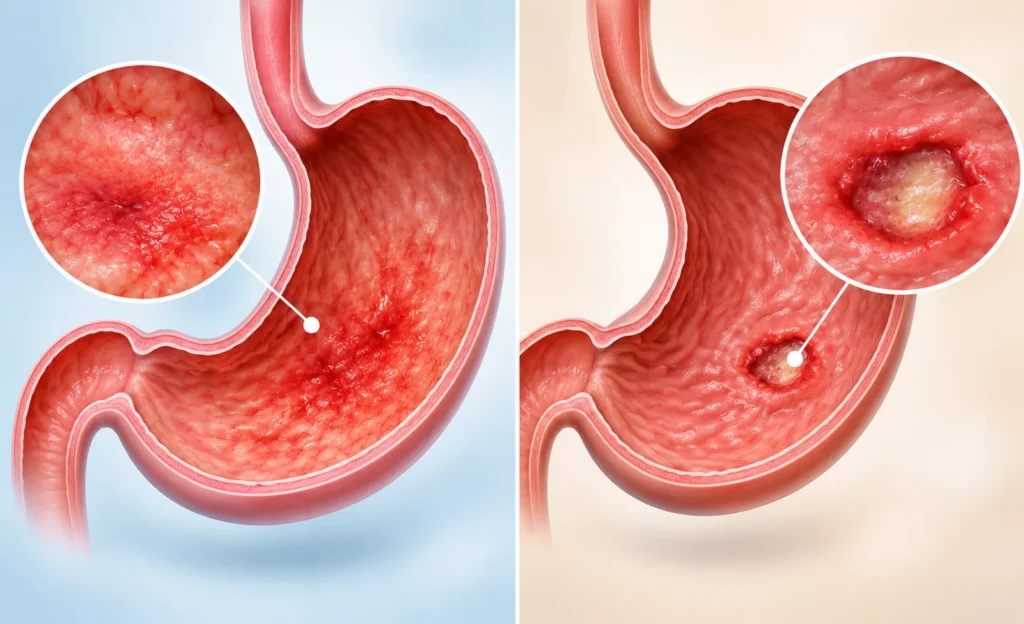
Although gastritis and ulcers can share similar symptoms, they affect the stomach differently.
| Feature | Gastritis | Stomach Ulcer |
| Condition | Inflammation of stomach lining | Open sore in stomach lining |
| Main Issue | Irritation and swelling | Tissue damage or erosion |
| Severity | Can range from mild to severe | May cause complications if untreated |
| Common Causes | H. pylori, medications, alcohol, irritation | H. pylori, NSAIDs, acid-related damage |
| Diagnosis | Medical history, tests, endoscopy if needed | Endoscopy, biopsy, H. pylori testing |
| Treatment | Depends on cause and severity | Requires treatment to heal ulcer and prevent complications |
Understanding these differences helps doctors recommend the right treatment plan based on the actual condition.
How Are Gastritis and Ulcers Diagnosed?
Many stomach problems have overlapping symptoms, so diagnosis is important before starting treatment.
A gastroenterologist may recommend:
Medical Evaluation
Your doctor may ask about:
- Duration of symptoms
- Pain patterns
- Food-related triggers
- Medication use
- Lifestyle habits
H. pylori Testing
Since H. pylori infection is associated with both gastritis and ulcers, doctors may suggest tests such as:
- Breath tests
- Stool tests
- Blood tests in certain situations
Upper Gastrointestinal Endoscopy
An endoscopy allows doctors to examine the stomach lining directly. It can help identify:
- Inflammation
- Ulcers
- Bleeding areas
- Other stomach abnormalities
Early diagnosis helps prevent complications and supports effective treatment.
Treatment Options for Gastritis and Ulcers
Treatment depends on the cause, severity, and individual health condition.
Gastritis Treatment
Management may include:
- Medicines that reduce stomach acid
- Treatment for H. pylori infection if detected
- Avoiding foods and habits that trigger symptoms
- Lifestyle modifications
- Reducing unnecessary use of stomach-irritating medications
Stomach Ulcer Treatment
Treatment may involve:
- Acid-reducing medications
- Antibiotics for H. pylori infection
- Medicines that protect the stomach lining
- Follow-up evaluation to confirm healing
Self-medication for recurring stomach pain may delay diagnosis. A proper evaluation helps identify whether symptoms are due to gastritis, ulcers, or another digestive condition.
Experiencing recurring acidity, stomach pain, or digestive discomfort? GutCare Clinics provides specialised gastro care in Bangalore with evaluation-based treatment approaches. Schedule a consultation today.
Lifestyle Tips to Support Stomach Health
Along with medical treatment, healthy daily habits can support digestive wellness.
Maintain Regular Eating Habits
Skipping meals or eating at irregular times may worsen digestive discomfort for some individuals. Try maintaining consistent meal timings.
Limit Stomach Irritants
Some people may benefit from reducing:
- Excess spicy foods
- Alcohol
- Smoking
- Excess caffeine
- Foods that personally trigger symptoms
Manage Stress
Stress does not directly cause ulcers in most cases, but prolonged stress may affect digestive symptoms and overall gut health.
Practices such as:
- Regular physical activity
- Adequate sleep
- Relaxation techniques
may support better digestive function.
Avoid Unnecessary Painkiller Use
Frequent use of certain painkillers without medical advice can irritate the stomach lining and increase ulcer risk.
When Should You Consult a Gastroenterologist?
Occasional acidity or stomach discomfort may not always indicate a serious condition. However, medical evaluation is recommended if symptoms are persistent or worsening.
Seek professional advice if you experience:
- Frequent stomach burning or pain
- Symptoms lasting several weeks
- Unexplained weight loss
- Difficulty swallowing
- Repeated vomiting
- Blood in vomit or stools
- Severe abdominal discomfort
A gastroenterologist can determine whether symptoms are related to gastritis, ulcers, acid reflux, or another digestive condition.
Conclusion
Understanding the difference between gastritis vs ulcer is important because both conditions require different approaches to diagnosis and management. Gastritis involves inflammation of the stomach lining, while ulcers involve deeper damage that creates an open sore.
If you are experiencing recurring stomach pain, acidity, or digestive problems, getting an accurate diagnosis is the first step toward effective care.
Gutcare Clinics, Bangalore, offers specialized gastroenterology consultations to help patients understand digestive issues and receive appropriate treatment guidance. Book your consultation today for personalized stomach and gut health care.
Find us here:Gutcare Clinics, Indiranagar, Bangalore | Dr. Yuvraj Singh Gehlot, Digestive Health Specialist
FAQs
What is the difference between gastritis and an ulcer?
Gastritis is the inflammation or irritation of the stomach lining, while a stomach ulcer is an open sore that develops due to damage to the stomach lining. Both conditions can cause stomach pain and discomfort, but ulcers involve deeper tissue damage and may require closer medical monitoring.
Can gastritis turn into an ulcer?
Untreated or long-standing gastritis may increase the risk of stomach lining damage in some cases, especially when caused by factors such as H. pylori infection or prolonged use of stomach-irritating medicines. However, not every person with gastritis develops an ulcer.
How can I know if I have gastritis or a stomach ulcer?
Symptoms alone may not always clearly differentiate gastritis from an ulcer because both can cause burning stomach pain, nausea, and indigestion. A gastroenterologist may recommend tests such as H. pylori testing or an upper gastrointestinal endoscopy to identify the exact cause.
What are the common symptoms of a stomach ulcer?
Common stomach ulcer symptoms include:
- Burning pain in the upper abdomen
- Indigestion
- Nausea
- Feeling full quickly
- Reduced appetite
- Unexplained weight loss
- Dark stools or vomiting blood in severe cases
Is gastritis more serious than an ulcer?
Both conditions require proper evaluation. Gastritis affects the stomach lining through inflammation, while ulcers involve an open sore that may lead to complications such as bleeding if untreated. The seriousness depends on the cause, severity, and overall health condition.
Can H. pylori cause both gastritis and ulcers?
Yes. H. pylori bacteria can damage the stomach’s protective lining and contribute to inflammation. In some individuals, it may also contribute to the development of stomach or peptic ulcers.
When should I see a gastroenterologist for stomach pain?
You should consult a gastroenterologist if you experience persistent stomach pain, recurring acidity, unexplained weight loss, vomiting, difficulty swallowing, blood in stools, or symptoms that do not improve with basic lifestyle changes.
Can gastritis and ulcers be treated completely?
Many cases of gastritis and stomach ulcers can improve with appropriate treatment. The treatment approach depends on the underlying cause, such as infection, medication-related irritation, or acid-related damage. Follow-up with a healthcare professional helps monitor recovery.