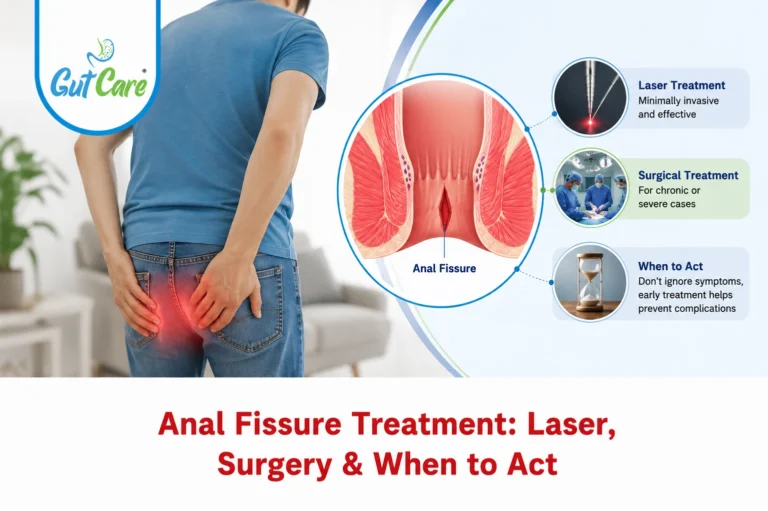

Noticing a small lump or extra piece of skin near the anus after experiencing pain during bowel movements can be concerning. Many people search for answers about anal fissure skin tag because they are unsure whether it is a normal part of healing or a sign of another condition.
An anal fissure is a small tear in the lining of the anal canal, often caused by hard stools, constipation, or repeated straining during bowel movements. When a fissure becomes long-standing, the body may respond by forming a small skin growth near the tear, commonly known as a sentinel pile or anal fissure skin tag.
Understanding why this skin tag develops, how it differs from other anal conditions, and when to seek medical advice can help you make informed decisions about treatment.
At Gutcare Clinics, Bangalore, experienced proctology specialists provide evaluation and advanced treatment options for conditions like anal fissures, piles, and related anorectal concerns.
If you are experiencing persistent anal pain, bleeding, or a lump near the anus, consult a specialist for proper diagnosis and personalized treatment guidance.
Book an appointment Today!
What Is an Anal Fissure Skin Tag?
An anal fissure skin tag is a small flap of extra skin that develops near the outer opening of the anus, usually in people who have a chronic or recurring anal fissure.
When the body tries to heal a repeated injury in the anal area, inflammation and tissue changes can occur. Over time, this may result in a small skin tag appearing near the fissure site.
These skin tags are usually:
- Soft and skin-coloured
- Located near the anal opening
- Associated with a previous or ongoing fissure
- Sometimes uncomfortable while cleaning after bowel movements
Although they are generally harmless, they may indicate that an underlying fissure has not completely healed.
Why Does a Skin Tag Develop After an Anal Fissure?
1. The Body’s Natural Healing Response
When an anal fissure occurs, the body activates its healing process. Continuous irritation or repeated injury can cause excess tissue formation around the affected area.
This additional tissue may gradually form a small skin tag, especially when the fissure becomes chronic.
2. Chronic Inflammation Around the Fissure
A fresh anal fissure may heal within a few weeks with appropriate care. However, when the tear remains open for a longer period, ongoing inflammation can affect the surrounding skin.
This prolonged inflammation may contribute to the development of a sentinel pile or anal skin tag.
3. Repeated Straining During Bowel Movements
Constipation and hard stools are common triggers for anal fissures. Repeated pressure on the anal canal can delay healing and increase irritation.
Factors that may contribute include:
- Low fibre intake
- Insufficient water consumption
- Ignoring the urge to pass stools
- Excessive straining
- Irregular bowel habits
Managing these factors is important to prevent recurring fissures.
Is an Anal Fissure Skin Tag Dangerous?
In most cases, an anal fissure skin tag is not dangerous. However, it is important not to assume that every lump near the anus is a skin tag.
Similar symptoms may occur with conditions such as:
- External piles (haemorrhoids)
- Anal abscess
- Anal fistula
- Warts or other skin conditions
A proper examination by a proctologist can help identify the exact cause and recommend suitable treatment.
Difference Between Anal Skin Tag and Sentinel Pile
The terms anal skin tag and sentinel pile are sometimes used interchangeably, but they are usually associated with different situations.
Anal Skin Tag
An anal skin tag is:
- A small excess fold of skin
- Usually painless
- Often present without active disease
- Sometimes left behind after healing
Sentinel Pile
A sentinel pile is:
- A skin tag specifically associated with a chronic anal fissure
- Located near the lower end of the fissure
- Often accompanied by ongoing pain or discomfort during bowel movements
Identifying the difference helps determine whether treating only the skin tag is enough or whether the underlying fissure also needs attention.
Common Symptoms Associated With Anal Fissure Skin Tags
A skin tag itself may not always cause symptoms. However, when it occurs with an active fissure, people may experience:
- Sharp pain while passing stools
- Burning sensation after bowel movements
- Bright red bleeding on toilet paper
- A small lump near the anus
- Itching or irritation
- Discomfort while sitting
- Difficulty cleaning the area
Persistent symptoms should be evaluated because untreated chronic fissures may continue to cause discomfort.
Can an Anal Fissure Skin Tag Go Away Naturally?
Small skin tags that develop after a healed fissure may remain permanently, even after the original tear has improved.
However, if the skin tag is related to an active chronic fissure, treating the underlying fissure may reduce symptoms and prevent further problems.
Treatment depends on factors such as:
- Duration of symptoms
- Severity of pain
- Presence of bleeding
- Whether the fissure is acute or chronic
- Size and location of the skin tag
How Is Anal Fissure Skin Tag Treated?
Treatment focuses on managing the underlying cause and improving healing.
Lifestyle and Dietary Measures
For mild cases, doctors may recommend:
- Increasing dietary fibre intake
- Drinking adequate water
- Avoiding excessive straining
- Maintaining regular bowel habits
- Taking warm sitz baths
These measures help soften stools and reduce irritation.
Medical Treatment
Depending on the condition, a doctor may suggest:
- Prescription creams to relax anal muscles
- Medicines to improve bowel movements
- Pain-relieving treatments
- Treatment for constipation
Self-treatment without proper diagnosis may delay healing if another condition is present.
Surgical or Minimally Invasive Options
If a chronic fissure does not improve with conservative treatment, procedures may be considered.
Treatment options depend on individual evaluation and may include procedures aimed at reducing muscle spasm and promoting healing. If a skin tag causes significant discomfort or hygiene problems, a specialist may discuss whether removal is appropriate.
Experiencing recurring pain or a lump after an anal fissure? GutCare Clinics provides expert evaluation and personalised care for anorectal conditions in Bangalore. Schedule a consultation to understand your treatment options.
When Should You Consult a Proctologist?
You should consider medical advice if you notice:
- Anal pain lasting several weeks
- Repeated bleeding during bowel movements
- A lump that is increasing in size
- Symptoms returning frequently
- Discomfort affecting daily activities
- No improvement despite dietary changes
A proctologist can accurately identify whether the problem is an anal fissure skin tag, piles, fistula, or another condition.
How Can You Prevent Anal Fissures and Related Skin Tags?
Preventing constipation and reducing strain during bowel movements can lower the risk of fissures.
Helpful habits include:
- Eat fibre-rich foods such as fruits, vegetables, and whole grains
- Drink enough fluids throughout the day
- Avoid delaying bowel movements
- Maintain physical activity
- Avoid prolonged sitting on the toilet
- Seek early treatment for recurring anal discomfort
Early management of fissures may reduce the chance of developing chronic symptoms and related skin changes.
Expert Care for Anal Fissure and Skin Tag Concerns in Bangalore
An anal fissure skin tag is often a result of repeated irritation and healing changes around a chronic fissure. While it may not always be harmful, understanding the underlying cause is important for effective management.
At Gutcare Clinics, Bangalore, specialists evaluate anorectal conditions with a focus on accurate diagnosis and personalized treatment approaches. Whether you are dealing with fissure pain, bleeding, or a persistent lump near the anus, professional guidance can help you understand the right next steps.
Book a consultation with Gutcare Clinics in Bangalore to get expert advice for anal fissure, skin tags, and related concerns.
Find us here:Gutcare Clinics, Indiranagar, Bangalore | Dr. Yuvraj Singh Gehlot, Digestive Health Specialist
FAQs
What is an anal fissure skin tag?
An anal fissure skin tag is a small flap of extra skin that develops near the anus, usually due to a chronic anal fissure. It forms as part of the body’s healing response to repeated irritation and inflammation around the fissure area. It is also commonly called a sentinel pile when associated with a chronic fissure.
Can an anal fissure cause a skin tag?
Yes, a long-standing or recurring anal fissure can lead to the development of a skin tag near the anal opening. Continuous irritation, inflammation, and repeated injury during bowel movements may cause extra tissue to form around the affected area.
Is an anal skin tag the same as piles?
No, an anal skin tag and piles are different conditions. An anal skin tag is a small fold of extra skin, while piles (haemorrhoids) are swollen blood vessels inside or around the anus. However, both conditions can cause a lump-like feeling near the anal area.
Do anal fissure skin tags go away on their own?
Small skin tags may remain even after an anal fissure heals. If the underlying fissure is treated, symptoms may improve, but the extra skin may not disappear completely. A doctor can advise whether treatment or removal is needed based on symptoms.
How do I know if my lump is an anal fissure skin tag?
A doctor can confirm the cause through a physical examination. A skin tag is usually soft and located near the anal opening, while other conditions like piles, fistula, or abscess may have different symptoms and require different treatments.
Can anal fissure skin tags be removed?
Yes, if an anal skin tag causes discomfort, hygiene difficulties, or persistent irritation, a specialist may discuss removal options. However, treating the underlying fissure is important to prevent recurring symptoms.
When should I see a doctor for an anal fissure skin tag?
You should consult a proctologist if you experience:
- Persistent anal pain
- Bleeding during bowel movements
- A recurring lump near the anus
- Pus discharge or swelling
- Symptoms that do not improve with home care
Early evaluation can help identify the exact cause and prevent complications.