An anal fissure is a small tear in the lining of the anal canal, and its location can provide clues about how it developed. Most typical fissures occur in the posterior midline, while a smaller proportion occur in the anterior midline.
If you have sharp pain during bowel movements, burning afterwards or bright-red bleeding, understanding an anterior vs posterior anal fissure can explain why a doctor asks about bowel habits, childbirth and previous treatment. Gutcare Clinics explains what the location means and how treatment decisions are made.
Experiencing persistent anal pain or bleeding? Consult a proctology specialist in Bangalore for an evaluation rather than self-treating a recurring fissure.
What is an anal fissure?
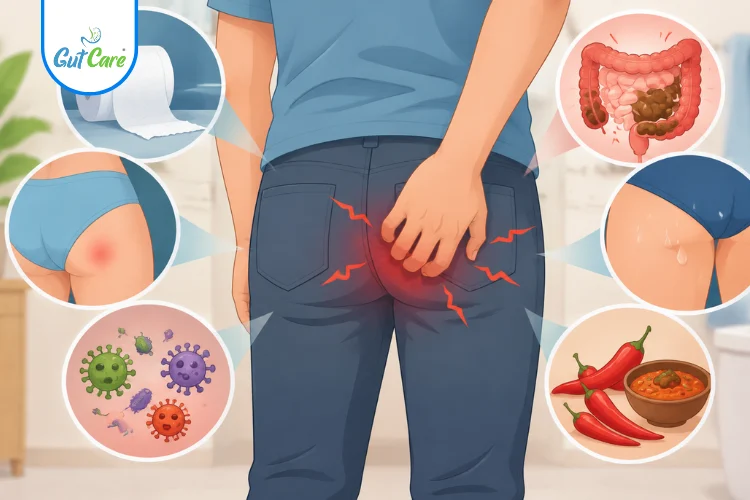
An anal fissure is a tear in the delicate lining of the anal canal. It commonly causes sharp pain while passing stool, burning or throbbing discomfort afterwards and a small amount of bright-red blood on toilet paper or the outside of the stool.
Fissures may develop after passing a hard or bulky stool, repeated straining or frequent diarrhoea. Pain can trigger spasm of the internal anal sphincter, which may make bowel movements more painful and contribute to delayed healing.
An acute fissure is relatively recent and may improve with conservative care. A chronic or recurrent fissure may need prescription treatment or a procedure.
Anterior vs posterior anal fissure: what is the difference?
Posterior anal fissure
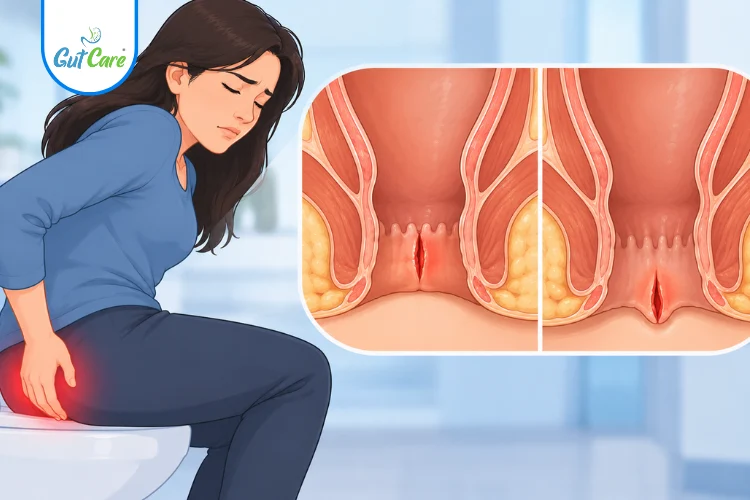
A posterior anal fissure is found at the back of the anal canal, in the posterior midline. This is the most common location for a typical anal fissure.
The posterior midline can be more vulnerable to reduced local blood flow when the internal sphincter is tightly contracted. Persistent sphincter spasm can therefore contribute to pain and delayed healing in some patients.
Anterior anal fissure
An anterior anal fissure occurs at the front of the anal canal and is less common than a posterior fissure.
Anterior fissures can occur in anyone, but they are seen relatively more often in women, including after childbirth. Location alone does not establish the cause, so clinicians also consider bowel habits, childbirth history and previous anorectal problems.
Why does the location of an anal fissure matter?
Location helps a clinician decide whether the fissure follows a typical pattern or whether additional evaluation may be appropriate.
Typical midline fissures
Posterior and anterior midline fissures are generally considered typical locations. Diagnosis is usually based on symptoms, medical history and examination findings.
Atypical fissure locations
A fissure on the side of the anal canal, particularly when it is multiple, unusually persistent or associated with other symptoms, may be considered atypical.
Atypical fissures can sometimes be associated with Crohn’s disease, inflammatory bowel disease, certain infections or, less commonly, other underlying disease. An atypical location does not mean a serious condition is present; it means the clinician may need to look beyond simple constipation or straining.
Anterior vs posterior anal fissure symptoms
Both types can cause similar symptoms.
Common symptoms include:
- Sharp pain during or after passing stool
- Burning or throbbing discomfort
- Bright-red blood on toilet paper or the outside of the stool
- Anal sphincter spasm or a feeling of tightness
- Pain while sitting in some cases
- Itching or irritation
Heavy bleeding, blood mixed into the stool, unexplained weight loss, fever, persistent diarrhoea or a significant change in bowel habits should be assessed rather than automatically attributed to a fissure.
What causes anterior and posterior anal fissures?
Common contributors include:
- Hard or bulky stools
- Constipation and repeated straining
- Frequent diarrhoea
- Local trauma
- Pregnancy and childbirth
- Increased anal sphincter tension in some patients
- Previous anorectal surgery or procedures in selected cases
A fissure is not always caused by constipation alone. If it repeatedly returns or does not heal, the reason for persistence should be assessed.
How are anterior and posterior anal fissures diagnosed?
Diagnosis usually starts with a medical history and examination. Your clinician may ask:
- How long have you had the pain?
- Does pain occur during or after bowel movements?
- Is there bright-red bleeding?
- Have you had constipation or diarrhoea?
- Have you tried fibre, stool-softening measures or topical medicines?
- Has the fissure returned after previous treatment?
- Have you had childbirth, anorectal surgery or other relevant conditions?
When pain is severe, a gentle examination may be preferred rather than forcing an uncomfortable procedure. Further evaluation may be needed in selected cases.
Treatment: does location change the approach?
Conservative treatment
Many acute fissures are initially managed by keeping stools soft and reducing trauma during bowel movements. Depending on the patient, this may include:
- Adequate fluid intake
- A fibre-rich diet or fibre supplementation
- Avoiding prolonged straining
- Stool-softening measures when advised
- Warm sitz baths for symptom relief
- Prescription topical medicines that relax the anal sphincter or support healing
Treatment for chronic or recurrent fissures
For chronic or recurrent fissures, a clinician may consider botulinum toxin injection or surgery in selected patients.
Lateral internal sphincterotomy is an established treatment for chronic anal fissure, but it is not suitable for everyone. Previous anorectal surgery, baseline bowel control and potential continence risks are among the factors considered before surgery. Fissurectomy or advancement flap techniques may also be considered in selected cases.
Laser treatment is sometimes promoted for anal fissures, but it is not appropriate for every patient. The right treatment depends on the fissure, the patient’s circumstances and the surgeon’s assessment.
When should you see a doctor for an anal fissure?
Consider a medical evaluation if:
- Pain or bleeding keeps returning
- Symptoms continue for several weeks
- The fissure does not appear to be healing
- Pain is severe or affects daily activities
- You have recurrent or multiple fissures
- The fissure is in an unusual location
- You have diarrhoea, weight loss, fever or other bowel symptoms
- You have concerns about bowel control before considering surgery
Anterior vs posterior anal fissure: key differences at a glance
| Feature | Posterior fissure | Anterior fissure |
| Location | Back midline | Front midline |
| Frequency | More common | Less common |
| Typical symptoms | Pain, burning, bright-red bleeding | Similar symptoms |
| Common associations | Constipation, trauma, sphincter spasm | Similar triggers; relatively more frequent in women |
| Does location alone determine treatment? | No | No |
| Further assessment | If persistent, recurrent or atypical | If persistent, recurrent or atypical |
Anterior and posterior midline fissures can both be typical anal fissures. Location is useful, but it should be interpreted alongside symptoms, duration, examination findings and risk factors.
Final thoughts
A posterior fissure is the common pattern, while an anterior fissure is less common and may occur relatively more often in women. Location alone does not determine severity or treatment.
If pain, bleeding or recurrent fissures are affecting your daily life, a proper proctology assessment is more useful than trying to determine the cause from symptoms alone. GutCare Clinics can evaluate the fissure’s location, duration and underlying factors and guide you towards an appropriate treatment plan in Bangalore.
Looking for anal fissure care in Bangalore?
Find us here:Gutcare Clinics, Indiranagar, Bangalore | Dr. Yuvraj Singh Gehlot, Digestive Health Specialist
FAQs
What is the difference between an anterior and posterior anal fissure?
The difference is location. A posterior fissure occurs in the back midline of the anal canal and is more common. An anterior fissure occurs in the front midline and is less common.
Is an anterior anal fissure more serious than a posterior fissure?
No. An anterior fissure is not automatically more serious. The duration, symptoms, appearance, recurrence and any associated health conditions matter more than location alone.
Why are most anal fissures posterior?
Typical fissures commonly occur in the posterior midline, where local blood flow can be affected when the internal sphincter is tightly contracted. Straining, hard stools and sphincter spasm can contribute to fissure development and delayed healing.
Can an anterior anal fissure heal without surgery?
Yes. Some acute fissures heal with measures that keep stools soft and reduce trauma. Chronic or recurrent fissures may need prescription treatment, botulinum toxin or a procedure depending on the individual case.
When should I see a doctor for an anal fissure?
Seek medical advice when pain or bleeding persists, keeps returning or interferes with daily life. Multiple fissures, an unusual side-wall location, fever, weight loss or persistent diarrhoea also warrant evaluation.