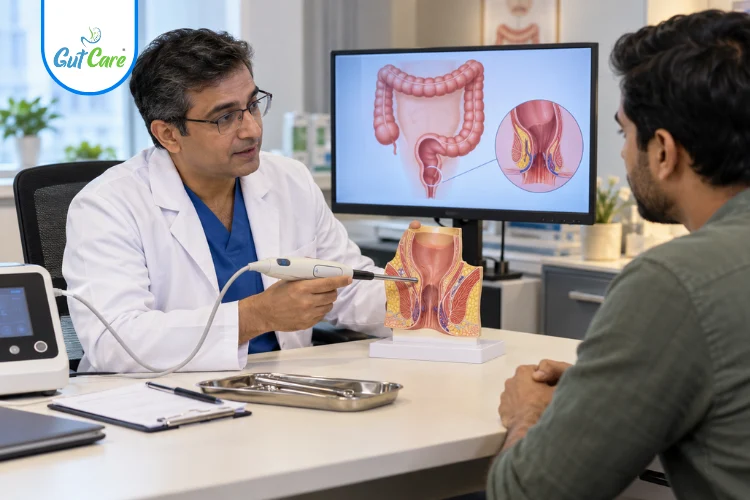

Piles, also called haemorrhoids, are common and can cause bleeding, itching, swelling, discomfort or a lump around the anus. If several people in your family have had piles, it is natural to wonder, “Is piles hereditary?”
The short answer is that piles are not usually inherited in a simple, predictable way. However, family history may be one factor that influences susceptibility. Other factors, including constipation, straining during bowel movements, prolonged sitting, pregnancy, ageing and irregular bowel habits, can have a much more direct role.
Understanding the difference between genetic susceptibility and inherited disease can help you focus on the factors you can actually control. This guide explains whether piles can run in families, what may contribute to the risk, how to reduce preventable triggers, and when rectal bleeding needs medical evaluation.
Book Your Piles Consultation Today at Gutcare Clinics if you have persistent bleeding, pain, swelling or other symptoms that are affecting your daily life.
Are Piles Hereditary?
Piles develop when the tissues and blood vessels in the lower rectum and anus become swollen or lose some of their normal support. They are generally considered a multifactorial condition, meaning several factors can contribute to their development.
A family history of piles does not mean that you will definitely develop them. Similarly, not having a family history does not mean you cannot get piles.
There is also no routine genetic test that can predict whether a person will develop piles. Doctors usually assess symptoms, bowel habits, medical history and physical findings to determine the cause.
Can Piles Run in Families?
Yes, piles may appear to run in families, but this does not necessarily mean they are directly inherited.
Some researchers have investigated whether inherited differences in connective tissue or the structures supporting the anal cushions may contribute to susceptibility. However, current evidence does not establish a single gene responsible for piles.
This means that “genetic risk” and “hereditary disease” are not the same thing.
Shared Family Habits Can Also Increase Risk
Family members often share eating patterns, activity levels and bathroom habits.
For example, a family that commonly eats low-fibre meals, drinks inadequate fluids or follows a sedentary lifestyle may have several members who experience constipation. Repeated constipation and straining can increase the risk of piles.
Therefore, what appears to be hereditary piles may sometimes be the result of a combination of family susceptibility and shared lifestyle factors.
What Are the Main Risk Factors for Piles?
Genetics is only one possible part of the picture. More established piles risk factors include:
- Chronic constipation and hard stools
- Repeated straining while passing stool
- Sitting on the toilet for long periods
- Low dietary fibre intake
- Frequent diarrhoea or irregular bowel habits
- Pregnancy
- Increasing age
- Being overweight or obese
- Prolonged sitting and physical inactivity
- Activities that repeatedly increase pressure inside the abdomen, including heavy lifting
These factors can increase pressure on the blood vessels and supporting tissues around the anus.
Does Constipation Make Hereditary Piles Worse?
If you have a family history of piles and also experience constipation, paying attention to your bowel habits is particularly important.
Hard stools can require repeated pushing and straining. Over time, frequent straining may contribute to swelling and weakening of the tissues supporting the anal cushions.
The goal is not simply to prevent “genetic piles”. Instead, it is to reduce the factors that can trigger or worsen symptoms.
How to Reduce Constipation
Simple changes that may support healthier bowel habits include:
- Eat fibre-rich foods such as vegetables, fruits, whole grains and pulses.
- Drink adequate fluids unless your doctor has advised you to restrict them.
- Stay physically active.
- Do not repeatedly ignore the urge to pass stool.
- Avoid prolonged sitting and straining on the toilet.
- Seek medical advice if constipation is persistent or keeps returning.
Can You Prevent Piles If They Run in Your Family?
You cannot change your genes or family history, but you can influence many of the factors associated with piles.
If piles are common in your family, consider paying attention to your bowel habits before symptoms become troublesome. Regular physical activity, adequate fibre and fluids, and avoiding prolonged straining can help reduce several modifiable risk factors.
It is also important not to assume that every episode of rectal bleeding is caused by piles. Several other conditions can cause bleeding, so persistent or unexplained bleeding should be medically assessed.
What Are the Symptoms of Piles?
Common piles symptoms include:
- Bright-red bleeding during or after passing stool
- Itching or irritation around the anus
- A lump or swelling near the anus
- Pain or tenderness, particularly with some external piles
- Mucus or a sensation of incomplete bowel emptying
- Discomfort while sitting or passing stool
Internal and external piles can produce different symptoms. Internal piles commonly cause painless bleeding, while external piles can become painful, particularly when a blood clot develops.
However, these symptoms can overlap with other anorectal and bowel conditions. A proper diagnosis is important before assuming that bleeding or pain is caused by piles.
When Should You See a Piles Doctor?
Consider seeing a doctor if rectal bleeding keeps returning, symptoms are getting worse, a lump persists, bowel habits change, or symptoms do not improve with basic measures.
Seek prompt medical attention for:
- Heavy or ongoing bleeding
- Black or tarry stools
- Severe or rapidly worsening pain
- Dizziness or fainting associated with bleeding
- Fever with significant swelling or pain
- Unexplained changes in bowel habits
New or persistent rectal bleeding should not automatically be attributed to piles, even when you have a family history of haemorrhoids.
How Are Recurrent or Hereditary Piles Treated?
There is no specific treatment simply because piles occur in a family. Treatment depends on the type, severity and symptoms of the condition.
Mild piles may improve with changes to bowel habits, fibre, fluids, physical activity and appropriate medical advice. Depending on the examination findings, medicines or office-based procedures may also be recommended.
For persistent or advanced piles, a doctor may discuss minimally invasive procedures, including laser-based treatment where appropriate. Some patients with advanced disease may require surgical treatment.
The important point is that there is no single “genetic piles treatment”. A proctologist or colorectal specialist can recommend an appropriate approach after evaluating the individual condition.
If you are experiencing recurrent piles symptoms, speaking with a piles specialist in Bangalore can help establish whether the symptoms are actually due to hemorrhoids and whether treatment is necessary.
Can Children Inherit Piles From Their Parents?
True haemorrhoidal disease is less common in children than in adults.
If a child develops rectal bleeding, pain or a lump around the anus, it should not automatically be assumed to be piles because a parent has them. Constipation-related anal fissures and other conditions may need to be considered.
A doctor should assess persistent symptoms in children to identify the underlying cause.
What Does a Family History of Piles Actually Mean?
Having a parent or sibling with piles should not be viewed as a diagnosis waiting to happen. It is better understood as one possible background risk factor.
Think about your risk in three groups.
Factors You Cannot Change
- Family history
- Age
- Possible inherited tissue characteristics
Factors You Can Influence
- Fibre intake
- Fluid intake
- Physical activity
- Toilet habits
- Constipation management
- Prolonged sitting
Factors That Need Medical Assessment
- Recurrent rectal bleeding
- Persistent or severe pain
- Recurrent swelling or prolapse
- Symptoms that do not improve
- Unexplained changes in bowel habits
This approach is more useful than focusing only on whether piles are genetic.
Key Takeaway: Is Piles Hereditary?
So, is piles hereditary? Not in the straightforward sense of a condition caused by one inherited gene. A family history may indicate some susceptibility, but it does not mean you will definitely develop piles.
Constipation, straining, bowel habits, age, pregnancy, prolonged sitting and other factors can play an important role. Many of these factors can be managed.
If you have a family history of piles and develop bleeding, itching, pain, swelling or a lump, getting the diagnosis confirmed is more useful than trying to determine whether the condition was inherited.
Gutcare Clinics provides evaluation and treatment for piles and other anorectal symptoms in Bangalore, with treatment recommendations based on the individual diagnosis and severity.
Find us here:Gutcare Clinics, Indiranagar, Bangalore
Frequently Asked Questions About Hereditary Piles
Is piles hereditary?
Piles are not usually inherited through a simple genetic pattern. Family history may contribute to susceptibility, but factors such as constipation, straining, ageing and bowel habits are also important.
Can piles run in families?
Yes, piles can appear to run in families. This may reflect a combination of possible inherited susceptibility and shared lifestyle or bowel habits rather than a single inherited gene.
Are piles genetic?
There may be genetic factors that influence susceptibility to haemorrhoids, but there is no established single gene that causes piles in most people.
If my parents have piles, will I get them too?
Not necessarily. Having a parent with piles may increase your awareness of risk, but it does not mean you will definitely develop them. Managing constipation, avoiding repeated straining and maintaining healthy bowel habits can help reduce several risk factors.
Can constipation cause piles?
Yes. Chronic constipation and repeated straining can increase pressure on the tissues and blood vessels around the anus and may contribute to piles.
How can I prevent piles if they run in my family?
You cannot change your family history, but you can manage several risk factors. Eat enough fibre, maintain adequate fluid intake, stay active, avoid prolonged straining and seek medical advice for persistent constipation.
When should I see a doctor for piles?
See a doctor if bleeding is recurrent, symptoms are worsening, a lump persists, pain is significant or symptoms do not improve. Heavy bleeding, black stools, severe pain or dizziness require prompt medical attention.