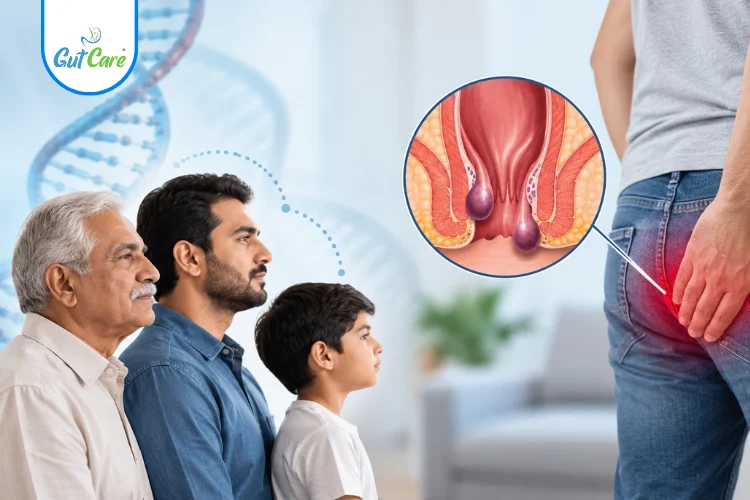
Living with piles can mean dealing with bleeding, itching, discomfort or tissue that comes out during bowel movements. When these symptoms keep returning despite dietary changes and medicines, patients often look for a treatment that does not involve the extensive wound associated with conventional haemorrhoid surgery.
Doppler-guided hemorrhoidal artery ligation, commonly known as THD or Doppler-guided HAL, is a minimally invasive procedure used mainly for symptomatic internal hemorrhoids. It works by identifying and tying off the arteries supplying the hemorrhoidal tissue and can also include a technique to lift prolapsed tissue.
At Gutcare Clinics in Bangalore, patients can discuss their symptoms, hemorrhoid grade and treatment options with a specialist before deciding whether THD is appropriate.
Book Your Piles Consultation Today
What is Doppler-guided haemorrhoidal artery ligation?
Doppler-guided haemorrhoidal artery ligation is a procedure designed to treat internal haemorrhoids without cutting out the haemorrhoidal tissue.
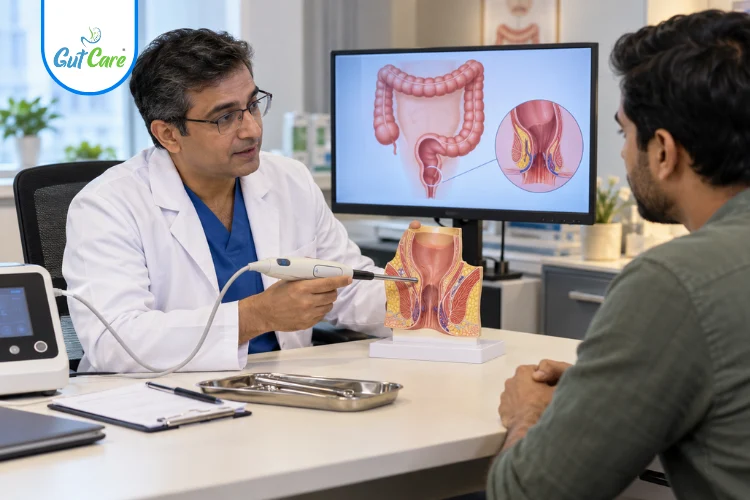
A small Doppler probe is used to identify the arteries supplying the haemorrhoidal cushions. Once these vessels are located, the surgeon places sutures around them to reduce blood flow. Over time, the treated haemorrhoidal tissue can shrink.
THD stands for transanal haemorrhoidal dearterialisation. Depending on the patient’s condition, the procedure may also involve mucopexy, where prolapsed internal haemorrhoidal tissue is lifted and secured in a higher position.
This makes THD different from an excisional haemorrhoidectomy, where the enlarged haemorrhoidal tissue is surgically removed.
Why is THD considered a less painful piles treatment?
The term “painless piles treatment” is commonly searched online, but it is important to put the claim into perspective.
THD is not guaranteed to be completely painless. However, because the procedure does not involve cutting and removing haemorrhoidal tissue in the same way as an excisional haemorrhoidectomy, postoperative discomfort may be lower for appropriately selected patients.
Some people may experience:
- Mild to moderate discomfort
- Pressure or a feeling of fullness
- An urge to pass stool
- Temporary soreness
- Mild bleeding
The level of discomfort varies from person to person and can also depend on whether mucopexy is performed, the extent of prolapse and individual healing.
Therefore, a more accurate description is that THD is a minimally invasive, potentially less painful option for selected internal haemorrhoids, rather than a procedure that guarantees zero pain.
How does the THD procedure work?
1. Examination and diagnosis
Before treatment, the surgeon assesses symptoms such as bleeding, prolapse, itching and discomfort. An examination helps determine whether the symptoms are actually caused by internal haemorrhoids.
This is important because rectal bleeding should not automatically be attributed to piles. Depending on a person’s age, medical history and symptoms, additional investigation may sometimes be necessary.
2. Locating haemorrhoidal arteries with Doppler
During THD, a specialised Doppler device helps the surgeon identify the arteries supplying the internal haemorrhoidal tissue.
The Doppler signal allows the surgeon to locate these vessels more precisely before placing the ligatures.
3. Haemorrhoidal artery ligation
The identified arteries are tied with sutures. This reduces arterial blood flow to the haemorrhoidal tissue, helping it gradually reduce in size.
4. Mucopexy for prolapse
When prolapse is present, the procedure may be combined with mucopexy.
Instead of removing the prolapsed tissue, sutures are used to lift and secure it. This can help address the sensation of tissue coming out during bowel movements.
5. Post-procedure care
After THD, patients receive instructions about bowel movements, diet, fluids, medicines, activity and follow-up.
Recovery is individual, so the treating surgeon’s instructions should always take priority over general information found online.
Who may benefit from THD for piles?
THD is generally considered for symptomatic internal haemorrhoids, particularly selected Grade II and Grade III cases.
It may also be discussed in some patients with more advanced prolapse, but suitability depends on the extent of prolapse, symptoms, previous treatments and other clinical factors.
THD may be considered when a patient has:
- Recurrent bleeding from internal haemorrhoids
- Prolapse during or after bowel movements
- Symptoms that have not improved sufficiently with conservative treatment
- A preference for a non-excisional approach
- Piles symptoms affecting work, exercise, travel or daily activities
THD is not automatically suitable for every type of piles. External haemorrhoids, thrombosed haemorrhoids or significant prolapse may require a different treatment approach.
THD vs conventional haemorrhoidectomy
THD and conventional haemorrhoidectomy work in different ways.
THD/HAL reduces blood flow to the internal haemorrhoidal tissue and may lift prolapsed tissue with mucopexy.
Excisional haemorrhoidectomy removes the problematic haemorrhoidal tissue surgically.
One potential advantage of THD is less postoperative pain and an easier early recovery compared with conventional excisional surgery in appropriately selected patients. However, this needs to be balanced against the possibility of recurrence or further treatment, particularly in some patients with more advanced disease.
There is therefore no single procedure that is “best” for every person.
The decision should consider:
- Haemorrhoid grade
- Degree of prolapse
- Severity and frequency of bleeding
- Previous treatments
- Presence of external disease
- Overall health
- Expected recovery and recurrence risk
What is THD recovery like?
Recovery after Doppler-guided HAL varies between individuals. The aim is to allow the treated area to heal while preventing constipation and straining.
Helpful recovery habits
- Drink adequate water unless your doctor has advised otherwise.
- Include fibre-rich foods in your diet as recommended.
- Avoid prolonged sitting on the toilet.
- Do not strain during bowel movements.
- Take prescribed medicines as directed.
- Gradually return to normal activities according to your surgeon’s advice.
- Attend your scheduled follow-up.
Temporary pressure, urgency, discomfort or mild bleeding can occur after treatment.
Heavy bleeding, fever, severe or worsening pain, difficulty passing urine or any concerning change should be reported to your healthcare provider promptly.
What are the risks and limitations of THD?
Like any medical procedure, THD has potential risks. These can include bleeding, pain or discomfort, urinary difficulties, infection and recurrence of haemorrhoidal symptoms.
Some patients may also experience a temporary sensation of urgency or discomfort during bowel movements.
An important limitation is that THD does not guarantee that piles will never return. Long-term bowel habits, constipation, straining and the original severity of haemorrhoidal disease can influence outcomes.
Your surgeon should explain the expected benefits, limitations and alternatives before treatment.
Is THD better than laser piles treatment?
THD and laser-based piles procedures are different techniques, so comparing them simply as “better” or “worse” can be misleading.
The appropriate procedure depends on what is causing the symptoms and the grade and characteristics of the haemorrhoids.
A patient with mainly internal haemorrhoidal bleeding may have different treatment needs from someone with significant prolapse or external disease.
Rather than choosing a procedure based only on terms such as “painless”, “laser” or “minimally invasive”, ask:
- What grade are my haemorrhoids?
- Is there significant prolapse?
- Why is this procedure suitable for me?
- What alternatives are available?
- What is the expected recovery?
- What is the possibility of recurrence?
A specialist assessment can help answer these questions.
When should you see a piles specialist?
Mild piles symptoms may sometimes improve with fibre, fluids, appropriate toilet habits and other conservative measures. However, recurring symptoms should not simply be ignored or repeatedly self-treated.
Consider seeing a specialist if you have:
- Repeated rectal bleeding
- Tissue coming out during bowel movements
- Persistent itching or anal discomfort
- Symptoms that keep returning
- Difficulty controlling bowel movements
- A change in bowel habits along with bleeding
- Unexplained weight loss or symptoms of anaemia
Rectal bleeding can have causes other than haemorrhoids. Getting the correct diagnosis is more important than choosing a procedure quickly.
Choosing THD piles treatment in Bangalore
If you are searching for THD treatment in Bangalore, focus on the diagnosis as well as the procedure.
Ask your specialist about your haemorrhoid grade, whether prolapse is present, why Doppler-guided haemorrhoidal artery ligation is being recommended, what alternatives are available and what recovery may involve.
Gutcare Clinics in Bangalore can help patients understand their piles symptoms and discuss appropriate treatment options based on their individual condition.
Find us here:Gutcare Clinics, Indiranagar, Bangalore | Dr. Yuvraj Singh Gehlot, Digestive Health Specialist
Frequently Asked Questions About THD
Is Doppler-guided haemorrhoidal artery ligation painful?
THD is designed to minimise tissue disruption and may cause less postoperative pain than excisional haemorrhoidectomy for suitable patients. However, it is not completely painless for everyone, and temporary discomfort, pressure or urgency can occur.
Is THD suitable for Grade 3 haemorrhoids?
THD can be considered for selected Grade III internal haemorrhoids, particularly when prolapse is present. The extent of prolapse and other clinical factors need to be assessed before choosing the procedure.
How long does THD recovery take?
Recovery varies between patients. Some people return to routine activities relatively quickly, but the exact timeline depends on the procedure performed, the severity of the haemorrhoids and individual healing.
Can piles come back after THD?
Yes. Recurrence is possible after THD, as it is with other haemorrhoid treatments. Bowel habits, constipation, straining and the severity of the original condition can influence the risk.
Is THD better than haemorrhoidectomy?
Neither procedure is universally better. THD may offer less postoperative pain and tissue disruption for selected patients, while excisional haemorrhoidectomy may be more appropriate for certain advanced or significantly prolapsing haemorrhoids.
Does THD treat external haemorrhoids?
THD primarily targets the arteries supplying internal haemorrhoids. External haemorrhoids may require a different treatment depending on their type, severity and symptoms.
What should I ask my surgeon before THD?
Ask about your haemorrhoid grade, degree of prolapse, why THD is suitable, expected recovery, possible complications, recurrence risk and alternative treatment options.
Is THD the same as Doppler-guided HAL?
The terms are closely related and are often used to describe the same general treatment approach. THD refers to transanal haemorrhoidal dearterialization, while HAL refers to haemorrhoidal artery ligation guided by Doppler identification of the vessels.