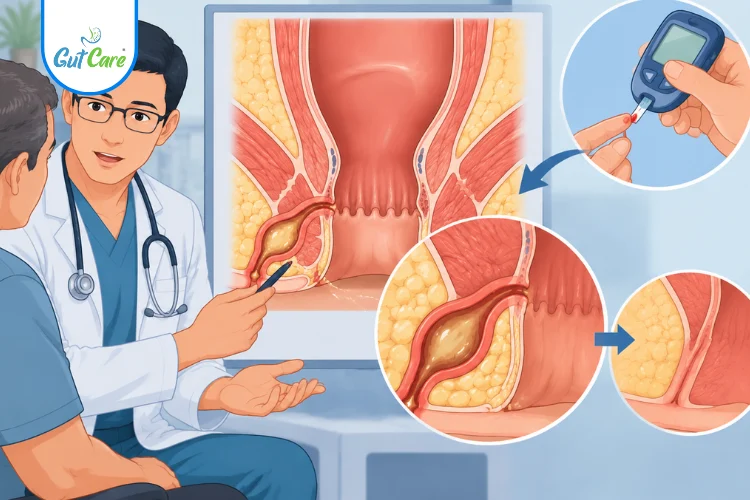

An anal fistula can be difficult to ignore. Repeated drainage, discomfort, skin irritation or a swelling that comes and goes may indicate a tract connecting the anal canal to the skin. When the fistula passes through or close to the anal sphincter muscles, treatment is not simply about closing the tract. It also has to protect bowel control.
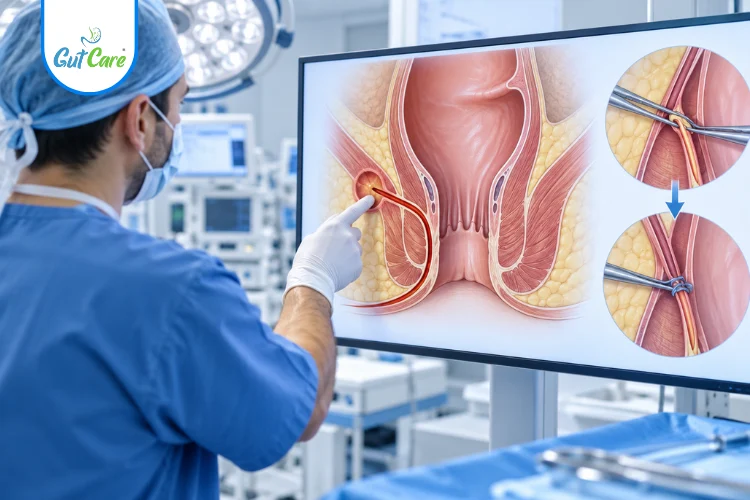
Seton treatment for anal fistula is one option used for selected fistulas, particularly when immediate fistulotomy could risk the sphincter. A small thread-like device called a seton is placed through the fistula tract to keep it open and allow ongoing drainage. The seton may be part of a staged treatment plan rather than the final treatment itself.
At Gutcare Clinics in Bangalore, the appropriate approach depends on the fistula’s location, complexity, previous procedures and relationship with the sphincter muscles.
If you have persistent drainage, recurrent swelling or a diagnosed anal fistula, arrange an evaluation with a colorectal or proctology specialist rather than trying to manage the tract on your own.
Book an appointment Today!
What is a seton for an anal fistula?
A seton is a soft surgical thread or loop placed through the fistula tract. Its main purpose is to maintain drainage and prevent the external opening from sealing too early while infection or inflammation remains inside.
A seton can be particularly useful when a fistula involves a significant portion of the anal sphincter. Cutting through the entire tract in such cases may increase the risk of impaired bowel control. A seton can help control infection while the surgeon plans the next step.
A seton does not automatically mean the fistula has been permanently cured. Some patients need another procedure, while selected patients with Crohn’s disease may have a draining seton for longer-term control.
Types of seton used for anal fistula
Loose or draining seton
A loose seton keeps the fistula tract open so fluid can continue to drain. It is commonly used to control infection or inflammation and protect the sphincter while further treatment is considered.
It may stay in place for several weeks or months. In some complex or Crohn’s-related fistulas, it may be retained longer.
Cutting seton
A cutting seton is placed under controlled tension and gradually tightened so that the fistula tract is divided over time. Because this can affect the sphincter and may cause continence problems, it is used selectively.
The decision depends on the anatomy of the fistula, how much sphincter is involved and the surgeon’s assessment of the risks and benefits.
Seton as part of staged fistula treatment
For some complex fistulas, the seton is the first stage rather than the final treatment. A later procedure, such as LIFT or an advancement flap, may be considered when appropriate.
The treatment cannot be chosen from symptoms alone. Examination and, in selected cases, pelvic MRI or endoanal ultrasound may be needed to map the tract.
How long does a seton stay in for an anal fistula?
There is no single seton duration that applies to everyone.
A loose seton may remain for several weeks to several months, depending on:
- Active infection or an abscess
- Fistula complexity and branching
- How much sphincter muscle the tract crosses
- Whether another procedure is planned
- How inflammation and drainage are controlled
- Conditions such as Crohn’s disease
A surgeon may recommend keeping the seton until inflammation has settled and the anatomy is clearer. It may then be removed, exchanged or left for longer-term drainage.
A fixed promise such as “the seton will come out in two weeks” is therefore not appropriate without assessing the individual fistula.
What happens during seton placement?
Seton placement is usually performed as a surgical procedure, often under anaesthesia. The surgeon identifies the fistula openings, follows the tract and passes the seton through it before securing the loop.
If an abscess is present, drainage may also be necessary.
Your surgeon may discuss:
- The fistula’s relationship with the sphincter
- Whether imaging is needed
- The purpose of the seton
- Expected drainage and recovery
- Whether another procedure may be required
- The possible effect of treatment on bowel control
Seton treatment aftercare: What should you do?
Some drainage is expected while a seton is in place.
Keep the area clean
Gently wash the area with water after bowel movements and pat it dry. Avoid harsh products and aggressive scrubbing.
Warm sitz baths may help with comfort if recommended by your clinician.
Manage drainage
Mucus, light blood staining or discharge can occur. A small gauze pad or absorbent dressing can help protect clothing.
The amount of drainage can vary, so discuss any sudden or significant change with your treating team.
Avoid constipation and straining
Straining can increase discomfort. Follow your clinician’s advice on fibre, fluids and any prescribed stool-softening medication.
Do not start or stop medicines without appropriate medical advice.
Do not pull or cut the seton
Never try to tighten, loosen, reposition or remove the seton yourself.
If it breaks, falls out or becomes suddenly tighter or more painful, contact your treating team.
CTA: If you are unsure whether your drainage, pain or seton position is normal, contact your treating clinic for individual advice.
What symptoms after seton placement need medical attention?
Some discomfort and drainage can be expected, but seek medical advice promptly if you develop:
- Increasing or severe pain
- Fever or chills
- Rapidly increasing swelling
- Suddenly increased or foul-smelling discharge
- Significant bleeding
- Difficulty passing urine
- A broken or displaced seton
- New difficulty controlling gas or stool
These symptoms need assessment because they may indicate infection, another complication or a change in the fistula.
Seton vs fistulotomy: Are they the same?
No. A fistulotomy and a seton are different approaches.
A fistulotomy opens the fistula tract along its length so it can heal from the base. It can be effective for selected simple fistulas where dividing the involved tissue is considered safe.
A seton is a loop placed through the tract. A loose seton primarily keeps the tract draining and may be used when immediate fistulotomy could put sphincter function at risk.
The choice between fistulotomy, seton treatment and other procedures depends on the fistula’s anatomy. There is no single procedure that is best for every patient.
Does a seton cure an anal fistula?
A seton can control drainage and infection, but whether it provides definitive treatment depends on the seton type and the underlying fistula.
A loose draining seton is often used to control the tract or prepare it for another treatment. Some patients later need a definitive fistula procedure, while others may have longer-term seton management when that is the safer strategy.
The goal is to control infection, preserve sphincter function and choose a treatment with an appropriate chance of durable healing.
When should you see a specialist for an anal fistula?
A recurring perianal swelling that bursts and drains, persistent discharge, repeated abscesses or ongoing pain should be evaluated rather than repeatedly treated at home.
If the tract involves the sphincter or has multiple branches, detailed assessment is particularly important because treatment needs to balance fistula healing with preservation of continence.
For patients in Bangalore, Gutcare Clinics can provide specialist evaluation and discuss appropriate treatment options based on individual fistula anatomy.
Find us here:Gutcare Clinics, Indiranagar, Bangalore | Dr. Yuvraj Singh Gehlot, Digestive Health Specialist
Frequently Asked Questions About Seton Treatment for Anal Fistula
What is a seton used for in an anal fistula?
A seton is used to keep a fistula tract open so that fluid can continue to drain. It may help control infection and protect the anal sphincter while a longer-term treatment plan is determined.
How long does a seton stay in?
A seton may remain in place for several weeks or months. The duration depends on the fistula’s complexity, sphincter involvement, infection, inflammation and whether another procedure is planned.
Is seton placement painful?
Some discomfort, soreness or awareness of the seton can occur after placement. Pain that becomes severe or progressively worse should be assessed by the treating doctor.
Can you sit and walk with a seton?
Many patients can sit and walk after recovering from seton placement, although the area may feel uncomfortable initially. Activity recommendations depend on the individual procedure and the surgeon’s advice.
Does a seton permanently cure an anal fistula?
Not always. A loose draining seton often controls drainage and infection and may be used before another fistula procedure. In some situations, longer-term seton management may be appropriate.
What happens if a seton falls out?
Do not try to replace it yourself. Contact your surgeon or treating clinic promptly so they can determine whether the seton needs to be replaced or whether further treatment is appropriate.
Is a seton better than fistulotomy?
Neither is universally better. Fistulotomy can be suitable for selected simple fistulas, while a seton may be preferred when immediate division of the tract could endanger sphincter function. The choice depends on the fistula anatomy.
When should I see a doctor for an anal fistula?
Persistent drainage, recurrent perianal swelling, repeated abscesses or ongoing pain should be evaluated by a specialist. Complex fistulas may require detailed examination and imaging before treatment is selected.