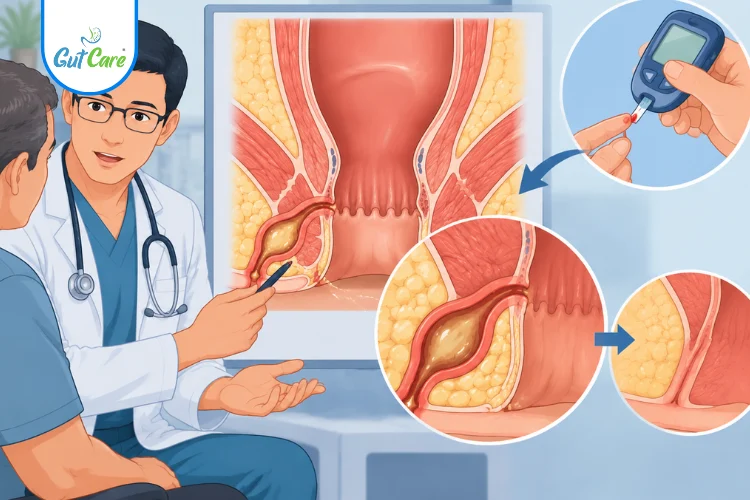
An anal fistula is an abnormal tunnel that develops between the inside of the anus or rectum and the skin around the anus. It often develops after an anal abscess has drained, leaving behind a tract that may continue to cause pain, swelling or discharge.
Anal fistula in diabetics, healing can sometimes take longer. This does not mean that every person with diabetes will have a difficult recovery. Blood sugar control, blood circulation, infection, nutrition and the complexity of the fistula can all influence how the wound heals.
Understanding these factors can help you recognise problems early and work with your doctor toward a safer recovery.
If you have diabetes and are experiencing persistent pus discharge, pain, swelling or a recurring lump near the anus, visit gutcare clinics.
Book an appointment Today!
Does Diabetes Cause Anal Fistula?
Diabetes does not automatically cause an anal fistula. Most anal fistulas are associated with an infection or abscess around the anus.
However, diabetes can affect the body’s ability to respond to infection and repair damaged tissue. This is particularly relevant when blood glucose levels remain above the recommended range for long periods.
In a person with diabetes, an infection may require closer monitoring, and a wound may take longer to heal depending on the individual’s overall health and diabetes control.
Why Does Anal Fistula in Diabetics Healing Take Longer?
High blood sugar can affect wound healing
Persistently elevated blood glucose can interfere with several processes involved in tissue repair.
Healing requires healthy blood flow, oxygen delivery, immune activity and the formation of new tissue. Poorly controlled diabetes can affect these processes and may make recovery slower.
This is one reason diabetes management becomes an important part of recovery after fistula treatment.
Reduced blood circulation can affect the wound
Good circulation supplies oxygen and nutrients needed for tissue repair.
Diabetes can contribute to blood vessel changes over time. If circulation around a healing wound is reduced, the body may have more difficulty repairing damaged tissue.
This does not happen to everyone with diabetes, but it is one factor doctors consider when a wound is slow to heal.
The body’s response to infection may be affected
The immune system plays an important role in controlling infection.
Diabetes can affect immune function, particularly when blood glucose is poorly controlled. This may increase concern about persistent or recurrent infections around a fistula.
For this reason, increasing pain, swelling, redness, pus or fever should not be ignored.
Infection can interfere with healing
An anal fistula is closely linked to infection and inflammation.
If an abscess develops again or infection continues around the fistula tract, the wound may not progress normally through healing.
Treating the underlying fistula and addressing infection when present are therefore important parts of care.
Nutrition and overall health also matter
Healing requires adequate nutrition. A balanced diet provides protein, vitamins, minerals and other nutrients involved in tissue repair.
People recovering from fistula treatment should also avoid prolonged constipation and straining, unless their doctor has given different instructions.
Does Better Blood Sugar Control Help Anal Fistula Healing?
Good diabetes management is an important part of preparing for treatment and recovery.
Your doctor may recommend monitoring your blood glucose more closely around the time of a procedure. The exact targets depend on your individual diabetes treatment plan, medications and overall health.
Do not change insulin or other diabetes medicines on your own. Follow the plan provided by your diabetes physician or treating surgeon.
Keeping diabetes under appropriate control can support the body’s normal healing processes, although it cannot guarantee a particular healing time.
How Is Anal Fistula Treated in People With Diabetes?
Treatment depends on the location and complexity of the fistula, whether an abscess is present, and how much of the anal sphincter is involved.
A specialist may assess the fistula through a physical examination and, when necessary, imaging such as an MRI for complex or recurrent disease.
Treatment options can include procedures such as:
- Fistulotomy for selected fistulas
- Seton placement in certain complex fistulas
- Other sphincter-preserving procedures
- Treatment of an associated abscess
- Additional procedures when the fistula is recurrent or complex
The appropriate procedure is not determined by diabetes alone. The anatomy of the fistula and the need to protect normal bowel-control function are important considerations.
Antibiotics may be needed when there is an infection, but antibiotics alone generally do not eliminate an established fistula tract.
How Can Diabetic Patients Support Recovery?
After treatment, follow the specific wound-care instructions provided by your surgeon.
Depending on the procedure, your care plan may include:
- Keeping the area clean as instructed
- Taking prescribed medicines correctly
- Monitoring blood glucose as advised
- Avoiding constipation and excessive straining
- Drinking adequate fluids unless medically restricted
- Eating a balanced, protein-containing diet
- Attending scheduled follow-up appointments
- Reporting unusual pain, swelling or discharge promptly
Avoid applying creams, antiseptics or home remedies to the surgical area unless your doctor recommends them.
If you have diabetes and your fistula wound is taking longer than expected to heal, a follow-up examination can help determine whether the delay is related to normal recovery, infection, the fistula anatomy or another factor.
What Signs Should Diabetic Patients Not Ignore?
Because infection can become more concerning when diabetes is poorly controlled, seek medical attention if you notice:
- Fever or chills
- Increasing pain around the anus
- New or worsening swelling
- Redness spreading around the wound
- Increasing pus or foul-smelling discharge
- A new painful lump
- The wound opening again after appearing to heal
- Symptoms of significantly worsening blood glucose control
Severe symptoms or rapidly worsening pain and swelling require prompt medical assessment.
How Long Does Anal Fistula Healing Take?
There is no single recovery timeline for everyone.
Healing depends on the type of procedure, fistula complexity, wound size, infection, blood glucose control, circulation and other individual health factors.
A simple fistula treated with an appropriate procedure may heal differently from a complex or recurrent fistula requiring staged treatment.
For people with diabetes, regular follow-up is particularly useful when healing appears slower than expected. Your surgeon can check the wound and determine whether continued healing is occurring normally or whether additional treatment is required.
Can an Anal Fistula Come Back?
Yes. Anal fistulas can recur even after treatment.
The risk depends on factors such as fistula complexity, whether all relevant parts of the tract have been treated, previous procedures, associated disease and individual healing factors.
Diabetes does not mean recurrence is inevitable. However, maintaining appropriate diabetes care and attending follow-up appointments can be important parts of long-term management.
When Should You See a Fistula Specialist?
Do not keep treating recurring anal discharge or swelling as a simple skin problem.
A specialist assessment is particularly important if you have diabetes and experience:
- Repeated abscesses near the anus
- Persistent discharge
- A wound that does not heal
- Recurrent pain or swelling
- A previously treated fistula that has returned
Early assessment can help identify the fistula tract and determine an appropriate treatment plan.
Find us here:Gutcare Clinics, Indiranagar, Bangalore | Dr. Yuvraj Singh Gehlot, Digestive Health Specialist
Frequently Asked Questions
Does diabetes make an anal fistula harder to heal?
Diabetes can contribute to slower wound healing, particularly when blood glucose is not well controlled. Other factors such as infection, circulation, nutrition and fistula complexity also affect healing.
Can a diabetic patient undergo anal fistula surgery?
Yes. People with diabetes can undergo anal fistula treatment. The surgeon may consider blood glucose control, medications, infection and other health conditions when planning treatment and recovery.
How does high blood sugar affect fistula healing?
Persistently high blood sugar can affect circulation, immune function and the body’s tissue-repair processes. These changes may contribute to delayed wound healing.
Can an anal fistula heal without surgery?
Some symptoms may temporarily improve if an abscess drains, but an established anal fistula often has a persistent tract that requires medical or surgical treatment. The appropriate approach depends on the fistula’s anatomy.
What should diabetics do after anal fistula surgery?
Follow the surgeon’s wound-care instructions, monitor blood glucose as advised, take prescribed medicines, avoid constipation and attend follow-up appointments. Contact your doctor if pain, swelling, discharge or fever increases.
Can an anal fistula come back after treatment?
Yes. Recurrence is possible, particularly with complex or recurrent fistulas. Follow-up helps identify persistent or returning disease early.
When should a diabetic patient see a doctor for an anal fistula?
Persistent discharge, recurring swelling, repeated abscesses, increasing pain or a wound that is not healing should be assessed by a qualified specialist. Fever or rapidly worsening symptoms require prompt medical attention.
Is anal fistula related to an anal abscess?
Often, yes. An anal abscess is an infected collection near the anus, and an anal fistula can develop afterward as an abnormal tunnel connecting the infected area to the anal canal or skin.