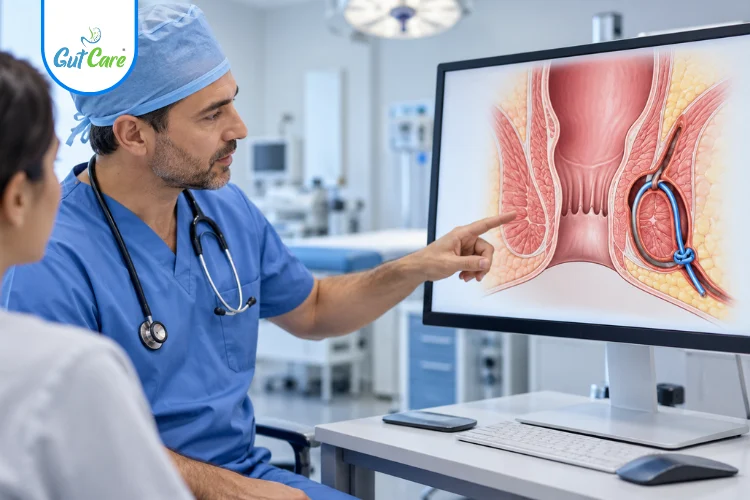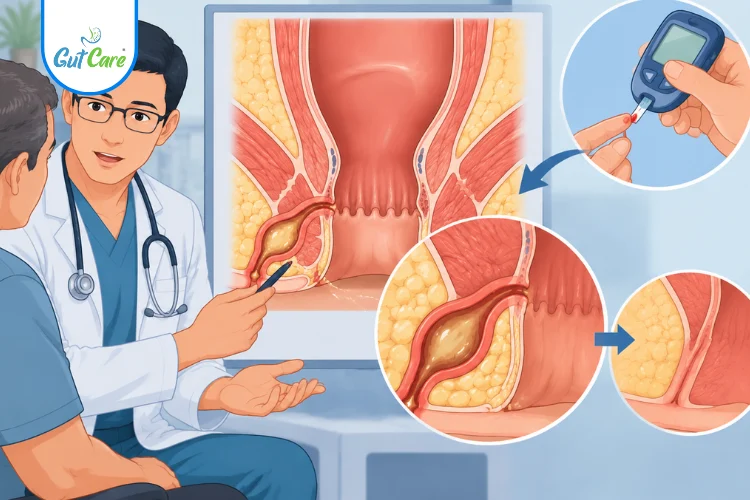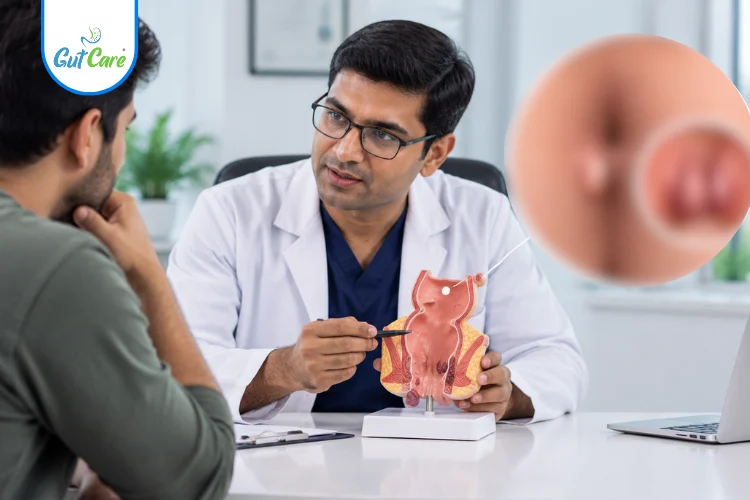
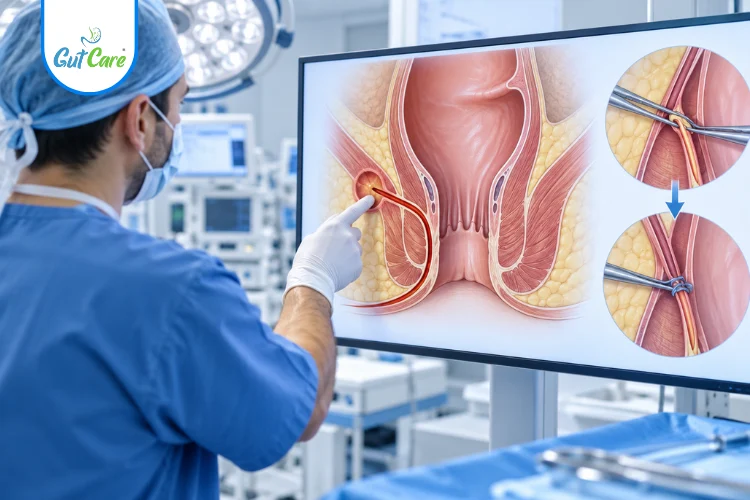
An anal fistula is an abnormal tunnel that develops between the inside of the anal canal and the skin around the anus. While some fistulas can be treated with procedures that open the tract, treatment becomes more complicated when the fistula passes through an important part of the anal sphincter.
This is where the LIFT procedure for anal fistula can be considered. LIFT, which stands for Ligation of the Intersphincteric Fistula Tract, is a sphincter-preserving technique designed to treat suitable trans sphincteric fistulas without deliberately dividing the main anal sphincter muscles.
At Gutcare Clinics in Bangalore, the choice of fistula treatment depends on factors such as the fistula’s anatomy, complexity, previous procedures, infection and how much sphincter muscle is involved.
If you have persistent discharge, recurrent swelling or a diagnosed anal fistula, consult a colorectal or proctology specialist for an assessment rather than delaying treatment.
Book an appointment Today!
What Is the LIFT Procedure for Anal Fistula?
LIFT is a surgical technique developed specifically to manage certain transsphincteric anal fistulas.
A transsphincteric fistula passes through the anal sphincter complex. Simply cutting across the tract in these cases may involve dividing a significant amount of sphincter muscle, which can increase concerns about continence.
Instead, LIFT approaches the fistula through the intersphincteric plane, the natural space between the internal and external anal sphincter muscles.
The surgeon identifies the fistula tract, isolates it, ties it off and divides it within this plane. The goal is to stop the abnormal connection while avoiding deliberate division of the main sphincter muscles.
What does LIFT stand for?
LIFT means Ligation of the Intersphincteric Fistula Tract.
- Ligation: tying off the fistula tract
- Intersphincteric: working in the space between the sphincter muscles
- Fistula tract: the abnormal tunnel connecting the anal canal with the skin
This explains why LIFT is described as a sphincter-preserving fistula procedure.
Why Is Sphincter Preservation Important?
The anal sphincter is a group of muscles that helps control bowel movements. Preserving healthy sphincter function is therefore an important consideration when planning anal fistula surgery.
A fistula that passes through more sphincter muscle can make treatment more challenging. A procedure that divides too much functioning sphincter muscle may potentially affect bowel control.
This does not mean that every fistula requires LIFT. A simple, low fistula may be better suited to a fistulotomy, while a complex fistula may require another sphincter-preserving approach.
The important point is that the procedure should be selected according to the fistula’s anatomy rather than using the same treatment for every patient.
How Does LIFT Preserve the Anal Sphincter?
The main difference between LIFT and a traditional fistulotomy is how the fistula tract is approached.
Step 1: The fistula is mapped
The surgeon first evaluates the fistula to understand the location of its internal and external openings, the path of the tract and its relationship to the sphincter muscles.
Depending on the case, this may involve clinical examination, examination under anaesthesia and imaging such as an MRI of the pelvis.
Step 2: The intersphincteric plane is accessed
Instead of opening the entire fistula tract through the sphincter, the surgeon reaches the tract through the space between the sphincter muscles.
Step 3: The fistula tract is identified
The surgeon carefully isolates the tract at the intersphincteric level.
Step 4: The tract is ligated and divided
The tract is tied off and divided. This interrupts the abnormal pathway between the anal canal and the external opening.
Step 5: The external portion is managed
The remaining external part of the fistula may be cleaned or allowed to drain according to the surgical plan, helping the area heal from the inside.
The central principle is simple: treat the fistula while avoiding deliberate division of the main sphincter muscle.
LIFT vs Fistulotomy: What Is the Difference?
Both procedures can be used to treat anal fistulas, but they are suitable for different anatomical situations.
| Feature | LIFT | Fistulotomy |
| Main approach | Intersphincteric tract ligation | Opens the fistula tract |
| Sphincter approach | Designed to avoid deliberate sphincter division | May divide involved sphincter muscle |
| Common consideration | Suitable transsphincteric fistulas | Often suitable for selected low/simple fistulas |
| Main goal | Treat fistula while preserving sphincter function | Lay open the tract for healing |
| Suitability | Depends on fistula anatomy | Depends on how much sphincter is involved |
Neither procedure is automatically “better” for every patient. The safest and most effective option depends on the fistula’s course, sphincter involvement, complexity and previous treatment.
Who May Be Suitable for LIFT?
LIFT is particularly considered for selected transsphincteric fistulas, where cutting through the involved sphincter could create an unacceptable risk to continence.
A specialist may consider factors such as:
- The fistula’s relationship with the anal sphincter
- Whether the fistula is simple or complex
- Presence of multiple or branching tracts
- Previous fistula surgery
- Recurrent disease
- Active infection or abscess
- Conditions such as Crohn’s disease
- Findings on clinical examination or MRI
LIFT may not be appropriate when the anatomy does not allow the tract to be clearly identified or when another treatment would provide a better chance of healing.
Is LIFT Suitable for Every Anal Fistula?
No.
This is an important distinction when researching LIFT surgery for anal fistula. A procedure being sphincter-preserving does not mean it is the right choice for every fistula.
Simple low fistulas may often be treated with fistulotomy. More complex cases may require options such as seton placement, an advancement flap or other sphincter-preserving techniques.
The treatment decision should follow a proper assessment of the fistula rather than the assumption that one technique is universally superior.
What Is Recovery Like After LIFT?
Recovery varies depending on the complexity of the fistula, the procedure performed and the individual’s overall health.
After surgery, patients may experience some discomfort, drainage or local tenderness. These symptoms generally improve as healing progresses.
Your surgeon may recommend:
- Keeping the area clean
- Warm baths or sitz baths when appropriate
- Adequate fluids and fibre
- Avoiding constipation and excessive straining
- Taking prescribed medicines as directed
- Attending follow-up appointments
- Watching for increasing pain, swelling, fever or persistent drainage
The external wound may appear to improve before the fistula has completely healed. Follow-up is therefore important even when symptoms seem better.
What Are the Possible Risks of LIFT?
Like any surgical procedure, LIFT has potential risks.
These can include:
- Persistent or recurrent fistula
- Infection or abscess
- Bleeding
- Pain or wound discomfort
- Delayed healing
- Failure of the tract to close
- Changes in continence, although the procedure is specifically designed to minimise sphincter injury
Published studies have reported variable healing rates for LIFT, and outcomes can differ according to patient selection, fistula anatomy and follow-up duration. The American Society of Colon and Rectal Surgeons recognises LIFT as a sphincter-preserving option for appropriately selected transsphincteric fistulas.
Importantly, no fistula procedure can guarantee zero recurrence or zero risk to continence.
Why Specialist Assessment Matters Before Fistula Surgery
Anal fistulas can look similar from the outside while having very different internal anatomy.
A small external opening does not necessarily mean that the underlying fistula is simple. There may be a longer tract, secondary branches, a horseshoe component or significant sphincter involvement.
A specialist assessment can help determine:
- Where the internal opening is located
- How the tract passes through the sphincter
- Whether an abscess is present
- Whether there are secondary tracts
- Whether the fistula is recurrent
- Which procedure offers the most appropriate balance between healing and sphincter preservation
For complex or recurrent fistulas, MRI can be particularly useful for mapping the anatomy.
If you have already undergone fistula treatment but continue to experience drainage or recurrent swelling, consider a specialist review to reassess the fistula tract before choosing another procedure.
LIFT Procedure in Bangalore: What Should Patients Consider?
When looking for fistula treatment in Bangalore, patients should look beyond the name of a procedure.
Ask whether the evaluation includes a careful assessment of the fistula tract and sphincter involvement. It is also useful to understand why a particular procedure has been recommended and what alternatives may be appropriate.
At Gutcare Clinics, the focus is on evaluating the individual fistula before discussing treatment options. This helps patients understand whether LIFT, fistulotomy or another approach is appropriate for their specific anatomy.
Key Takeaways
The LIFT procedure for anal fistula is a sphincter-preserving surgical technique designed primarily for suitable transsphincteric fistulas.
Its key principle is to ligate and divide the fistula tract in the intersphincteric plane rather than deliberately cutting through the main sphincter muscles.
However, LIFT is not appropriate for every anal fistula. Proper examination and, when required, imaging are important for selecting the right treatment.
If you have an anal fistula, recurrent drainage or repeated swelling around the anus, early specialist evaluation can help identify the fistula’s anatomy and the most appropriate treatment strategy.
Looking for anal fistula treatment in Bangalore?
Find us here:Gutcare Clinics, Indiranagar, Bangalore | Dr. Yuvraj Singh Gehlot, Digestive Health Specialist
5. FAQ Section
What is the LIFT procedure for anal fistula?
LIFT stands for Ligation of the Intersphincteric Fistula Tract. It treats selected anal fistulas by accessing and ligating the tract between the sphincter muscles, with the aim of avoiding deliberate division of the main sphincter muscles.
Does the LIFT procedure cut the sphincter?
The LIFT technique is designed to avoid deliberately cutting the main anal sphincter muscles. However, the suitability of LIFT depends on the exact anatomy of the fistula, so a specialist assessment is important.
Is LIFT better than fistulotomy?
Neither procedure is universally better. Fistulotomy can be highly effective for selected simple, low fistulas, while LIFT may be considered when a fistula passes through a significant portion of the sphincter and preservation of sphincter function is an important concern.
Who is a good candidate for LIFT surgery?
LIFT is commonly considered for selected transsphincteric anal fistulas. Previous surgery, recurrent disease, complex or branching tracts, Crohn’s disease and other factors can influence whether LIFT is appropriate.
How long does it take to recover from LIFT surgery?
Recovery varies between patients and depends on the complexity of the fistula and the procedure. Local discomfort and drainage may occur during healing, while complete closure of the fistula can take longer than the initial recovery period.
Can an anal fistula come back after LIFT?
Yes. Recurrence or failure to heal is possible after LIFT, as it is with other fistula procedures. The risk depends on factors such as fistula anatomy, complexity, previous treatment and underlying conditions.
Is LIFT surgery painful?
Some discomfort, tenderness or drainage can occur after LIFT. Pain levels vary between patients and are influenced by the complexity of the fistula and the surgical approach.
Can LIFT completely protect bowel control?
LIFT is designed as a sphincter-preserving procedure, but no surgery can guarantee completely unchanged bowel control. The individual risk should be discussed with the surgeon after assessing the fistula and sphincter anatomy.