
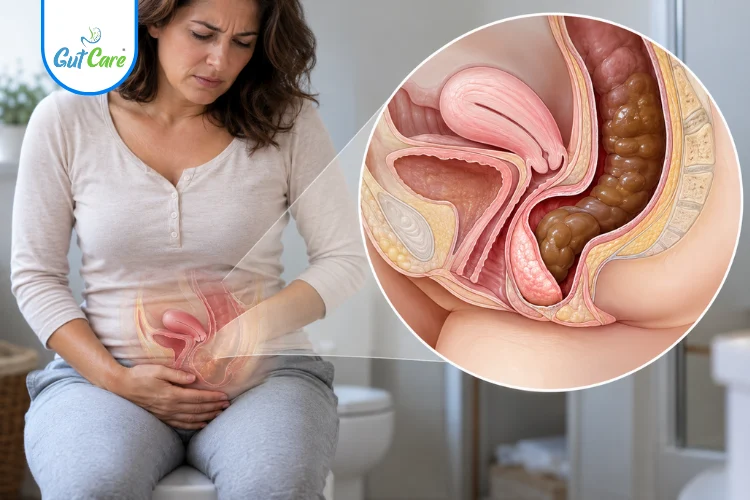
Constipation is usually associated with diet, dehydration or slow bowel movements. But when constipation continues despite making changes to your diet and bowel habits, there may be another factor involved. One possibility is a rectocele, a type of pelvic organ prolapse in which the front wall of the rectum bulges into the back wall of the vagina.
A rectocele can make it difficult to completely empty the bowel and may create a cycle of constipation, straining and worsening pelvic floor weakness. Understanding the connection between rectocele and constipation can help you recognise the symptoms and seek the right treatment.
If you regularly struggle with incomplete bowel movements, excessive straining or a feeling of pressure or bulging in the vagina, consider discussing your symptoms with a specialist at Gutcare Clinics in Bangalore.
What is a rectocele?
A rectocele occurs when the tissue separating the rectum from the vagina becomes weakened or stretched. As a result, part of the rectal wall can push forward into the vaginal space.
It is also described as a posterior vaginal wall prolapse.
Small rectoceles may cause no symptoms and may be discovered during a routine pelvic examination. Larger or symptomatic rectoceles can interfere with bowel movements and daily activities.
A rectocele is different from a rectal prolapse. In rectal prolapse, part of the rectum protrudes through the anus. With a rectocele, the rectal wall bulges towards the vagina.
How are rectocele and constipation connected?
The relationship can work in both directions.
Long-term constipation often causes repeated straining during bowel movements. Persistent pressure on the pelvic floor may contribute to weakening of the tissues that support the rectum and vagina.
At the same time, a rectocele can make it harder to empty the rectum properly. Stool may become trapped in the bulging area, leaving you with the sensation that you still need to pass stool even after using the toilet.
This can lead to a cycle:
- Constipation causes straining.
- Repeated straining puts stress on pelvic floor tissues.
- Weakened support can contribute to a rectocele.
- The rectocele may make bowel emptying more difficult.
- Difficulty emptying the bowel can lead to further straining.
However, constipation does not automatically mean that someone has a rectocele. There are many other causes of constipation, so proper assessment is important.
What are the symptoms of a rectocele?
A rectocele does not always cause noticeable symptoms. When symptoms occur, they can be related to bowel movements, pelvic pressure or vaginal bulging.
Common symptoms include:
- Difficulty passing stool
- Feeling that the bowel has not completely emptied
- Frequent straining during bowel movements
- A feeling of pressure in the vagina or pelvis
- A bulge or fullness inside the vagina
- Needing to press around the vagina or perineum to help pass stool
- The sensation of stool getting stuck
- Constipation that does not improve as expected
- Discomfort during sexual intercourse in some cases
The need to press on the vaginal wall or surrounding area to help complete a bowel movement is sometimes called splinting. It can be an important clue that a pelvic floor or rectocele problem may be contributing to difficulty with bowel emptying.
What causes a rectocele?
A rectocele develops when the tissues supporting the rectum and vagina become weakened or stretched.
Factors that may increase the risk include:
Pregnancy and vaginal childbirth
Pregnancy places additional pressure on the pelvic floor. Vaginal childbirth can stretch or injure pelvic floor tissues, particularly after difficult or prolonged deliveries.
Chronic constipation and straining
Repeatedly pushing hard to pass stool can place ongoing pressure on the pelvic floor. Managing constipation early may therefore be helpful for protecting pelvic floor function.
Ageing and hormonal changes
Pelvic support tissues can become less resilient with age. Changes associated with menopause may also affect pelvic floor support.
Previous pelvic surgery
Certain pelvic procedures may alter the structures that support the rectum, vagina and surrounding organs.
Not everyone with these risk factors develops a rectocele, and some people develop one without an obvious single cause.
How is a rectocele diagnosed?
Diagnosis usually begins with a detailed discussion about your symptoms and bowel habits.
A doctor may ask:
- How often you have bowel movements
- Whether you need to strain
- Whether you feel incompletely emptied
- Whether you need to use your fingers to help pass stool
- Whether you have noticed a vaginal bulge or pelvic pressure
- How long your symptoms have been present
A physical and pelvic examination may then be performed to assess the pelvic floor and identify a bulge.
Depending on the symptoms and findings, additional tests may sometimes be recommended. These can include imaging or specialised tests such as defecography, which can show how the rectum and pelvic floor behave during attempted bowel emptying.
The exact tests needed depend on the individual’s symptoms and examination findings.
Can constipation caused by a rectocele be treated without surgery?
Yes. Treatment depends on the size of the rectocele, the severity of symptoms and whether constipation is being caused or worsened by difficulty emptying the rectum.
For mild or moderate symptoms, treatment may begin with measures that make bowel movements easier.
Improve bowel habits
Avoid sitting on the toilet for long periods or repeatedly forcing a bowel movement. Responding to the natural urge to pass stool can also help establish healthier bowel habits.
Increase fibre gradually
Adequate dietary fibre can help produce softer, more easily passed stools. Fibre should generally be increased gradually, particularly if you are prone to bloating.
Good sources include vegetables, fruits, whole grains, pulses and other fibre-rich foods.
Drink enough fluids
Adequate fluid intake helps support softer stools, particularly when increasing dietary fibre.
Avoid excessive straining
Try not to repeatedly push hard to empty the bowel. A small footstool may help position the knees slightly higher than the hips and make a more natural squatting posture.
Consider pelvic floor physiotherapy
A pelvic floor physiotherapist can assess how the muscles are working and teach appropriate exercises or relaxation techniques. This can be particularly useful when constipation is related to pelvic floor coordination problems.
Laxatives or stool-softening medicines may also be recommended in some patients. These should be selected according to individual needs and medical advice.
When does a rectocele need surgery?
Surgery is not necessary for every rectocele.
It may be considered when the rectocele is causing significant symptoms, bowel emptying remains difficult despite appropriate non-surgical treatment, or the prolapse is substantially affecting quality of life.
The decision should be based on symptoms rather than the size of the rectocele alone. A relatively small rectocele can sometimes cause considerable difficulty, while a larger one may produce few symptoms.
Treatment should also address associated constipation and pelvic floor problems where appropriate. Otherwise, symptoms may persist even after a procedure.
When should you see a doctor for constipation and a possible rectocele?
Occasional constipation is common. However, persistent or unexplained bowel changes deserve attention.
Consider seeking medical advice if you have:
- Ongoing constipation despite lifestyle changes
- Repeatedly incomplete bowel movements
- Significant straining
- A vaginal or pelvic bulge
- The need to manually assist bowel movements
- Persistent pelvic pressure
- New changes in bowel habits
Seek prompt medical attention for symptoms such as significant rectal bleeding, severe abdominal or pelvic pain, persistent vomiting, marked abdominal swelling, unexplained weight loss or an inability to pass stool or gas.
These symptoms can have causes other than rectocele and should not simply be attributed to constipation.
How can you reduce the risk of worsening constipation?
If you have a rectocele or are experiencing symptoms that could be related to one, keeping stools soft and avoiding repeated straining can be helpful.
Practical measures include:
- Eat a balanced, fibre-rich diet.
- Drink adequate fluids.
- Stay physically active.
- Avoid delaying bowel movements regularly.
- Avoid prolonged sitting and straining on the toilet.
- Discuss persistent constipation with a doctor rather than relying only on repeated self-treatment.
- Follow pelvic floor exercises or physiotherapy recommendations when advised.
These measures may help manage constipation, but they do not necessarily correct the underlying structural weakness of a rectocele.
If constipation is persistent or you are having difficulty emptying your bowel, Gutcare Clinics can help assess whether an underlying colorectal or pelvic floor problem may be contributing to your symptoms.
Find us here:Gutcare Clinics, Indiranagar, Bangalore | Dr. Yuvraj Singh Gehlot, Digestive Health Specialist
Why early assessment matters
Rectocele symptoms can sometimes be embarrassing to discuss, particularly when they involve bowel movements or the need for manual assistance. But these symptoms are medical concerns and can be evaluated without judgement.
It is also important not to assume that every case of constipation is caused by a rectocele. Conditions such as irritable bowel syndrome, medication-related constipation, slow-transit constipation and pelvic floor dysfunction can produce similar symptoms.
A proper evaluation helps identify the actual cause and prevents unnecessary treatment.
For patients in Bangalore experiencing persistent constipation, incomplete bowel emptying or symptoms suggestive of a rectocele, Gutcare Clinics can provide specialist assessment and guidance based on the individual’s symptoms.
Frequently Asked Questions About Rectocele and Constipation
What is a rectocele?
A rectocele is a type of pelvic organ prolapse in which the wall between the rectum and vagina becomes weakened, allowing the front wall of the rectum to bulge towards the vagina.
Can a rectocele cause constipation?
Yes. A rectocele can make it difficult to completely empty the rectum. Some people experience stool trapping, incomplete bowel movements or the need to press around the vaginal area to help pass stool.
What does a rectocele feel like?
A rectocele may feel like pelvic pressure, vaginal fullness or a bulge. Some people also feel that stool is getting stuck or that they have not completely emptied their bowel.
Can constipation make a rectocele worse?
Chronic constipation and repeated straining can place additional pressure on the pelvic floor. Managing constipation and avoiding excessive straining may help reduce ongoing stress on these tissues.
Can a rectocele be treated without surgery?
Yes. Depending on the severity of symptoms, treatment may include improving bowel habits, increasing fibre and fluids, managing constipation and pelvic floor physiotherapy. Surgery may be considered when significant symptoms persist despite appropriate conservative treatment.
What is splinting during a bowel movement?
Splinting means using a finger or hand to apply pressure around the vagina, perineum or rectal area to help complete a bowel movement. It can occur with a rectocele and should be discussed with a healthcare professional if it becomes necessary regularly.
When does a rectocele need surgery?
Surgery may be considered when a rectocele causes significant symptoms or persistent difficulty with bowel emptying despite appropriate non-surgical treatment. The decision depends on symptoms, examination findings and the individual’s overall health.
Is a rectocele the same as rectal prolapse?
No. A rectocele occurs when the rectal wall bulges towards the vagina. Rectal prolapse occurs when part of the rectum protrudes through the anus. Although both can affect bowel function, they are different conditions.