Travelling can be exciting, but a change in your usual routine can sometimes affect your bowel habits. You may eat at different times, drink less water, spend long hours sitting, sleep differently or simply find it difficult to follow your usual toilet routine. For some people, these changes can lead to travel constipation.
The good news is that a few simple habits can make it easier to maintain a regular bowel routine during a trip. From planning your meals to staying active and responding to the urge to use the toilet, small changes can make travelling more comfortable.
At Gutcare Clinics, we understand that changes in bowel habits can be frustrating, especially when they happen repeatedly during travel. This guide explains why constipation can occur while travelling and what you can do to reduce the chances of it happening.
If constipation during travel is becoming a recurring concern, you can consult the team at Gutcare Clinics in Bangalore to discuss your symptoms and suitable next steps.
Book Your Consultation Today
Why Does Travel Cause Constipation?
There is rarely just one reason why someone develops constipation while travelling. Several changes can happen at the same time, and your normal bowel routine may be disrupted.
Changes in your daily routine
Your body may be accustomed to having meals, sleeping and using the toilet at roughly the same times each day. Travel can change all of these.
You might wake up earlier for a flight, eat dinner much later than usual or spend an entire day moving between different locations. These changes can make it harder to maintain your normal bowel routine.
Spending long periods sitting
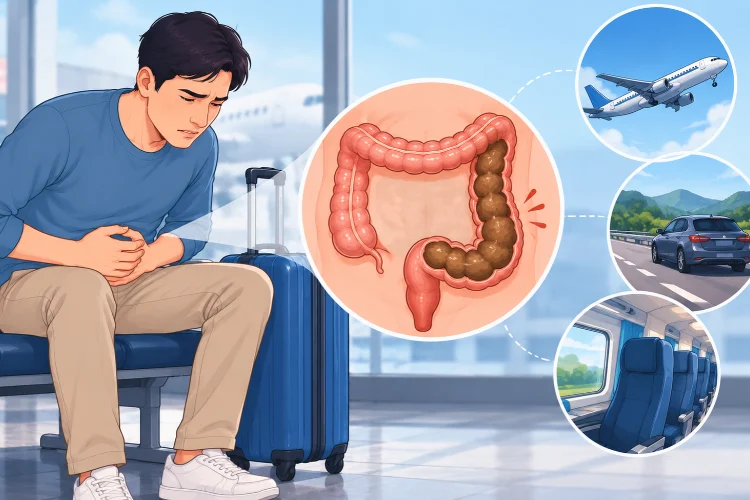
Road trips, flights, trains and long bus journeys can involve extended periods of sitting.
When travelling, you may also walk less than you normally do, particularly on days spent moving between airports, hotels and vehicles. This reduction in your usual physical activity can coincide with changes in bowel habits.
Drinking less water
People sometimes drink less while travelling because they do not want to search for toilets frequently or because access to water is inconvenient.
Busy schedules can also make it easy to forget about regular fluid intake. Maintaining your usual drinking routine can be particularly useful when you are away from home.
Changes in food
Travel often means eating differently.
You may have more restaurant meals, fewer familiar foods, different meal timings or less of the fibre-containing foods you normally eat. These dietary changes can affect your usual bowel pattern.
Ignoring the urge to use the toilet
One of the most common practical problems during travel is inconvenient toilet access.
You may feel the need to use the toilet while travelling, but postpone it because you are on a bus, in a meeting, at an airport or visiting a crowded place. Repeatedly delaying your normal toilet routine can make it harder to maintain regular bowel habits.
Stress and unfamiliar surroundings
Even enjoyable travel can involve changes in sleep, schedules and surroundings.
Some people may feel uncomfortable using unfamiliar toilets or may find it difficult to relax when they are away from home. This can make maintaining a normal toilet routine more challenging.
What Does Travel Constipation Feel Like?
Travel constipation does not look exactly the same for everyone. You may notice a change from your normal bowel pattern rather than one specific symptom.
Some common changes people notice include:
- Passing stool less often than usual
- Finding it harder to pass stool
- Feeling that you have not completely emptied your bowel
- Passing harder or drier stool
- Spending longer than usual in the bathroom
- Feeling bloated or uncomfortable
- Experiencing a noticeable change in your usual bowel routine
The important point is to compare your bowel habits with what is normal for you.
How to Prevent Constipation While Travelling
You do not need a complicated travel routine to support regular bowel habits. A few practical habits can be easier to maintain when you plan them before your trip.
1. Keep your drinking routine consistent
Carry a water bottle when practical and make drinking fluids part of your travel routine.
Instead of waiting until you feel very thirsty, take regular drinks throughout the day. If you are travelling somewhere with different weather conditions or spending more time outdoors, pay attention to your usual fluid needs.
2. Include fibre-containing foods
Changes in diet are common during holidays and business trips. Try to include foods that you normally associate with a balanced diet rather than relying entirely on restaurant meals or highly processed snacks.
Depending on what is available, this could include:
- Fruits
- Vegetables
- Whole grains
- Beans and lentils
- Nuts and seeds
If your usual diet already contains these foods, maintaining some familiar choices during your trip can make your eating routine easier to manage.
3. Keep moving during long journeys
You do not necessarily need a full workout while travelling.
During suitable breaks, stand up, stretch or walk around. On a holiday, walking while exploring your destination can also help you avoid spending the entire day sitting.
For long journeys, use appropriate breaks to move around rather than remaining seated continuously whenever possible.
4. Do not ignore the urge to use the toilet
If you need to use the toilet, try to respond to the urge rather than repeatedly postponing it.
Before leaving your hotel or accommodation, you can also give yourself enough time in the morning instead of rushing directly into your travel schedule.
5. Protect your morning routine
For many people, mornings become completely different during a trip.
Instead of immediately rushing to breakfast, a sightseeing location or a meeting, allow some time for your normal morning routine. Having enough time can make it easier to use the toilet without feeling rushed.
6. Plan your meals
Travel can make meal timings unpredictable, particularly during road trips and busy sightseeing days.
Whenever possible, try to avoid going for extremely long periods without eating and then having very large meals. Planning simple meals and snacks can help you maintain some consistency.
7. Be prepared for long journeys
If you know that long journeys tend to affect your bowel habits, preparation can make a difference.
Before leaving:
- Carry water
- Pack familiar snacks
- Check where suitable toilet facilities may be available
- Allow enough time before departure
- Plan breaks during road journeys
- Avoid making your entire schedule so tight that you cannot take bathroom breaks
A little planning can prevent your bowel routine from becoming an afterthought.
What Should You Eat When Travelling?
There is no single travel diet that works for everyone. The goal is to avoid completely abandoning your usual eating pattern.
When possible, choose a mixture of familiar foods and fibre-containing options. Fresh fruit can be a convenient travel choice, while vegetables, whole grains, pulses and other fibre-containing foods can be included in meals.
At the same time, sudden major changes to your diet may not be comfortable for everyone. If you normally eat a particular way, keeping your meals reasonably familiar while travelling may be more practical than making several changes at once.
How to Maintain Your Toilet Routine on Holiday
A holiday schedule can make regular bathroom habits surprisingly difficult.
You may sleep later, eat at different times and spend most of the day outside your accommodation. If your body usually follows a predictable routine, try to leave some space for it.
Give yourself enough time
Avoid creating a morning schedule that leaves no time for the bathroom.
Getting up slightly earlier can be more practical than rushing through your morning and postponing the urge to use the toilet.
Know where toilets are available
When sightseeing or travelling between destinations, knowing where toilets are located can reduce the temptation to delay using them.
This is especially useful on road trips, during long excursions and on days when you will be away from your accommodation for several hours.
Avoid making travel days unnecessarily stressful
A tightly packed itinerary can leave little room for breaks.
Building reasonable pauses into your travel schedule gives you time to eat, drink, walk and use the toilet when needed.
What If You Are Already Constipated While Travelling?
If constipation has already started, return to the basics of your normal routine.
Drink fluids regularly, include fibre-containing foods where appropriate, move around during the day and give yourself enough time for bathroom breaks. Most importantly, avoid turning the situation into a cycle of ignoring the urge because you are busy travelling.
If your bowel changes continue after your trip, happen frequently whenever you travel, or are causing significant concern, consider discussing them with a healthcare professional rather than repeatedly managing the problem on your own.
When Should You Discuss Travel-Related Constipation With a Doctor?
An occasional change in bowel habits during travel may simply coincide with changes in your routine. However, repeated or persistent constipation deserves more attention.
Consider speaking with a healthcare professional if:
- Constipation keeps returning whenever you travel
- Your bowel habits remain changed after returning home
- The problem is becoming more difficult to manage
- Changes in your bowel habits are persistent or concerning
- You are unsure whether your symptoms are related to constipation or another digestive issue
Keeping a simple note of when the changes started, what you ate, your travel schedule and how your bowel habits changed can also make it easier to explain the problem during a consultation.
Find us here:Gutcare Clinics, Indiranagar, Bangalore | Dr. Yuvraj Singh Gehlot, Digestive Health Specialist
A Simple Travel Constipation Prevention Checklist
Before your next trip, keep this checklist in mind:
- Carry a water bottle
- Include fibre-containing foods in your meals
- Pack familiar snacks
- Take movement breaks during long journeys
- Do not repeatedly delay the urge to use the toilet
- Leave enough time for your morning routine
- Plan bathroom breaks on long trips
- Avoid making every part of your itinerary tightly scheduled
- Pay attention to changes that continue after your trip
Travel should not mean completely abandoning the routines that normally work for you. A little preparation can help you maintain more consistent bowel habits while you are away from home.
If you frequently experience constipation while travelling or have ongoing changes in your bowel habits, GutCare Clinics in Bangalore can help you discuss the issue and understand what may be contributing to it.
FAQs
What is travel constipation?
Travel constipation refers to constipation or a noticeable change in bowel habits that occurs while travelling. Changes in routine, food, fluid intake, activity and toilet habits may coincide with the problem.
Why do I get constipated when I travel?
Travel can change several parts of your normal routine at once. Different meal timings, reduced movement, changes in drinking habits, unfamiliar toilets and delaying bathroom breaks can all affect your usual bowel routine.
How can I prevent constipation while travelling?
Try to maintain regular fluid intake, include fibre-containing foods, stay physically active, respond to the urge to use the toilet and leave enough time for your usual bathroom routine.
What should I eat to avoid constipation on a trip?
Try to include familiar fibre-containing foods such as fruits, vegetables, whole grains, beans and lentils when they suit your usual diet. Keeping your meals reasonably consistent can also make travel easier on your routine.
Does sitting for a long time while travelling affect bowel habits?
Long periods of sitting are common during flights, train journeys and road trips. Taking appropriate breaks to stand, stretch and walk can help you avoid being inactive throughout the journey.
How do I stay regular while travelling?
A consistent routine can help. Drink fluids regularly, eat balanced meals, include fibre-containing foods, stay active and avoid repeatedly delaying the urge to use the toilet.
What should I do if constipation continues after travelling?
If your bowel habits do not return to your usual pattern after the trip, or if constipation keeps happening, consider discussing the changes with a healthcare professional.
Is constipation during holidays common?
Changes in daily routines are common during holidays, including different food choices, sleep schedules, activity levels and bathroom routines. These changes can coincide with constipation in some people.