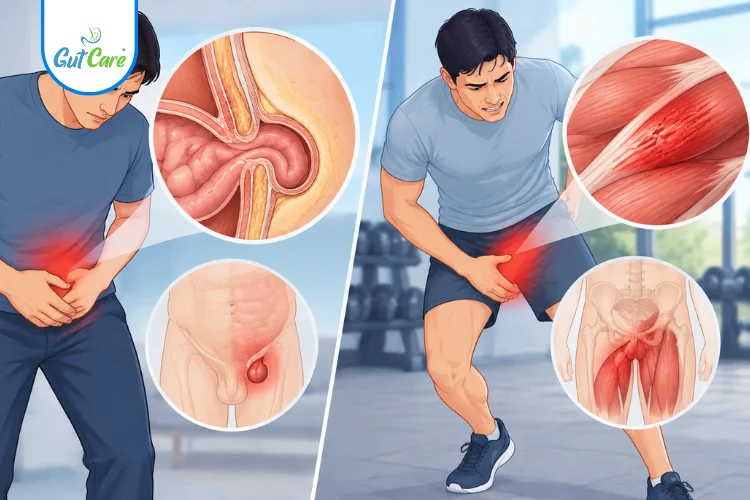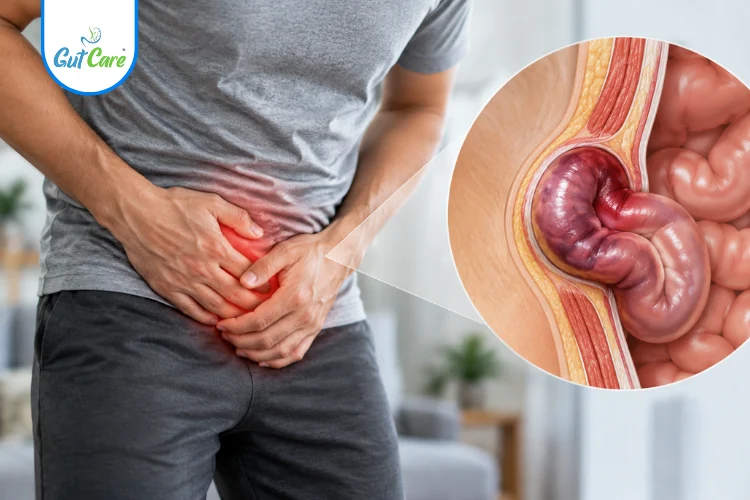
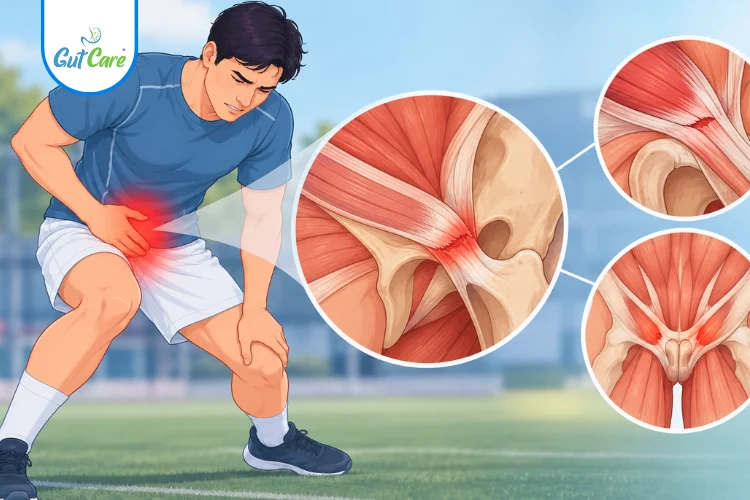
A sharp or persistent pain in the groin or lower abdomen can be frustrating, particularly when it appears during running, football, cricket, sudden changes of direction or other physical activity. One possible cause is a sports hernia, also known medically as athletic pubalgia.
Despite its name, a sports hernia is not always a traditional hernia with a visible lump. It usually refers to an injury or weakness involving the muscles, tendons and tissues around the lower abdomen and groin. Understanding the cause of the pain is important because several other conditions can produce similar symptoms.
This guide explains sports hernia symptoms, causes, diagnosis and treatment, including when conservative care may be enough and when surgery may be considered.
Experiencing recurring groin or lower abdominal pain during physical activity?
Book Your Consultation Today
What Is a Sports Hernia?
A sports hernia, or athletic pubalgia, is a painful injury affecting the lower abdominal and groin region. It commonly occurs when the tissues around the pubic bone and abdominal wall are subjected to repeated stress, particularly during activities involving sprinting, twisting, kicking or sudden changes in direction.
The term can be confusing because a sports hernia is different from a conventional inguinal hernia.
In many cases, there is no obvious groin bulge. The main complaint is pain that develops or worsens with physical activity.
According to the American Academy of Orthopaedic Surgeons, athletic pubalgia can involve injury to muscles or tendons around the lower abdominal and groin region.
What Causes a Sports Hernia?
Sports hernia causes are usually related to repetitive stress or forceful movements involving the abdominal wall, hip and groin muscles.
Activities that place considerable stress on this region include:
- Football and soccer
- Cricket
- Hockey
- Tennis
- Running and sprinting
- Basketball
- Martial arts
- Weight training
- Sports involving frequent twisting or direction changes
A sudden increase in training intensity can also contribute. For example, someone who rapidly increases running distance or begins high-intensity workouts without adequate conditioning may place excessive stress on the muscles and tendons around the pelvis.
Muscle imbalance, poor core conditioning and previous groin injuries may also increase the risk.
Sports Hernia Symptoms to Watch For
The most common sports hernia symptom is pain in the groin or lower abdomen that becomes noticeable during physical activity.
Symptoms can include:
- Pain in the groin or lower abdomen
- Pain near the pubic bone
- Discomfort during sprinting or running
- Pain while kicking or twisting
- Pain when changing direction quickly
- Pain during sit-ups or other abdominal exercises
- Pain that improves with rest but returns after activity
- Tenderness around the groin or lower abdominal region
Some people may feel fine while resting but experience significant pain once they resume sports or strenuous exercise.
A visible bulge is not necessary. This is one reason athletic pubalgia can sometimes be mistaken for a muscle strain or another type of groin injury.
How Is a Sports Hernia Diagnosed?
There is no single test that confirms every case of sports hernia. Diagnosis usually begins with a detailed medical history and physical examination.
A doctor may ask:
- When did the pain begin?
- Which activity triggers it?
- Does the pain improve with rest?
- Have you had a previous groin injury?
- Does coughing or straining worsen the pain?
- Is there a visible lump?
- Have you changed your training routine recently?
During the examination, the doctor may assess the abdomen, groin, hips and surrounding muscles. Specific movements may be used to identify where the pain originates.
Why Imaging May Be Needed
Because several conditions can cause similar groin symptoms, imaging may sometimes be recommended.
An MRI can help assess soft tissues and may identify injuries involving muscles, tendons or structures around the pelvis. Ultrasound or other imaging may also be useful depending on the suspected diagnosis.
A medical review published in Sports Health discusses the role of clinical assessment and imaging in evaluating athletic pubalgia and differentiating it from other causes of groin pain.
Sports Hernia vs Inguinal Hernia
Although the names sound similar, a sports hernia and an inguinal hernia are not necessarily the same condition.
| Sports Hernia | Inguinal Hernia |
| Often associated with athletic activity | Occurs when tissue pushes through a weak area in the abdominal wall |
| Usually causes activity-related groin pain | May cause a groin bulge or swelling |
| A visible bulge may be absent | A visible or palpable bulge is common |
| Often involves muscles, tendons or abdominal wall tissues | Involves protrusion of abdominal tissue through the abdominal wall |
| Diagnosis may require clinical assessment and imaging | Diagnosis is often based on examination, with imaging in selected cases |
The distinction matters because treatment depends on the actual cause of the pain. Not every case of groin pain should be treated as a hernia.
How Is a Sports Hernia Treated?
The best sports hernia treatment depends on the severity of the injury, how long symptoms have been present and whether another condition is responsible for the pain.
Rest and Activity Modification
The first step is often reducing or temporarily stopping activities that trigger pain.
This does not necessarily mean complete inactivity. A doctor or physiotherapist may recommend alternative activities that do not aggravate the affected area.
Trying to repeatedly “push through” significant pain can delay recovery.
Physical Therapy
Physical therapy is commonly an important part of conservative treatment.
A rehabilitation programme may focus on:
- Core strengthening
- Abdominal muscle conditioning
- Hip and pelvic stability
- Adductor strengthening
- Flexibility
- Gradual return to sport-specific movements
The exercises should progress according to symptoms and physical capacity rather than following a fixed timeline for everyone.
Medicines for Pain
A doctor may recommend appropriate pain-relieving or anti-inflammatory medication when necessary. These medicines are not suitable for everyone, so they should be used according to professional advice, particularly if you have other medical conditions or take regular medication.
When Is Surgery Considered?
If significant pain continues despite an appropriate period of conservative treatment, surgery may be considered after confirming the diagnosis.
The exact procedure depends on the underlying problem. Surgical approaches may involve repairing or reinforcing weakened tissues around the abdominal wall or addressing associated tendon problems.
Surgery should not automatically be considered simply because groin pain has lasted for a certain number of weeks. A proper diagnosis is important because conditions such as an adductor injury, hip disorder, stress injury or true inguinal hernia may require different treatment.
If recurring groin pain is preventing you from running, exercising or playing sport normally, speak with a specialist at Gutcare Clinics in Bangalore to determine what is causing the pain and which treatment approach is appropriate.
How Long Does Sports Hernia Recovery Take?
There is no single sports hernia recovery time that applies to everyone.
Recovery depends on factors such as:
- Severity of the injury
- Duration of symptoms
- Overall fitness
- Previous injuries
- Response to physiotherapy
- Whether surgery is required
- The demands of the person’s sport or occupation
Returning to sport too quickly can cause symptoms to return. A gradual progression from daily activities to sport-specific training is generally more appropriate than returning directly to full-intensity exercise.
When Should You See a Doctor for Groin Pain?
Persistent or recurring groin pain deserves assessment, particularly if it interferes with exercise or daily activities.
Seek medical attention if:
- Pain continues despite rest
- Symptoms repeatedly return when you exercise
- Pain is becoming more severe
- You notice a groin swelling or lump
- You have difficulty walking or bearing weight
- Pain is associated with fever or significant swelling
- You experience sudden severe abdominal or groin pain
- You have severe testicular pain or swelling
Sudden severe pain, vomiting, a painful groin lump that cannot be pushed back, or other acute symptoms may require urgent medical evaluation rather than routine sports injury assessment.
Can You Prevent a Sports Hernia?
Not every case can be prevented, but sensible training habits may reduce the risk of groin and abdominal wall injuries.
Consider:
- Increasing training intensity gradually
- Warming up before strenuous exercise
- Maintaining core and hip strength
- Working on flexibility and mobility
- Avoiding sudden increases in workload
- Allowing adequate recovery between intense sessions
- Addressing recurring groin pain early
- Returning to sport gradually after an injury
Good conditioning is particularly important for athletes whose sports involve repeated sprinting, kicking and rapid changes in direction.
Conclusion
A sports hernia, or athletic pubalgia, can cause persistent groin or lower abdominal pain without producing the obvious bulge associated with a traditional hernia. Because several other conditions can produce similar symptoms, accurate diagnosis is an important first step.
Treatment may include activity modification, physiotherapy and gradual rehabilitation. When symptoms persist despite appropriate conservative care, a specialist may consider further investigations and, in selected cases, surgery.
If ongoing groin pain is affecting your exercise, sport or everyday activities, getting it assessed can help identify the actual cause and guide appropriate treatment.
Looking for evaluation and treatment for persistent groin pain in Bangalore? Find us here:Gutcare Clinics, Indiranagar, Bangalore | Dr. Yuvraj Singh Gehlot, Digestive Health Specialist
FAQs
What is a sports hernia?
A sports hernia, also called athletic pubalgia, is a painful condition affecting tissues around the lower abdomen and groin. Despite the name, it may not involve a traditional hernia or a visible bulge.
What are the main sports hernia symptoms?
Common symptoms include groin or lower abdominal pain that worsens with running, sprinting, kicking, twisting, changing direction or abdominal exercises. Pain may improve with rest and return when physical activity resumes.
Can you have a sports hernia without a bulge?
Yes. A sports hernia often does not produce the visible bulge commonly associated with an inguinal hernia. Activity-related groin pain may be the main symptom.
How is a sports hernia diagnosed?
Diagnosis generally involves a medical history and physical examination. Depending on the symptoms and suspected cause, imaging such as MRI or ultrasound may be recommended to assess the soft tissues and rule out other conditions.
What is the best treatment for a sports hernia?
Treatment depends on the underlying injury. Activity modification and structured physical therapy are commonly used first. Persistent symptoms may require further evaluation and, in selected cases, surgery.
How long does it take to recover from a sports hernia?
Recovery time varies depending on the severity of the injury, treatment approach, fitness level and response to rehabilitation. Returning to strenuous sport too quickly may cause symptoms to recur.
Can a sports hernia heal without surgery?
Some cases improve with rest, activity modification and appropriate rehabilitation. Surgery may be considered when symptoms persist despite suitable conservative treatment and the diagnosis supports a surgical approach.
When should I see a doctor for groin pain?
You should consider medical evaluation if groin pain persists, repeatedly returns during exercise, limits your activities or is associated with a swelling or lump. Sudden severe pain or other acute symptoms require prompt medical attention.