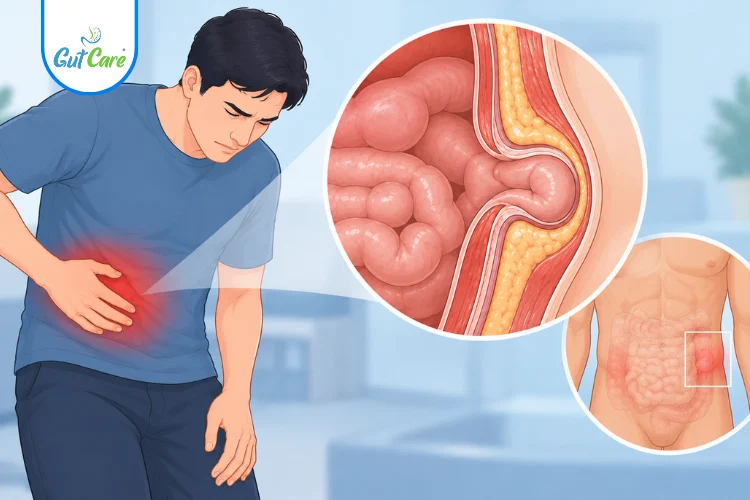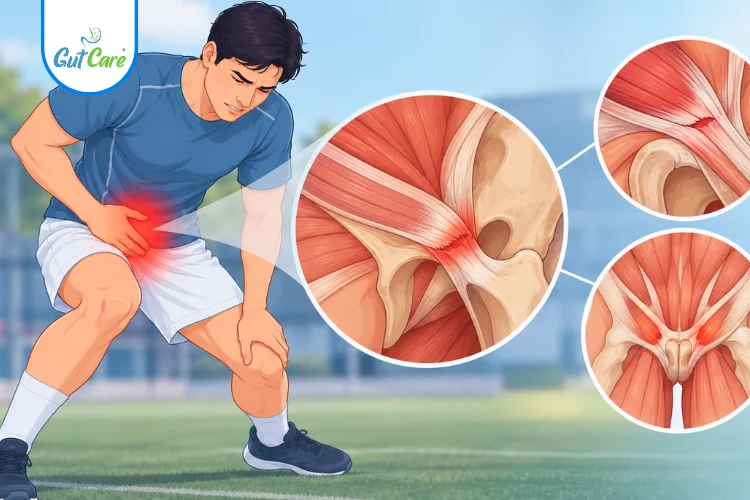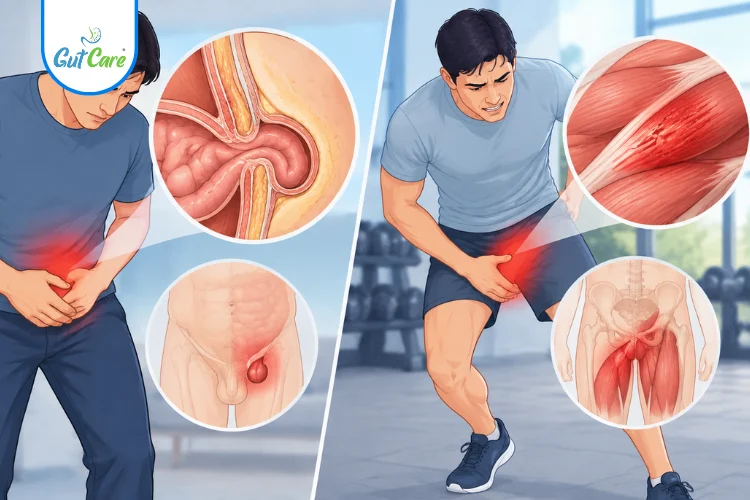
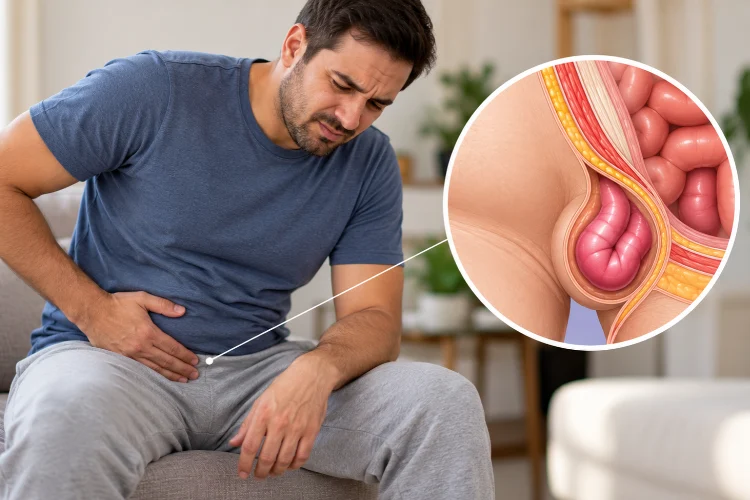
A hernia can be easy to ignore when the lump is small, comes and goes, or causes little discomfort. This often leads to a common question: can a hernia heal itself without surgery?
A hernia occurs when tissue pushes through a weakened area in the abdominal wall. Although the visible bulge may become smaller or disappear temporarily, that does not necessarily mean the underlying weakness has healed.
Whether a hernia needs treatment immediately or can be monitored depends on factors such as its type, size, symptoms and individual circumstances. At Gutcare Clinics in Bangalore, understanding these factors is an important part of deciding what to do next.
If you have noticed a new lump or swelling around your abdomen or groin, book a consultation at Gutcare Clinics in Bangalore for an appropriate assessment.
Can a Hernia Heal Itself Without Surgery?
In general, a hernia does not simply close the weakened area on its own. However, this does not mean that every person with a hernia needs immediate surgery.
Some hernias may be monitored when symptoms are limited and there are no concerning changes. Monitoring means keeping track of the hernia and discussing any changes with a clinician rather than assuming that the condition has disappeared.
Why can a hernia seem to disappear?
The appearance of a hernia can change depending on your position and activity.
For example, the bulge may become more noticeable when:
- Standing for a long period
- Coughing or sneezing
- Lifting something
- Straining during bowel movements
- Performing certain physical activities
It may become less noticeable when you lie down or relax. This change in appearance can make it seem as though the hernia has gone away.
However, a disappearing or smaller lump does not necessarily mean that the underlying weakness has been repaired.
Can a Hernia Be Managed Without Surgery?
Whether a hernia can be managed without immediate surgery depends on the individual situation. A clinician may recommend monitoring in some cases, particularly when symptoms are limited.
The goal of non-surgical management is not to make the hernia permanently disappear. Instead, it involves understanding the condition, reducing unnecessary strain and watching for changes.
What lifestyle measures may help?
Depending on your circumstances, a clinician may discuss practical measures such as:
- Avoiding unnecessary heavy lifting
- Using appropriate lifting techniques
- Addressing constipation and repeated straining
- Managing a persistent cough with appropriate medical care
- Maintaining a healthy body weight
- Staying physically active within comfortable limits
These measures may help you manage activities and factors that place additional strain on the abdominal wall. They should not be considered a way to repair the hernia itself.
What about a hernia belt?
A hernia belt or support garment may be discussed in certain situations. However, it should not automatically be viewed as a permanent solution.
If you are considering using a support belt, discuss whether it is appropriate for your particular hernia with a clinician rather than relying on it instead of an assessment.
When Should a Hernia Be Checked?
A new lump in the abdomen, groin or around the navel is worth getting assessed, particularly if you are unsure what is causing it.
You should also pay attention to changes in an existing hernia.
Changes to watch for
These can include:
- The lump becoming larger
- Increasing discomfort or pain
- The swelling appearing more frequently
- Changes in the appearance of the lump
- The hernia interfering with everyday activities
- A swelling that becomes difficult to move back
- New symptoms around the affected area
A hernia can remain relatively stable in some people, while in others its size or symptoms may change. This is why monitoring should involve paying attention to changes rather than simply waiting indefinitely.
Can you push a hernia back in?
Some hernias may reduce when a person lies down or with gentle pressure. This is sometimes described as a reducible hernia.
However, you should not repeatedly force a painful, firm or unusually swollen lump back into place. If a hernia suddenly becomes very painful, hard, discoloured or cannot be moved back, seek prompt medical assessment rather than trying to manage it yourself.
Does a Hernia Always Need Surgery?
Not every hernia requires surgery immediately. The decision depends on factors such as the type and location of the hernia, its size, symptoms, physical findings and how it is affecting the individual.
When might surgery be discussed?
Surgery may become part of the treatment discussion when:
- Symptoms continue or become troublesome
- The hernia is becoming more noticeable
- The lump is increasing in size
- It interferes with normal activities
- The hernia becomes difficult to reduce
- Clinical assessment indicates that treatment is appropriate
The specific approach depends on the type of hernia and the individual’s circumstances.
The important distinction is that monitoring a hernia is not the same as curing it without surgery. If surgery is recommended, the purpose is to address the weakened area responsible for the hernia.
What Happens During a Hernia Consultation?
A hernia consultation usually begins with questions about your symptoms and medical history.
The clinician may ask:
- When did you first notice the lump?
- Does it appear when standing or coughing?
- Does it become smaller when lying down?
- Do you experience pain or discomfort?
- Has the size changed?
- Does it affect your daily activities?
A physical examination can then help assess the location and characteristics of the swelling. Depending on the findings, additional evaluation may be considered.
The purpose of the consultation is not simply to identify whether a lump is a hernia. It is also to understand its characteristics and determine whether monitoring or treatment should be considered.
If you have a suspected or diagnosed hernia and are unsure whether you need treatment, speak with Gutcare Clinics in Bangalore to discuss your symptoms and available options.
What Can You Do While Waiting for an Assessment?
If you suspect that you have a hernia, pay attention to when the lump appears and whether particular activities make it more noticeable or uncomfortable.
You can also note:
- When the swelling first appeared
- Whether its size changes during the day
- Activities that make it more prominent
- Whether you experience discomfort
- Whether the lump becomes smaller when lying down
- Any recent changes in its appearance
Avoid activities that clearly make the area painful or significantly worsen your symptoms. Do not repeatedly force a painful or firm swelling back into place.
Most importantly, do not assume that a disappearing bulge means the hernia has healed.
The Bottom Line
So, can a hernia heal itself without surgery? A hernia generally does not repair the underlying weakened area by itself. However, not every hernia necessarily requires immediate surgery.
Depending on the type of hernia, symptoms and clinical findings, monitoring and practical lifestyle measures may be considered. If the hernia becomes larger, increasingly uncomfortable or changes in other ways, it should be reassessed.
If you have noticed a new or changing lump around your abdomen, groin or navel, getting it checked can help you understand what is happening and what your options are.
Book a consultation with Gutcare Clinics in Bangalore if you have a hernia or a new abdominal or groin lump and want to understand your next steps.
Find us here:Gutcare Clinics, Indiranagar, Bangalore | Dr. Yuvraj Singh Gehlot, Digestive Health Specialist
FAQs
Frequently Asked Questions About Hernia Without Surgery
Can a hernia go away on its own?
A hernia generally does not repair the underlying weakened area by itself. The visible lump may become smaller or temporarily disappear depending on your position or activity, but this does not necessarily mean the hernia has healed.
Can a hernia be treated without surgery?
Some hernias may be monitored without immediate surgery depending on their type, symptoms and clinical findings. A clinician can assess whether monitoring is appropriate for your situation.
Can lifestyle changes fix a hernia?
Lifestyle measures may help reduce unnecessary strain on the abdominal wall, but they should not be considered a way to permanently repair the underlying hernia.
Can you push a hernia back in?
Some hernias may reduce when lying down or with gentle pressure. A painful, firm or difficult-to-reduce swelling should not be repeatedly forced back and should be medically assessed.
When does a hernia need surgery?
Surgery may be discussed when a hernia causes ongoing symptoms, becomes larger, affects daily activities or requires treatment based on clinical assessment.
Can a hernia get bigger if left untreated?
A hernia can change over time. Some may remain relatively stable, while others may become more noticeable or uncomfortable. Changes in size or symptoms should be discussed with a clinician.
What are the warning signs of a hernia problem?
A suddenly very painful, hard or discoloured swelling, or a bulge that cannot be moved back, requires prompt medical assessment rather than repeated attempts at home management.