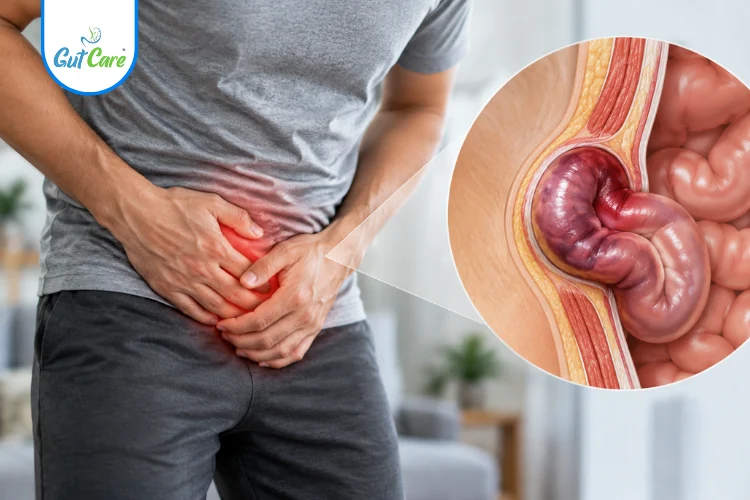
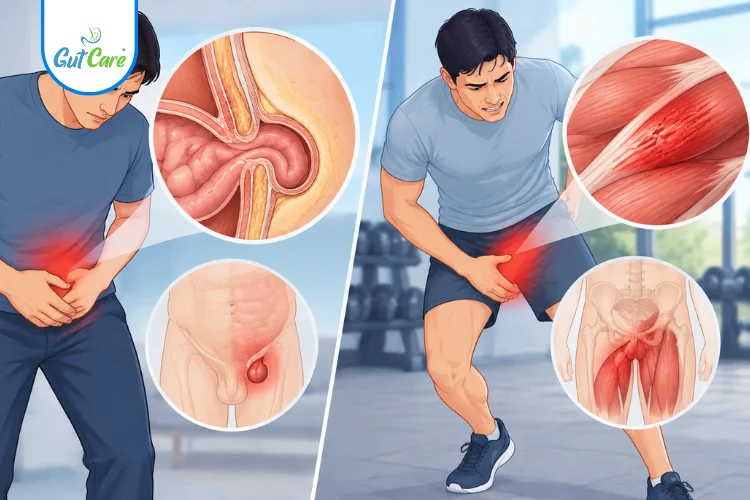
Groin pain can be confusing because different conditions can cause similar symptoms. A sudden pain after exercise may feel like a muscle injury, while discomfort with a noticeable bulge may point towards a hernia. Understanding the difference between hernia vs groin strain can help you identify the possible cause and seek the right medical advice at the right time.
A groin strain usually happens when the muscles or tendons in the groin area are overstretched or injured. A hernia, on the other hand, occurs when an internal tissue pushes through a weakened area of the abdominal wall, often creating a visible or noticeable bulge.
At Gutcare Clinics, Bangalore, our specialists help patients understand the cause of groin discomfort and provide appropriate evaluation and treatment options based on their condition.
Experiencing persistent groin pain or a swelling in the groin area? Consult Gutcare Clinics in Bangalore for expert evaluation and personalized care.
Book an appointment Today!
What Is a Groin Strain?
A groin strain is an injury affecting the muscles located on the inner side of the thigh and groin region. These muscles, known as the adductor muscles, help with movements like walking, running, changing direction, and maintaining balance.
Groin strains are common among athletes and people involved in activities that require sudden movements, such as:
- Football, cricket, and other sports
- Running or sprinting
- Heavy workouts
- Sudden twisting movements
- Lifting heavy objects incorrectly
A groin strain occurs when these muscles are stretched beyond their normal limit, causing small tears in the muscle fibres.
Common Symptoms of a Groin Strain
The symptoms of a groin strain may vary depending on the severity of the injury.
Common signs include:
- Sudden pain in the groin area
- Tenderness or soreness near the inner thigh
- Pain while walking, running, or stretching
- Muscle weakness
- Bruising or swelling in severe cases
- Difficulty moving the leg comfortably
The pain is usually linked to movement and may improve with rest, ice application, and proper rehabilitation.
What Is a Hernia?
A hernia occurs when an organ or fatty tissue pushes through a weak area in the surrounding muscle or connective tissue. Inguinal hernia is the most common type of groin hernia and occurs when tissue pushes through the lower abdominal wall near the groin.
An inguinal hernia may develop due to:
- Weakness in the abdominal wall
- Heavy lifting
- Chronic coughing
- Constipation and straining during bowel movements
- Age-related muscle weakness
- Previous abdominal surgeries
Unlike a groin strain, a hernia involves a structural weakness in the abdominal wall.
Common Symptoms of an Inguinal Hernia
Symptoms of a hernia can include:
- A visible or noticeable bulge in the groin area
- Groin swelling that becomes more noticeable while standing, coughing, or lifting
- Pressure or heaviness in the groin
- Pain or discomfort during physical activity
- Burning or aching sensation near the bulge
- Discomfort while bending or straining
Some hernias may not cause severe pain initially, but they generally do not disappear on their own and may require medical assessment.
Hernia vs Groin Strain: Key Differences
Understanding the differences between these two conditions can help you identify possible warning signs.
| Feature | Hernia | Groin Strain |
| Main cause | Weakness in abdominal wall | Muscle or tendon injury |
| Visible bulge | Common | Usually absent |
| Pain trigger | Coughing, lifting, standing, straining | Running, stretching, movement |
| Location | Groin or lower abdomen | Inner thigh and groin muscles |
| Recovery | May require medical treatment | Often improves with rest and rehabilitation |
| Long-term concern | May increase in size if untreated | Usually heals with proper care |
How Can You Tell If You Have a Hernia or Pulled Groin Muscle?
Many people search for “how to tell if you have a hernia or pulled groin muscle” because both conditions can cause discomfort in the same area.
Some differences to consider:
A Bulge May Suggest a Hernia
A lump or swelling in the groin that appears when you stand, cough, or lift something may indicate a hernia. The bulge may reduce when you lie down.
Pain After Exercise May Suggest a Groin Strain
If pain started after sports, exercise, or a sudden movement without any swelling or bulge, a muscle strain may be more likely.
Movement Patterns Can Be Different
Groin strain pain often increases with:
- Stretching the leg
- Running
- Changing direction quickly
- Specific muscle movements
Hernia discomfort may increase with:
- Heavy lifting
- Coughing
- Sneezing
- Standing for long periods
However, symptoms can overlap, and a proper examination is needed for an accurate diagnosis.
When Should You See a Doctor for Groin Pain?
Not all groin pain requires immediate medical attention, but certain symptoms should not be ignored.
Seek medical advice if you experience:
- A growing lump or swelling in the groin
- Persistent pain that does not improve
- Pain during normal daily activities
- A bulge that becomes painful or cannot be pushed back
- Sudden severe groin pain
- Nausea, vomiting, or abdominal discomfort along with a hernia
Early evaluation can help identify the condition and prevent possible complications.
How Are Hernia and Groin Strain Diagnosed?
A doctor usually begins with a physical examination and discusses your symptoms, activities, and medical history.
For suspected hernia, the evaluation may include:
- Checking for a groin bulge
- Assessing changes during coughing or straining
- Ultrasound imaging if required
For a groin strain, diagnosis may involve:
- Physical movement tests
- Checking muscle tenderness and strength
- Imaging tests in severe or unclear cases
The goal is to understand whether the problem involves muscles, tendons, or the abdominal wall.
Treatment Options for Hernia and Groin Strain
Treatment depends on the underlying cause.
Treatment for Groin Strain
Mild groin strains may improve with:
- Rest from activities causing pain
- Ice therapy during the early stage
- Gentle stretching exercises
- Physical therapy
- Gradual return to activity
Severe muscle injuries may require longer rehabilitation under professional guidance.
Treatment for Hernia
A hernia usually does not heal by itself because the weakness in the abdominal wall remains.
Treatment options may include:
- Monitoring small, symptom-free hernias under medical advice
- Lifestyle modifications
- Surgical repair when recommended
Modern hernia procedures, including minimally invasive techniques, may help reduce recovery time and discomfort for suitable patients.
If you are unsure whether your groin pain is due to a hernia or muscle injury, Gutcare Clinics, Bangalore can help with proper diagnosis and treatment guidance.
Find us here:Gutcare Clinics, Indiranagar, Bangalore | Dr. Yuvraj Singh Gehlot, Digestive Health Specialist
Can a Groin Strain Turn Into a Hernia?
A groin strain does not directly turn into a hernia. They are different conditions affecting different tissues.
However, activities that increase pressure inside the abdomen, such as repeated heavy lifting or straining, may contribute to the development of a hernia in someone who already has a weak abdominal wall.
How to Reduce the Risk of Groin Problems
You can reduce your risk by following healthy habits:
- Use proper lifting techniques
- Maintain a healthy body weight
- Strengthen core and abdominal muscles safely
- Warm up before exercise
- Treat persistent cough or constipation
- Avoid sudden increases in intense physical activity
Frequently Asked Questions About Hernia vs Groin Strain
What is the difference between a hernia and a groin strain?
A hernia happens when tissue pushes through a weak area in the abdominal wall, often causing a bulge in the groin. A groin strain is a muscle injury caused by overstretching or tearing of the groin muscles. Hernias are structural problems, while strains affect muscles and tendons.
How can I tell if my groin pain is a hernia or a muscle strain?
A noticeable bulge in the groin area, pain while coughing or lifting, and a feeling of pressure may suggest a hernia. Pain that begins after exercise, running, or sudden movement and improves with rest is more commonly associated with a groin strain. A medical examination can confirm the exact cause.
Can a groin strain cause a lump in the groin?
A typical groin strain does not usually cause a visible lump. Swelling or a bulge in the groin area may indicate another condition, such as a hernia, and should be evaluated by a healthcare professional.
Does an inguinal hernia heal without surgery?
An inguinal hernia usually does not repair itself because the weakness in the abdominal wall remains. Depending on symptoms, size, and risk factors, a doctor may recommend monitoring or surgical repair.
Can lifting heavy objects cause both a hernia and groin strain?
Heavy lifting can contribute to both conditions, but they happen differently. Improper lifting techniques or sudden movements can strain groin muscles, while increased abdominal pressure during lifting may contribute to hernia development in people with abdominal wall weakness.
When should I see a doctor for groin pain?
You should consult a doctor if you notice a groin bulge, persistent pain, increasing discomfort, pain during daily activities, or symptoms that do not improve with rest. Immediate medical attention is needed for severe pain, vomiting, or a painful hernia bulge that does not reduce.
How is a hernia diagnosed?
A doctor usually diagnoses a hernia through a physical examination. In some cases, imaging tests such as an ultrasound may be recommended to confirm the diagnosis or evaluate unclear symptoms.
How long does a groin strain take to heal?
Recovery depends on the severity of the injury. Mild strains may improve within a few weeks, while severe muscle injuries may require longer rehabilitation with guided exercises and medical support.