Gallstones are one of the most common digestive problems affecting people worldwide. These small, hardened deposits develop inside the gallbladder and may remain unnoticed for years. However, when they block the bile ducts, they can cause symptoms such as sudden abdominal pain, nausea, vomiting, and digestive discomfort.
Understanding the types of gallstones and how they form in the gallbladder can help you recognize possible warning signs and seek timely medical advice. At Gutcare Clinics, Bangalore, our team focuses on helping patients understand digestive conditions and choose appropriate treatment based on their individual health needs.
If you experience recurring abdominal pain or symptoms related to gallstones, consult a gastroenterology specialist for proper evaluation and guidance.
Book an appointment Today!
What Are Gallstones?
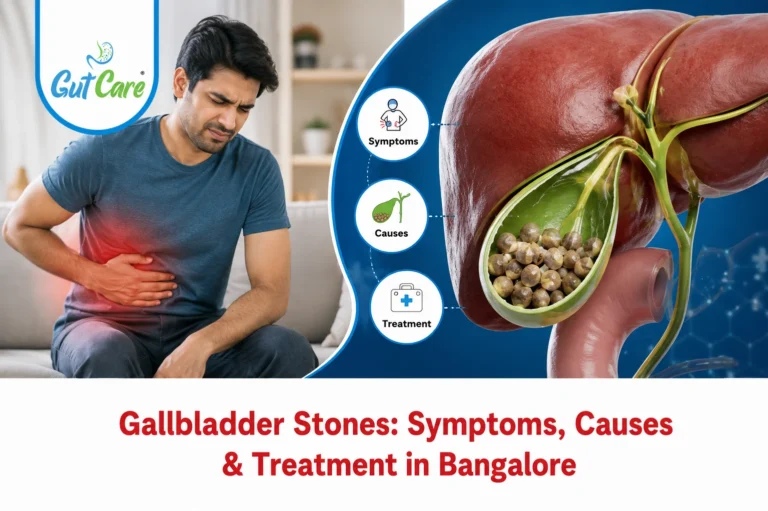
The gallbladder is a small, pear-shaped organ located below the liver. Its main function is to store and release bile, a digestive fluid produced by the liver that helps the body break down fats.
Sometimes, substances present in bile become imbalanced and begin to harden into solid particles. These deposits gradually grow and form gallstones.
Gallstones can vary in:
- Size — from tiny grains to larger stones
- Number — a person may have one or multiple stones
- Composition — depending on the substances that form them
Some people have gallstones without symptoms, while others may develop complications requiring medical treatment.
What Are the Different Types of Gallstones?
The main types of gallstones are classified based on their composition. The two major categories are:
- Cholesterol gallstones
- Pigment gallstones
A less common category includes mixed gallstones, which contain a combination of different substances.
Cholesterol Gallstones
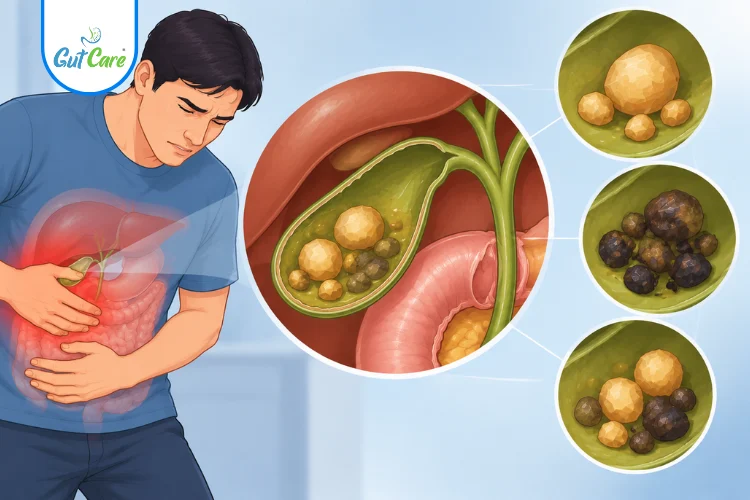
Cholesterol gallstones are the most common type of gallstones. They usually appear yellow-green because they are mainly made of hardened cholesterol.
How Do Cholesterol Gallstones Form?
Cholesterol gallstones develop when there is too much cholesterol in bile compared to the amount of bile salts available to dissolve it.
The formation process usually involves:
- The liver releases cholesterol into bile.
- Excess cholesterol begins forming tiny crystals.
- These crystals collect together inside the gallbladder.
- Over time, they grow into solid gallstones.
Factors that may increase the risk of cholesterol gallstones include:
- Being overweight or having obesity
- Rapid weight loss
- High-fat or high-cholesterol diets
- Diabetes
- Family history of gallstones
- Certain hormonal changes
Pigment Gallstones
Pigment gallstones are less common and form due to excess bilirubin in bile. Bilirubin is a substance produced when red blood cells naturally break down.
These stones are usually smaller and darker in colour compared to cholesterol stones.
How Do Pigment Gallstones Form?
Pigment gallstones may develop when the body produces too much bilirubin or when the gallbladder cannot process bile properly.
Conditions associated with pigment gallstones include:
- Certain blood disorders that cause increased red blood cell breakdown
- Liver-related conditions
- Bile duct infections
- Some chronic medical conditions
Mixed Gallstones
Mixed gallstones contain both cholesterol and pigment components. These stones develop due to multiple changes in bile composition.
Although gallstones are often grouped into cholesterol and pigment categories, many stones contain a combination of substances.
How Do Gallstones Form Inside the Gallbladder?
The formation of gallstones is usually a gradual process. Several changes inside the gallbladder contribute to stone development.
1. Imbalance in Bile Composition
Healthy bile contains the right balance of cholesterol, bile salts, bilirubin, and other substances.
When this balance changes, certain components may start forming crystals.
2. Bile Crystallisation
Small crystals may develop when cholesterol or bilirubin particles become concentrated.
These crystals can stick together and slowly increase in size.
3. Reduced Gallbladder Movement
The gallbladder needs to empty regularly to prevent bile from becoming stagnant.
When the gallbladder does not empty properly, bile remains concentrated for longer periods, increasing the chance of stone formation.
4. Growth of Gallstones Over Time
As more particles collect around existing crystals, the stones gradually become larger.
Some gallstones remain small and harmless, while others may block the flow of bile and cause symptoms.
What Causes Gallstones to Develop?
Several factors can increase the chances of developing gallbladder stones.
Common risk factors include:
Diet and Lifestyle Factors
- Eating a diet high in unhealthy fats
- Low fibre intake
- Lack of physical activity
- Sudden weight loss due to extreme dieting
Medical Factors
- Diabetes
- Liver diseases
- Certain blood disorders
- Gallbladder emptying problems
Age and Genetics
Gallstones are more common as people get older. Having a family history of gallstones may also increase risk.
Hormonal Factors
Changes in hormone levels can affect cholesterol levels in bile. This is one reason gallstones are more frequently seen in certain groups, including during pregnancy or with hormone-related changes.
Symptoms of Gallstones You Should Not Ignore
Many people with gallstones do not experience symptoms. These are called silent gallstones and may not require immediate treatment.
However, when gallstones block bile flow, symptoms may occur.
Common symptoms include:
- Sudden pain in the upper right abdomen
- Pain after eating fatty foods
- Pain that spreads to the back or right shoulder
- Nausea and vomiting
- Indigestion or bloating
- Feeling of fullness after meals
A gallstone attack may last from several minutes to a few hours.
If you frequently experience these symptoms, getting evaluated by a healthcare professional can help identify the underlying cause.
How Are Gallstones Diagnosed?
Doctors use different methods to confirm the presence of gallstones and assess their condition.
Common diagnostic methods include:
Ultrasound Scan
An abdominal ultrasound is one of the most commonly used tests for detecting gallstones. It helps identify stones inside the gallbladder and checks for signs of inflammation.
Blood Tests
Blood tests may help identify infection, inflammation, or problems affecting the liver and bile ducts.
Additional Imaging Tests
In some cases, doctors may recommend advanced imaging tests to examine bile ducts or complications.
Early diagnosis helps doctors decide whether monitoring, medication, or procedures may be required.
When Should You Consult a Doctor for Gallstones?
You should seek medical advice if you experience:
- Severe or persistent abdominal pain
- Fever with abdominal discomfort
- Yellowing of the eyes or skin
- Repeated vomiting
- Dark urine or pale stools
These symptoms may indicate complications such as infection or blockage in the bile ducts.
For personalised evaluation and expert guidance for gallbladder-related concerns, consult Gutcare Clinics in Bangalore.
Find us here:Gutcare Clinics, Indiranagar, Bangalore | Dr. Yuvraj Singh Gehlot, Digestive Health Specialist
Treatment Options for Gallstones
The treatment approach for gallstones depends on factors such as symptoms, stone size, location, and whether complications are present.
Monitoring Silent Gallstones
If gallstones are found accidentally and do not cause symptoms, doctors may recommend regular monitoring instead of immediate treatment.
However, any new symptoms should be evaluated to check whether the stones are causing problems.
Medications for Gallstones
In some specific cases, medicines may be used to dissolve certain cholesterol gallstones. However, this approach may take a long time and may not be suitable for everyone.
Gallstones may also return after stopping medication in some cases.
Gallbladder Removal Surgery
For people with repeated gallstone attacks or complications, gallbladder removal surgery may be recommended.
The most common procedure is laparoscopic cholecystectomy, where the gallbladder is removed through small incisions.
This procedure is commonly preferred because it generally involves:
- Smaller cuts compared to traditional surgery
- Faster recovery
- Less discomfort after surgery
Your doctor will evaluate your condition and recommend the most appropriate treatment option.
Can Gallstones Be Prevented?
While not all gallstones can be prevented, maintaining a healthy lifestyle may help reduce certain risk factors.
Helpful prevention tips include:
Maintain a Healthy Weight
Avoid rapid weight loss through crash diets, as sudden changes in weight can increase the risk of gallstone formation.
Follow a Balanced Diet
Include:
- High-fibre foods such as vegetables, fruits, and whole grains
- Healthy sources of fats
- Adequate protein
Limit:
- Excess processed foods
- Foods high in unhealthy fats
- Excess sugar intake
Stay Physically Active
Regular physical activity supports healthy digestion and helps maintain a balanced weight.
Manage Existing Health Conditions
Proper management of conditions such as diabetes and cholesterol problems may help reduce gallstone risk.
Difference Between Cholesterol and Pigment Gallstones
| Feature | Cholesterol Gallstones | Pigment Gallstones |
| Main component | Cholesterol | Bilirubin |
| Appearance | Yellow-green | Dark brown or black |
| Commonness | Most common type | Less common |
| Main causes | Excess cholesterol in bile | Increased bilirubin levels |
| Associated factors | Obesity, diet, metabolic factors | Blood disorders, infections, liver conditions |
Why Understanding Gallstone Types Matters
Knowing the different types of gallstones can help patients better understand their condition and possible causes.
The type of gallstone may provide doctors with important information about:
- Why the stones developed
- Possible risk factors
- The likelihood of complications
- Suitable management options
However, treatment decisions are based on the complete health condition of the patient, not only the type of stone.
Frequently Asked Questions About Gallstones
What are the main types of gallstones?
The two main types of gallstones are cholesterol gallstones and pigment gallstones. Cholesterol gallstones are the most common, while pigment stones develop due to excess bilirubin in bile.
How do gallstones form in the gallbladder?
Gallstones form when substances in bile become imbalanced and create crystals. Over time, these crystals combine and grow into solid stones inside the gallbladder.
Are cholesterol gallstones dangerous?
Cholesterol gallstones may not cause problems if they remain inside the gallbladder. However, if they block bile ducts, they can lead to pain, inflammation, or other complications.
Can gallstones go away on their own?
Small gallstones may remain without causing symptoms, but they usually do not disappear naturally. Treatment depends on symptoms and medical evaluation.
What foods increase the risk of gallstones?
Diets high in unhealthy fats, processed foods, and low fibre intake may increase the risk of gallstone formation, especially when combined with other risk factors.
Do all gallstones require surgery?
No. Some people with silent gallstones may not need treatment. Surgery is generally considered when gallstones cause repeated symptoms or complications.
Which doctor treats gallstones?
A gastroenterologist or gastrointestinal surgeon can evaluate gallstones and recommend suitable treatment based on the patient’s condition.