Have you ever felt a sharp pain or discomfort in the upper right side of your abdomen after a meal, especially after eating oily or fatty foods? This could be a sign of a gallbladder-related problem. Gallbladder pain after eating is a common symptom that may occur when the gallbladder struggles to release bile properly or when conditions like gallstones affect normal digestion.
The gallbladder plays an important role in digestion by storing and releasing bile, a fluid that helps break down fats. When there is a blockage, inflammation, or irritation in the gallbladder, eating can trigger pain and discomfort.
At Gutcare Clinics, Bangalore, our gastroenterology team helps patients understand the cause behind digestive symptoms and provides appropriate evaluation and treatment options based on individual health needs.
If you experience repeated pain after meals, do not ignore it. Early evaluation can help identify gallbladder problems before they become more serious.
Book an appointment Today!
What Causes Gallbladder Pain After Eating?
The gallbladder stores bile produced by the liver and releases it into the small intestine when you eat, especially when your meal contains fats. If the flow of bile is interrupted or the gallbladder becomes irritated, pain may occur after eating.
Some common causes include:
Gallstones Blocking Bile Flow
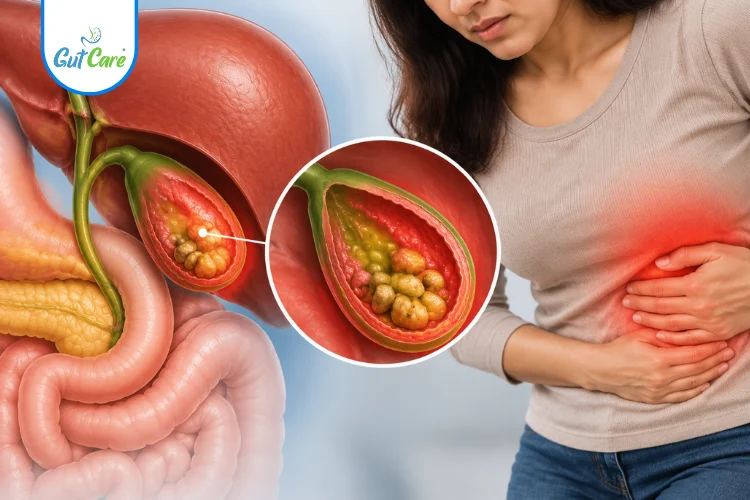
Gallstones are one of the most common reasons for gallbladder pain after meals. These are hardened deposits that form inside the gallbladder.
When you eat, the gallbladder contracts to release bile. If a gallstone blocks the bile duct during this process, it can cause sudden pain known as a gallbladder attack or biliary colic.
Gallstones may cause:
- Pain in the upper right abdomen
- Discomfort after eating fatty meals
- Nausea or vomiting
- Feeling of fullness or bloating
- Pain that spreads to the back or right shoulder
Gallbladder Inflammation (Cholecystitis)
When a gallstone blocks the gallbladder outlet for a longer period, it can lead to inflammation called cholecystitis.
Unlike temporary discomfort, gallbladder inflammation often causes more persistent pain and may require medical attention.
Symptoms may include:
- Severe abdominal pain
- Tenderness in the right upper abdomen
- Fever
- Nausea and vomiting
- Pain that continues for several hours
Fatty Foods Triggering Gallbladder Pain
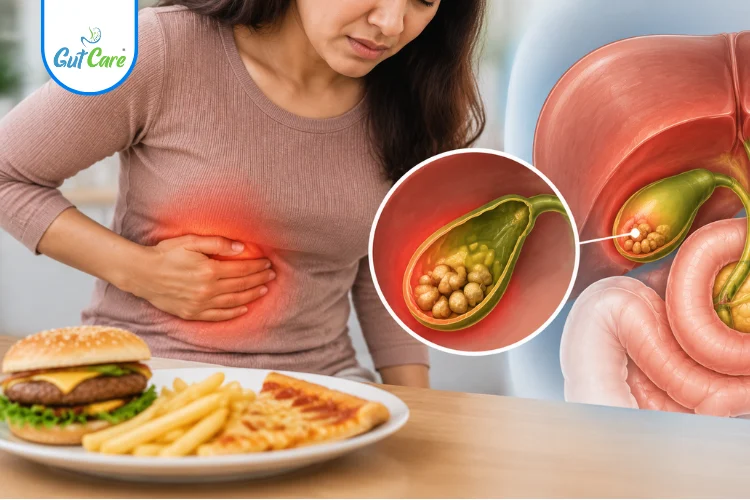
Many people notice that gallbladder pain occurs after eating fried foods, rich meals, or high-fat foods.
Fat stimulates the gallbladder to contract and release bile. If gallstones or other gallbladder problems are present, this contraction can increase pressure and trigger pain.
Common trigger foods may include:
- Fried foods
- Butter and cream-based foods
- Fatty meats
- Fast food
- Heavy meals
However, food triggers can vary from person to person.
Functional Gallbladder Problems
Sometimes, a person may experience gallbladder symptoms even without visible gallstones. This can happen when the gallbladder does not empty properly.
This condition may cause:
- Pain after meals
- Indigestion
- Nausea
- Bloating
- Discomfort after eating fatty foods
A gastroenterologist can evaluate symptoms along with imaging tests to determine the cause.
Where Is Gallbladder Pain Usually Felt?
Understanding the location of pain can help identify whether symptoms may be related to the gallbladder.
Typical gallbladder pain is felt:
- In the upper right side of the abdomen
- Below the ribs on the right side
- In the centre upper abdomen in some cases
The pain may also spread to:
- Right shoulder
- Upper back
- Between the shoulder blades
Gallbladder pain is often described as:
- Sharp or intense pain
- A steady ache or pressure
- Pain that appears after meals
- Discomfort lasting from minutes to several hours
Not all abdominal pain is caused by the gallbladder. Conditions involving the stomach, pancreas, liver, or intestines can cause similar symptoms. Proper diagnosis is important.
How Are Gallbladder Problems Diagnosed?
If you have recurring gallbladder pain after eating, a doctor may recommend tests to identify the underlying cause.
Medical History and Physical Examination
A gastroenterologist will ask about:
- Location and timing of pain
- Food triggers
- Duration of symptoms
- Associated symptoms like fever or vomiting
- Previous digestive problems
A physical examination may help identify areas of tenderness.
Ultrasound Scan
An abdominal ultrasound is commonly used to detect gallstones and evaluate the gallbladder.
It can help identify:
- Presence of gallstones
- Gallbladder wall changes
- Bile duct abnormalities
Blood Tests
Blood tests may be recommended to check for signs of:
- Infection
- Inflammation
- Liver or bile duct problems
Additional Imaging Tests
In certain cases, doctors may suggest advanced tests such as:
- HIDA scan to assess gallbladder function
- MRI or CT scans for detailed evaluation
When Should You See a Doctor for Gallbladder Pain?
Occasional digestive discomfort may not always indicate a serious condition. However, repeated or severe symptoms should be evaluated.
Seek medical advice if you experience:
- Severe abdominal pain after meals
- Pain lasting several hours
- Fever with abdominal pain
- Yellowing of the eyes or skin
- Persistent nausea or vomiting
- Unexplained weight loss
- Frequent episodes of gallbladder pain
Ignoring recurring symptoms may increase the risk of complications, especially if gallstones block bile flow.
Treatment Options for Gallbladder Pain
Treatment depends on the cause, severity of symptoms, and overall health condition.
Lifestyle and Dietary Changes
For mild symptoms, doctors may suggest:
- Reducing high-fat foods
- Eating smaller meals
- Maintaining a healthy weight
- Avoiding foods that trigger symptoms
These changes may help reduce discomfort but may not remove existing gallstones.
Medicines
In some situations, medications may be prescribed to manage symptoms or treat specific conditions. The choice depends on the diagnosis.
Laparoscopic Gallbladder Surgery
For people with repeated gallstone-related pain or complications, doctors may recommend gallbladder removal surgery, also called laparoscopic cholecystectomy.
This minimally invasive procedure involves removing the gallbladder through small incisions.
Benefits may include:
- Smaller cuts
- Faster recovery compared to traditional surgery
- Shorter hospital stay
- Relief from recurring gallstone attacks
A surgeon will determine whether surgery is suitable based on your symptoms and medical evaluation.
Can Gallbladder Pain Be Prevented?
While not all gallbladder problems can be prevented, healthy habits may lower the risk.
Helpful steps include:
- Maintain a balanced diet
- Include more fibre-rich foods
- Limit excessive fried and fatty foods
- Exercise regularly
- Maintain a healthy body weight
- Avoid rapid weight loss diets
Listening to your body and seeking medical advice for repeated symptoms can help with early diagnosis.
Why Choose GutCare Clinics for Gallbladder Evaluation in Bangalore?
Gallbladder pain can have multiple causes, and identifying the correct reason is important for effective treatment.
At Gutcare Clinics, Bangalore, patients receive evaluation for digestive symptoms with a focus on accurate diagnosis and personalised care.
The team helps patients understand:
- The cause of abdominal pain
- Required diagnostic tests
- Available treatment options
- Steps for better digestive health
If you are experiencing recurring pain after meals, consulting a gastroenterology specialist can help you understand the next steps.
Find us here:Gutcare Clinics, Indiranagar, Bangalore | Dr. Yuvraj Singh Gehlot, Digestive Health Specialist
Frequently Asked Questions About Gallbladder Pain After Eating
What causes gallbladder pain after eating?
Gallbladder pain after eating is commonly caused by gallstones blocking the flow of bile when the gallbladder contracts after a meal. Other causes may include gallbladder inflammation, poor gallbladder function, or digestive conditions that affect the biliary system.
Why does my gallbladder hurt after eating fatty foods?
Fatty foods stimulate the gallbladder to release bile for digestion. If gallstones or other gallbladder problems are present, this contraction can increase pressure inside the gallbladder and trigger pain.
Where is gallbladder pain usually located?
Gallbladder pain is usually felt in the upper right side of the abdomen, below the ribs. In some cases, the pain may spread to the right shoulder or upper back.
How long does gallbladder pain last after eating?
Gallbladder pain can last from a few minutes to several hours depending on the cause. Pain that is severe, persistent, or associated with fever and vomiting should be evaluated by a doctor.
What foods trigger gallbladder pain?
Foods high in fat are common triggers for some people with gallbladder problems. These may include fried foods, fatty meats, butter, cream-based dishes, and heavy meals.
Can gallbladder pain go away on its own?
Mild gallbladder discomfort may improve temporarily, but recurring pain can indicate an underlying problem such as gallstones. A medical evaluation can help identify the exact cause.
When should I see a doctor for gallbladder pain?
You should consult a doctor if you experience repeated pain after meals, severe abdominal pain, fever, vomiting, yellowing of the skin or eyes, or pain that does not improve.
Is surgery required for gallbladder stones?
Not everyone with gallstones needs surgery. However, people with repeated symptoms, complications, or blocked bile ducts may