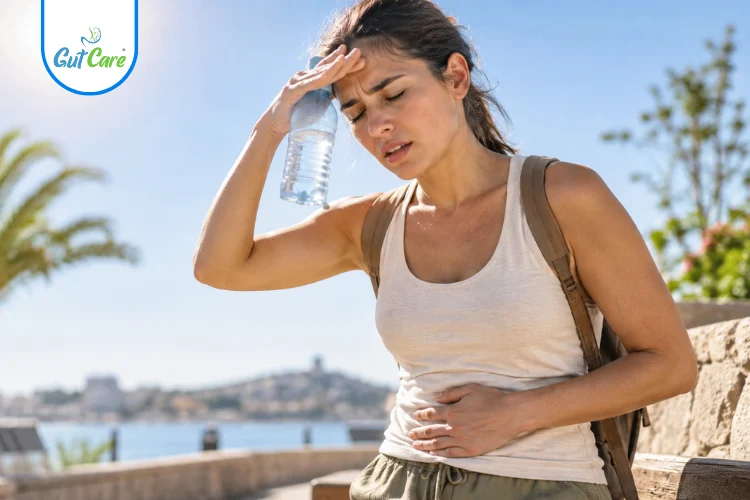
During summer, rising temperatures and excessive sweating can affect more than just your energy levels. Your digestive system can also be impacted when your body loses more fluids than it receives. One common digestive concern during hot weather is constipation, which is often linked to inadequate hydration.
At Gutcare Clinics, we understand that digestive health depends on several factors, including hydration, diet, lifestyle habits, and timely medical guidance. Understanding the connection between dehydration and constipation can help you take simple preventive steps and maintain a healthy bowel routine throughout the summer.
Book an appointment Today!
How Does Dehydration Cause Constipation?
Your body needs enough water to support normal digestion and bowel movements. The large intestine absorbs water from food waste before it leaves the body. When your body becomes dehydrated, the colon absorbs more water than usual, making stools harder and more difficult to pass.
This can result in:
- Hard or dry stools
- Difficulty passing stools
- Straining during bowel movements
- Feeling of incomplete bowel emptying
- Reduced frequency of bowel movements
In simple terms, when your body lacks enough fluids, your stool can become harder, increasing the chances of constipation.
Why Is Constipation More Common During Summer?
Summer conditions can increase the risk of constipation due to several reasons:
1. Increased Fluid Loss Through Sweating
Hot weather causes the body to sweat more to regulate temperature. If lost fluids are not replaced adequately, dehydration can occur, affecting digestion and bowel movements.
2. Reduced Water Intake
Many people stay busy outdoors during summer and may forget to drink enough water. Low fluid intake can gradually affect stool consistency.
3. Changes in Eating Habits
During summer, some people may eat more processed foods, fewer fibre-rich foods, or skip regular meals due to changes in routine. These habits can contribute to constipation.
4. Less Physical Activity
Extreme heat may reduce outdoor activities and exercise levels. Reduced movement can slow down bowel activity and affect digestion.
Signs That Your Constipation May Be Due to Dehydration
Dehydration-related constipation may occur along with other signs of low fluid levels, such as:
- Dark-coloured urine
- Dry mouth or increased thirst
- Fatigue
- Headache
- Dry skin
- Hard stools
If constipation continues despite improving hydration and lifestyle habits, it may require evaluation by a healthcare professional.
How Much Water Should You Drink to Prevent Constipation?
There is no single amount of water that works for everyone. Your fluid requirement depends on factors such as:
- Body size
- Activity level
- Weather conditions
- Diet
- Existing health conditions
During summer, you may need more fluids because of increased sweating. Drinking water regularly throughout the day is often better than waiting until you feel extremely thirsty.
Tips to Prevent Constipation During Summer
1. Stay Hydrated Throughout the Day
Keep water accessible and drink regularly. Include fluids based on your activity level and daily needs.
2. Add More Fibre to Your Diet
Fibre helps add bulk to stools and supports smoother bowel movements. Include:
- Fruits such as apples, oranges, and papaya
- Vegetables
- Whole grains
- Pulses and legumes
- Nuts and seeds
Remember, increasing fibre intake without enough water may sometimes worsen constipation.
3. Maintain Regular Toilet Habits
Ignoring the urge to pass stools can affect bowel habits over time. Try to maintain a consistent bathroom routine.
4. Stay Physically Active
Light activities such as walking can support healthy digestion and improve bowel movement patterns.
5. Limit Constipation-Triggering Foods
Excessive intake of processed foods, low-fibre snacks, and sugary drinks may affect digestive health.
Can Drinking More Water Alone Cure Constipation?
Increasing water intake can help if dehydration is contributing to constipation. However, constipation can have several causes, including:
- Low fibre intake
- Sedentary lifestyle
- Certain medications
- Irritable bowel syndrome (IBS)
- Other digestive conditions
A complete approach that includes diet, activity, hydration, and medical advice when needed is important for long-term digestive health.
When Should You Consult a Doctor for Constipation?
Occasional constipation is common, especially during seasonal changes. However, you should consider consulting a healthcare professional if you experience:
- Constipation lasting several weeks
- Severe abdominal pain
- Blood in stools
- Unexplained weight loss
- Persistent changes in bowel habits
- Repeated episodes of constipation
Early evaluation can help identify the underlying cause and prevent complications.
How Gutcare Clinics Can Help With Digestive Health
At Gutcare Clinics, we focus on understanding the underlying reasons behind digestive problems rather than only addressing symptoms. Our specialists provide evaluation and personalised guidance for conditions affecting the digestive system, including constipation and related concerns.
Maintaining hydration, balanced nutrition, and healthy lifestyle habits can support better gut health, especially during summer months.
Conclusion
Summer dehydration and constipation are closely connected because insufficient fluids can make stools harder and affect normal bowel movements. Staying hydrated, eating enough fibre, staying active, and maintaining healthy habits can help reduce the risk of constipation during hot weather.
If constipation becomes frequent, severe, or does not improve with lifestyle changes, seeking professional medical advice can help identify the right approach for your digestive health.
Find us here:Gutcare Clinics, Indiranagar, Bangalore | Dr. Yuvraj Singh Gehlot, Digestive Health Specialist
FAQs
1. Can dehydration cause constipation?
Yes. Dehydration can cause constipation because the colon absorbs more water from waste material, making stools harder and more difficult to pass.
2. How can I prevent constipation during summer?
Drinking enough fluids, eating fibre-rich foods, staying active, and maintaining regular toilet habits can help prevent summer constipation.
3. Is warm weather linked to digestive problems?
Yes. Hot weather can increase fluid loss through sweating, and inadequate hydration may affect digestion and bowel movements.
4. How long does dehydration constipation last?
It may improve once hydration levels are restored, but persistent constipation may have other underlying causes that require medical evaluation.
5. Does drinking water improve bowel movements?
Adequate hydration can support softer stools and smoother bowel movements, especially when constipation is related to low fluid intake.